Every Single Roe Is Precious
Gems on Sushi, Now Worth Their Weight in Gold
"About 45 won per roe"
Salmon roe prices double
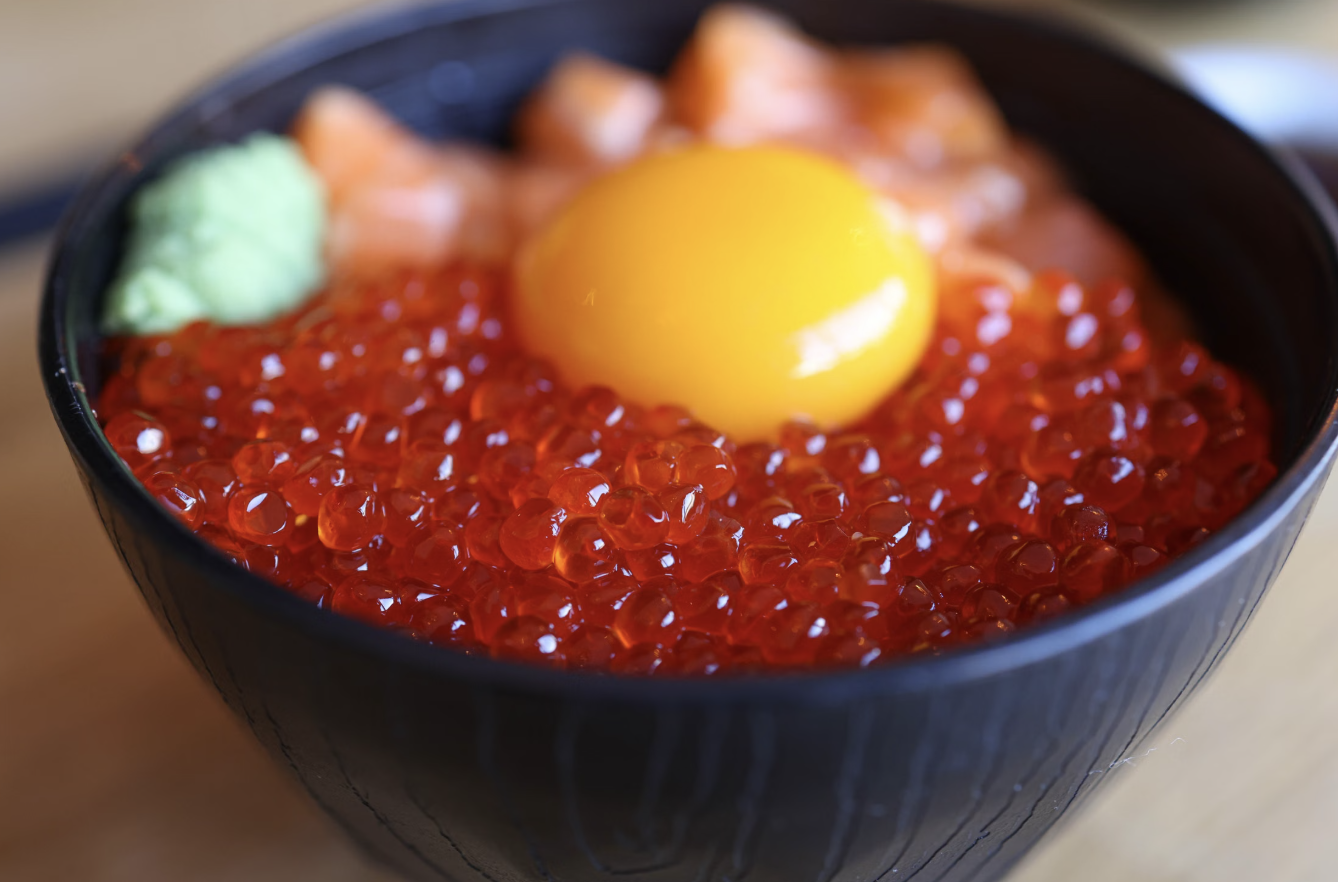
Salmon roe prices in Japan have more than doubled from a year earlier. Also known as the gems of the sea for their glistening appearance, salmon roe is known for its salty taste and its popping texture. With salmon catches in Hokkaido plunging and poor catches continuing in major overseas production areas, including North America and Russia, competition to secure imported salmon roe is also intensifying.
According to the Nikkei on October 22, arrivals of raw salmon roe skeins at the Sapporo Central Wholesale Market this month were down 70% from the same period last year. Wholesale prices rose to 30,000-40,000 yen per kilogram, double last year's level. A raw salmon roe skein is a sack of eggs that still has the membrane surrounding the roe attached. The eggs are separated from the membrane and marinated in soy sauce or other seasonings to make the salmon roe used in sushi and rice bowls.
Retail prices have also risen sharply. Raw salmon roe skeins sold in Hokkaido now cost around 4,000-6,000 yen per 100 g, more than double the price a year ago.
The Nikkei bought 90 g of fresh salmon roe for about 5,000 yen at a seafood specialty store and counted the eggs in a 50 g portion. There were 606 eggs in total. That works out to about 4.8 yen per egg, or about 45 won.
Assuming one gunkan-maki sushi piece contains at least 60 eggs, the salmon roe alone costs 288 yen at retail prices. At a popular conveyor-belt sushi restaurant in Hokkaido, two pieces of salmon roe sushi cost about 600 yen, roughly twice the price of two pieces of wild tuna sushi (about 300 yen).
Will salmon roe disappear from supermarket sushi assortments?
With prices soaring, herring roe is being considered as a substitute
Distributors are changing their procurement methods to reduce the burden of holding inventory. Seafood wholesaler Marusui Sapporo Chuo Suisan has decided to source only the quantities ordered by high-end sushi restaurants and other customers.
Ralse, a supermarket operator, has also switched from securing Hokkaido raw salmon roe skeins in advance to buying them only when orders come in. As of October 20, it had recorded almost no related sales over the previous two weeks. Sales of flying fish roe
are rising instead, and the company is also considering replacing the sushi topping with herring roe.
Imported salmon roe is also in short supply...
Could aquaculture be the answer?
It is also difficult to make up the shortfall with imports. Poor salmon catches in North America and Russia, combined with rising demand for sushi in Asia and Europe, have made imported salmon roe harder to source.
The price of imported salmon roe, which has larger eggs, is around 18,000 yen per kilogram. Trout roe, whose eggs are relatively small, costs 15,000-16,000 yen per kilogram, two to three times the price a year earlier.
Industry estimates suggest that Japan's salmon roe supply will amount to only about 5,000 tons this year, even if the country secures as much imported roe as possible. Supply is expected to fall sharply from the 8,000-10,000 tons available annually over the past 10 years.
Salmon catches in Hokkaido fell 70% last year from the year before and this year have amounted to only about half of last year's level.
Salmon roe producer Okamura Foods Co., Ltd. is pursuing a plan to increase supply through aquaculture. The company, which farms 4,000-5,000 tons of salmon annually in Northern Europe, plans to focus on raising salmon that produce large quantities of roe. It also plans to raise the share of its farmed salmon output supplied to Japan from the current 60% to 75% starting next year.
-

Reporter Choi Young zero02@asiae.co.kr
-
Edit Lee Seonju sjlee109@asiae.co.kr
© The Asia Business Daily. All rights reserved. Unauthorized AI training and use prohibited.