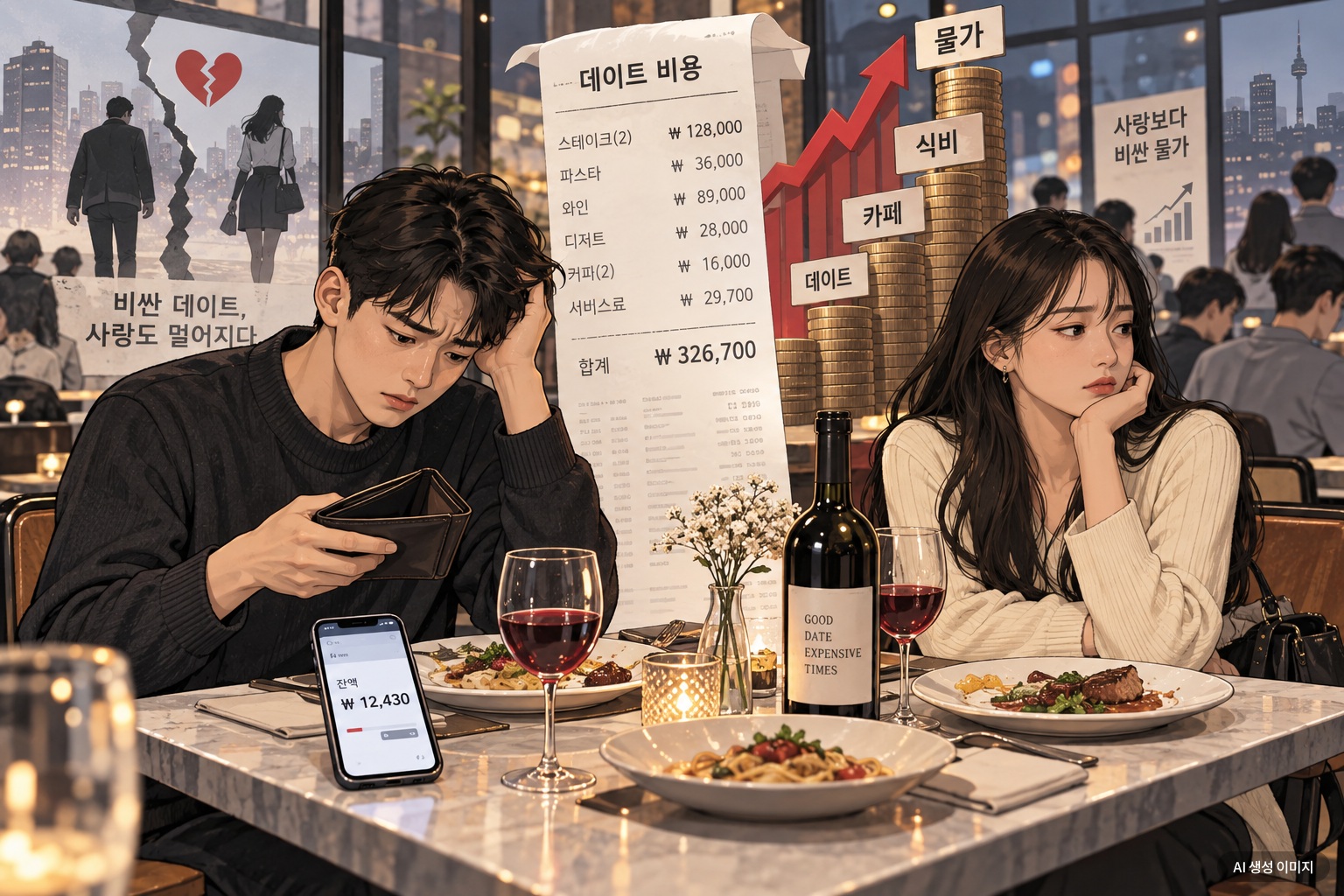
Soaring prices are changing the way young people date. In the United States, more than half of Generation Z say they have cut off contact or ended relationships to avoid conflicts over the burden of dating expenses.

According to the "Dating Economics Report" released on September 22 by the U.S. payment service Zelle, 52% of Generation Z respondents said they had ghosted, blocked, or unfollowed someone on social media to avoid having to agree to split the bill.
Dating Expenses: Taking on Debt and Borrowing from Family
Many young people also reported feeling burdened by the cost of dating itself. Twenty percent of respondents said they had taken on debt to continue active dating, while 19% said they had sought financial help from family or friends to cover dating expenses.

Photo for article understanding purposes only, not related to specific content. Getty Images
원본보기 아이콘The growing burden of dating costs is also changing how people meet. Forty percent of respondents said they prefer activities with lower expenses.
Additionally, 38% said they prefer meeting more frequently with less costly dates over occasionally having expensive outings, and 37% said they directly suggest nearly cost-free dates such as hiking or a walk on the beach.

Generation Z: "How You Spend Money Is Also a Standard of Attraction"
Economic factors are also becoming increasingly important in choosing and maintaining romantic relationships. Fifty percent of respondents said that "financial requirements" have become a more important factor than before when deciding whether to continue seeing their partner.

Photo for article understanding purposes only, not related to specific content. Getty Images
원본보기 아이콘Financial attitudes are also viewed as a key attractive quality. Fifty-six percent said a "wise approach to spending money" is a positive sign, while 54% valued "honesty and transparency about money" in a partner.
Experts note that it's important to discuss how to share dating costs early in the relationship to reduce conflict over expenses.
"To avoid unnecessary conflicts over dating expenses, it's a smart choice to clearly decide from the beginning who will pay for what," experts have advised.
In Korea, Disagreements Over "Who Pays How Much"
Disputes over dating expenses continue in Korea as well. However, conflicts arise not only from the burden of the costs themselves, but also from disagreements over how much each person should pay.

According to a survey on dating expenses conducted on September 11 by the marriage information company Gayeon with 506 unmarried men and women, when splitting dating costs into 10 parts, men considered a share of 5.96 and women 4.04 as appropriate. In other words, a "6 to 4 split," with men bearing about 60% and women 40% of the expenses, is seen as ideal by most respondents.
A question about the main cause of cost-related disputes showed a difference between men and women. Among male respondents, "differences in spending habits or attitudes towards types of dates (48.0%)" were most often cited as the biggest source of conflict, while female respondents most frequently pointed to "one person paying too little or not paying at all (40.0%)" as the main issue.
-

Reporter Shin Eunseo elsie@asiae.co.kr
-
Edit Kim Hyunhee faith100@asiae.co.kr
© The Asia Business Daily. All rights reserved. Unauthorized AI training and use prohibited.