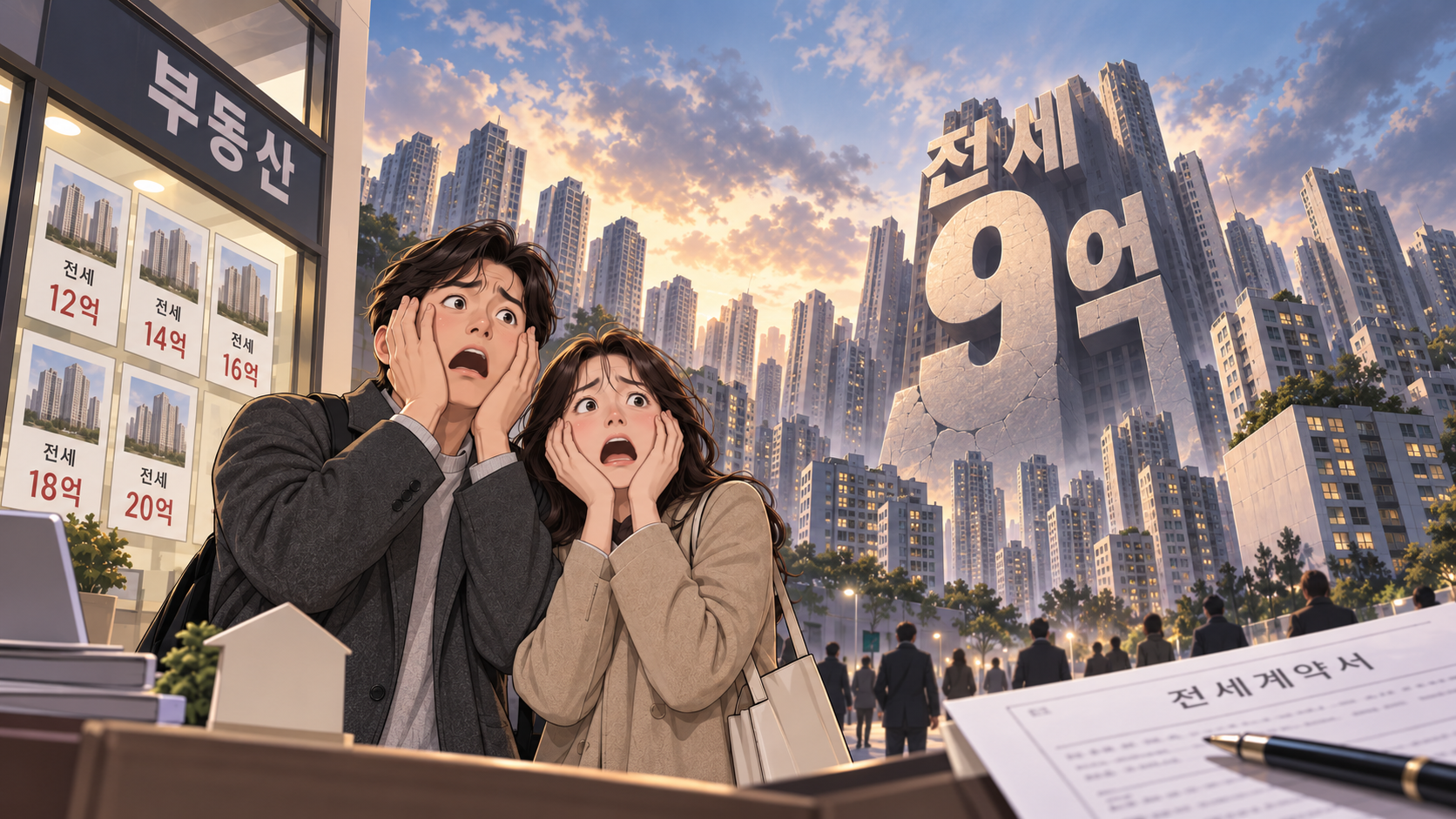
Gangbuk Rising Faster than Gangnam
Seongbuk & Nowon Jeonse Prices Up 12%
In Seoul, jeonse prices in Seongbuk and Nowon Districts have risen by more than 12% so far this year, marking the highest increase since the Korea Real Estate Board (REB) started compiling statistics in 2012. With a steep drop in available listings, the jeonse deposit for an 84m² unit in a 30-year-old apartment complex has surpassed 900 million won.
According to the Korea Real Estate Board, by the second week of September 2026, the year-to-date increase in jeonse prices stood at 12.84% for Seongbuk and 12.25% for Nowon, ranking first and second among Seoul's 25 districts. This rate is more than 4 percentage points higher than the Seoul average of 7.79%.
The previous record under the same conditions was set in 2015, when low interest rates and a shift to monthly rent overlapped, resulting in a 7.75% increase for Seongbuk and 10.77% for Nowon. This year's increases surpass those records by 5.09 percentage points and 1.48 percentage points, respectively. Seongbuk has already exceeded its previous all-time annual record of 11.57% (set in 2015) by September this year.
Gangbuk Jeonse Prices Rising Faster than Gangnam
Cumulative Ratio · % increase as of the 2nd week of September 2026are leading in increase and highest jeonse priceSeongbuk's highest price for an 84m² unit reached 1.1 billion won, while Nowon's 30-year-old Geonyoung 3rd Complex got up to 910 million won.
※ The highest jeonse price shown is for the top individual complex in the article, not the area average.
According to KB Kookmin Bank's monthly apartment jeonse price index, Seongbuk recorded a 13.09% increase in jeonse prices from January to August 2026, the highest since data began in 2003. Nowon saw an 11.63% rise over the same period.
This pattern mirrors 2011, when the aftermath of the global financial crisis caused potential buyers to shift demand to mid- and low-priced jeonse rentals. Back then, from January to August, Seongbuk rose by 12.24% and Nowon by 10.98%, leading the uptrend in outer Gangbuk districts.
Even 30-Year-Old Apartments
Setting New Jeonse Records in Gangbuk
On September 11, a 9th floor unit (84m²) at Geonyoung 3rd Complex in Junggye-dong, Nowon-gu, was newly leased at 910 million won, marking the district's highest jeonse for a standard size unit in 2026. The deposit jumped 230 million won compared to a contract for the same floor and size in January 2026.
Despite being completed in 1995, Geonyoung 3rd Complex surpassed the jeonse prices of Forena Nowon (870 million won, completed in 2020) and Nowon Lotte Castle Signature (850 million won, completed in 2023).
Top Jeonse Prices for 84m² Apartments in Seongbuk & Nowon
Source: Ministry of Land, Infrastructure and Transport Actual Transaction System · for 84m² unitsIn Seongbuk-gu, the highest jeonse price for an 84m² unit was recorded at 1.1 billion won at Lotte Castle Classia (move-in 2022), ranking first within the district. Raemian Gireum Centerpiece and Gireum Station Lotte Castle Twin Gold each exceeded 1 billion won, following close behind.
Even among complexes built more than 20 years ago, jeonse contracts at 900 million won have been concluded. An 84m² unit at Gireum New Town 4th Complex E-Pyunhansang, completed in 2005, was newly leased at a record 900 million won on August 6. This is 270 million won higher than a contract for a same-sized, same-floor unit in January 2026.
Jeonse Listings Declining, Demand Increasing
According to the real estate big data company Asil, as of September 22, there were 20,298 apartment jeonse listings in Seoul, a 13.3% decrease from 23,390 a year ago.
The sharpest drop was in Dongdaemun-gu, where listings fell by 69.4% from 1,027 to 315. Other districts saw significant declines: Jungnang -67.8%, Guro -61.6%, Geumcheon -58.9%, Nowon -51.5%, and Dobong -50.5%.
After the expansion of land trade permission zones and subsequent real estate tax reforms, there has been an increase in non-resident landlords opting for owner-occupation, and a rise in current tenants exercising their right to renew contracts. Combined, these factors have caused a sharp decline in new jeonse listings on the market. Last month, the Capital Region's Jeonse Supply-Demand Index rose to 180.1; a figure above 100 means demand outweighs supply.
Time Lag in Supply
Concerns Over Prolonged Jeonse Price Rises
The government has announced plans to respond by increasing supply. At a National Assembly confirmation hearing, Hong Jisun, nominee for Minister of Land, Infrastructure, and Transport, emphasized the need to expand housing supply.
However, there is a time lag of around three years between groundbreaking and move-in, meaning that supply measures take time to translate into actual listings. During this interval, the freeze in available jeonse listings, combined with heightened seasonal demand during the autumn moving season, could continue to drive up jeonse prices in Gangbuk, experts say.
"The price surge is not the result of natural market adjustment, but rather an imbalance caused by policy factors, so the upward trend is likely to persist. In outer areas with relatively small price differences, tenants may increasingly switch to home purchases, leading to a spike in that kind of conversion demand."
Song Seunghyun, CEO of Urban & EconomyThis means that if the gap between jeonse deposits and sale prices is relatively small, tenant demand could shift to purchases, which would quickly deplete the lower-priced inventory and put upward pressure on sale prices in those areas as well.


![[Culture Interview] "A Living Illustration Is an Imperfect One"... What Alemagna Never Hides from Children](https://cwcontent.asiae.co.kr/asiaresize/304/2026092108365135686_1789947412.jpg)