Nike, Past 5 Years
296 trillion won has vanishedScroll
Nike,
delisted from S&P 100
 Failed to load image.
 Failed to load image.
Limited editions were released every month
Nike in 2020
Sneakers
were traded like assets
On release days, apps crashed, and if you won the draw, the value multiplied immediately that day. The Jordan, in collaboration with Dior, had its price set even before hitting stores. 5 million people entered the lottery worldwide, but only 8,000 pairs were available to the general public.
5 millionRaffle entrants
0.16%Winning rate
15.5 millionResale price, size 270
The decline of the world’s No. 1 sports empire
began at its peak
Photo: Nike official Instagram
November 2021
Since November 2021,
Nike’s stock has
never recovered
The share price reached USD 177.51 per share. It was the highest level in history. This was the peak of the limited edition craze. In the following five years, Nike never returned to that level.
264 billion→57 billion
Market capitalization over the same period, in US dollars. 220 billion dollars were lost.
Reason One
Wherever the crowd gathered,
‘killer whale’ swarms appeared
Nike was reducing wholesale channels and drawing consumers into its own app and official store. Monthly limited editions and raffles were the engines of that strategy.
The Dunk Low Retro, nicknamed ‘killer whale’ for its black-and-white colorway, became symbolic of the trend’s end. The retail price was in the low to mid-100,000 won range, while resale prices reached 300,000–400,000 won. After celebrities like Gong Yoo and Suga of BTS were seen wearing them, prices soared even higher.
Then Nike released a massive restock. 150,000 pairs came in one restock, and another 500,000 remained in the warehouse. The retail price for these shoes was 100 dollars, while resale prices once exceeded 300 dollars, but dropped to around 150 dollars after the restock. On Korean online communities, posts appeared saying, “killer whales spotted in the subway.” Meanwhile, an American customer who bought the sneakers at resale prices reportedly spotted 75 people wearing the same shoes at Disneyland.
The consumer likened it to moms suddenly appearing on a platform once used only by kids, saying the shoes were no longer cool. As the sense of rarity diminished among collectors, the Wall Street Journal reported many no longer even wanted to see them.
Monthly limited editions were no longer truly limited editions. Jordans and Dunks had become old products rather than new. As Nike distanced itself from long-term distribution partners, there was less and less room to create new sneakers.
USD 300Peak resale price
USD 150After inventory was released
75 peopleSpotted at Disneyland
Reason Two
Nike gave up
the entire running shoe market
 Failed to load image.
The gaps left by Nike were quickly filled by On and Hoka, and Adidas, previously pushed aside, made a comeback. Nike’s market share in global sports footwear fell from 25.9% in 2022 to 22.9% last year. A three percentage point drop in a multi-billion-dollar market means there’s room for an entire brand to move in.
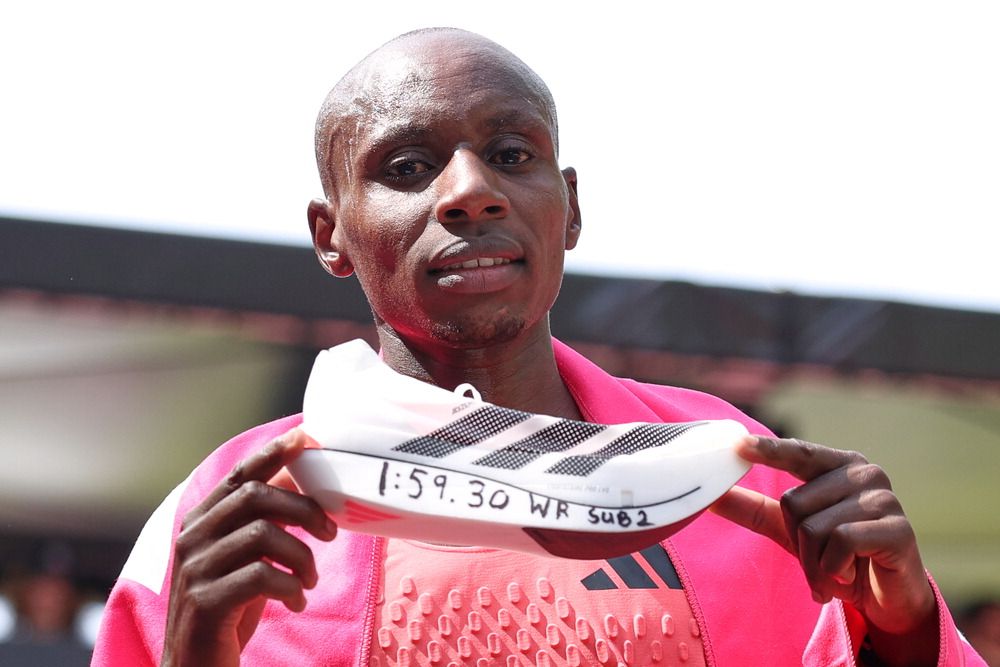
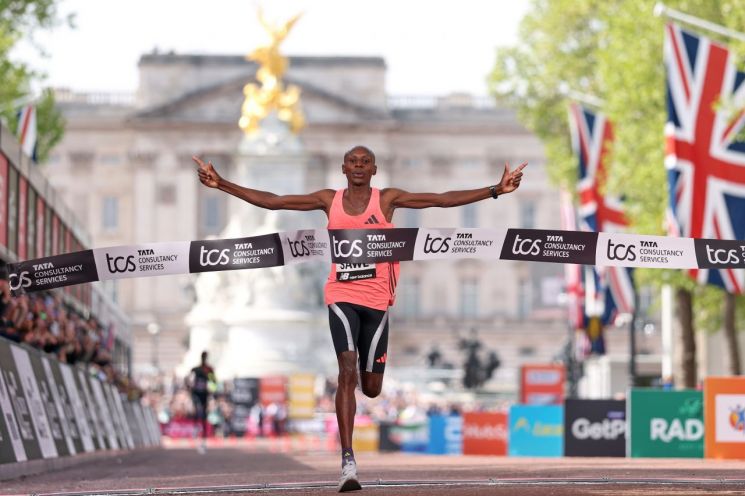
The turning point came in London this past April. Kenya’s Sebastian Sawe completed 42.195 km in 1 hour, 59 minutes, and 30 seconds, breaking the 2-hour barrier for the first time in official records. He was wearing Adidas running shoes, and after his record, he publicly thanked Adidas.
Nike had been first to challenge this barrier. In 2017, Nike invested heavily in the Breaking2 Project with Eliud Kipchoge. Kipchoge’s time was 2 hours and 25 seconds, missing the mark by just 25 seconds.
25.9%→22.9%
Global sports shoe market share, comparing 2022 and the previous year
Reason Three
Eight straight quarters:
Only one direction
The hardest-hit market was China, once a driver of Nike’s growth.
For fiscal year 2026, sales in Greater China fell to 5.85 billion dollars, an 11% drop year-over-year; excluding exchange rate effects, the decline reaches 13%. For the fourth quarter ending in late May, sales dropped 12%, marking eight consecutive quarters of decline.
Premium consumers shifted to On and Hoka, while more price-conscious customers moved to local brands like Anta Sports and Li-Ning.
Greater China sales declined for eight consecutive quarters
Investors buying Nike at this price are not expecting the glory days of 2021 to return. As long as results are even slightly better than the prevailing pessimism, that will be enough.
Forbes called this delisting the “capitulation phase,” when investors completely reset their expectations.On September 21, companies filling the spot left vacant by Nike will be Dell Technologies, Palo Alto Networks, Arista Networks, and SanDisk. Sneakers are out, while data centers and security devices are in. CEO Elliot Hill says Nike is in the middle of the recovery phase. Will Greater China sales rebound? Will inventories normalize? Will wholesale channels recover? Until all three move together, Nike’s time outside the index will continue.
Sources=S&P Dow Jones Indices·Forbes·Yahoo Finance·Euromonitor·Wall Street Journal·Nike 2026 fiscal year earnings report·Kream. The 296 trillion won figure is the won equivalent of the 220 billion dollar drop in market capitalization over the past five years—not actual cash spent by the company, but the change in market valuation. The stock price trend chart is a conceptual summary since the 2021 peak.