
President Lee Jae-myung is shaking hands with U.S. President Donald Trump, who welcomed him at the White House in Washington D.C. during his visit to the United States last year. Photo by Yonhap News
원본보기 아이콘White House Ramps Up Public Pressure
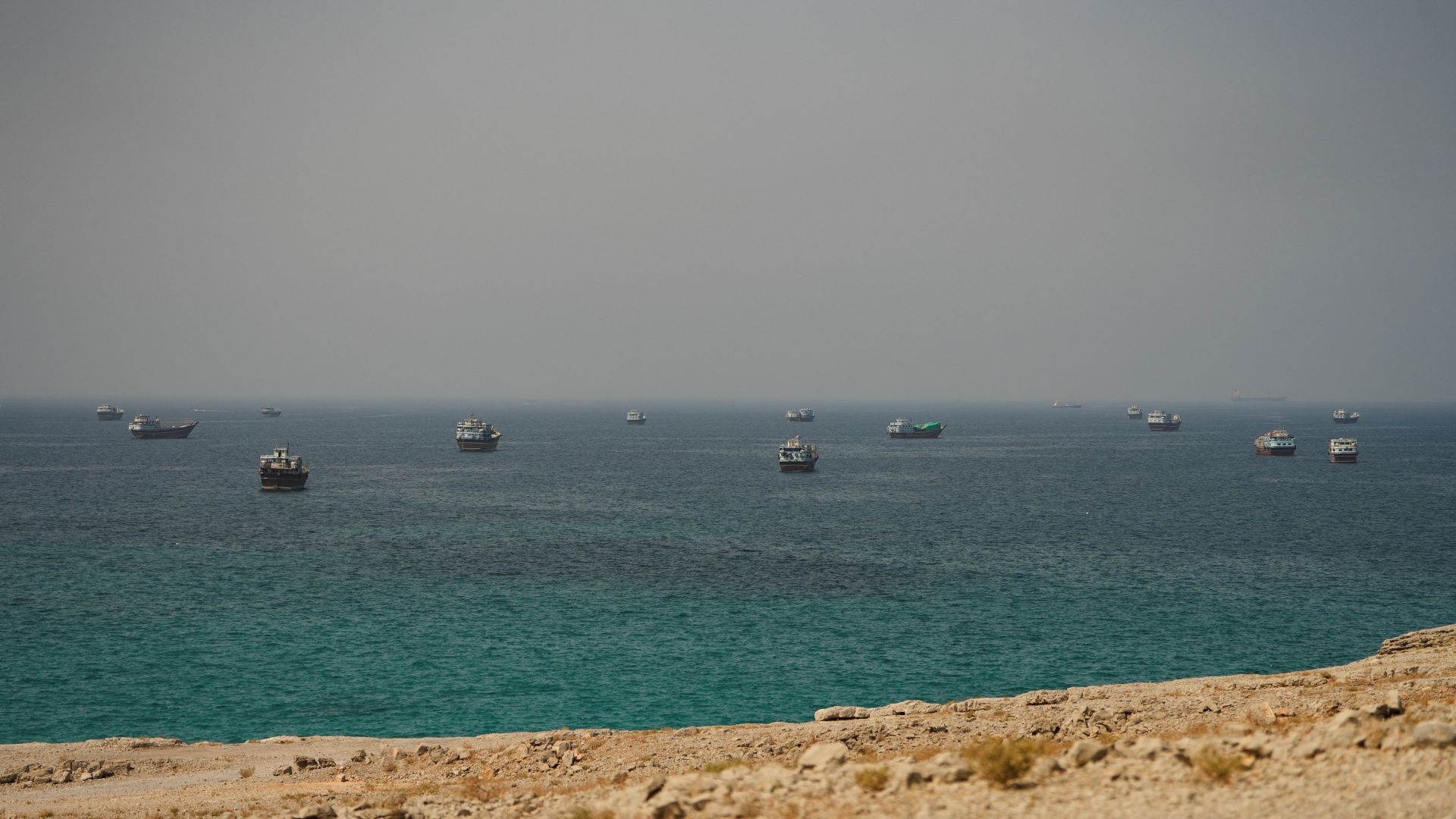
The U.S. administration under President Donald Trump has publicly urged South Korea to commit resources to ensuring maritime security in the Strait of Hormuz. At the same time, Iran has warned that any deployment of military forces will be regarded as active participation in the conflict, thereby increasing the pressure on the South Korean government.
According to Voice of America (VOA) and other outlets on the 6th (local time), a senior White House official responded on the 4th to an inquiry regarding South Korea’s potential measures to contribute to the Strait of Hormuz, stating, “South Korea is one of the major importers of Middle Eastern crude oil,” and “we are still waiting for South Korea to commit resources to the region.” However, the official did not specify the type, scale, or timing of the resources South Korea should provide.
A U.S. Department of Defense official, when asked for comment, replied, “President Trump has publicly stated that he expects allies to step up and support the protection of freedom of navigation in the Strait of Hormuz.” Regarding the possible deployment of South Korean assets or troops, the official avoided specifics and said, “Please refer to the South Korean government for details.”

On the 5th (local time), smoke is rising as the village of Al Mansouri in southern Lebanon was struck by an Israeli airstrike. Photo by AFP Yonhap News
원본보기 아이콘"Protecting the Strait of Hormuz Is Not Solely America’s Responsibility"
The Trump administration has maintained that it should not shoulder the responsibility for safeguarding navigation in the Strait of Hormuz alone, calling on South Korea and other allies to play a larger role.
On this day, U.S. Secretary of Energy Chris Wright, in interviews with CNN and Fox News, emphasized that while U.S. military support is essential to protect vessels passing through the Strait of Hormuz, “this should not be America’s responsibility alone.”
Secretary Wright stated that, currently, military assets participating in the operation—other than those of the United States—are being provided by allies and partner countries within the Middle East, adding, “We hope assets from outside the region will also be deployed, and hope that happens soon.”
He did not refer to any particular country by name. However, given the White House’s statement that it is waiting for South Korea to commit resources, his remarks are interpreted as a call for contributions from allied countries outside the Middle East, including South Korea.

On the 5th (local time), women are walking in front of the student cemetery in Minap Village, southern Iran. Photo by AP Yonhap News Agency
원본보기 아이콘Iran: "If South Korea Intervenes, It Is Direct Military Participation"
As U.S. pressure continues, the South Korean government has also begun to act. A Blue House official on the 4th stated, “It’s not as if South Korea is standing by idly,” and that options being considered include measures for military contribution.
Regarding the possibility of overseas troop deployment, the official commented, “The government may have flexibility in areas that do not significantly undermine the readiness for national defense on the Korean Peninsula.” However, the official explained that the exact nature of the forces to be deployed and the timing have not yet been decided.
Possible options under review by the government are said to include the dispatch of maritime patrol aircraft, logistics support ships, and units specializing in mine detection and removal. If an overseas deployment is to be decided, it will likely require review by the National Security Council (NSC), cabinet approval, and consent from the National Assembly.
Meanwhile, Iran has issued a warning to South Korea, stating that deployment of military forces to the Strait of Hormuz would effectively be considered as entering the conflict. Al Mayadeen, a Lebanese media outlet linked to Hezbollah, cited a senior Iranian official as saying, “Any intervention in the Strait of Hormuz against Iran by South Korea would constitute direct military participation in aggression and war against Iran.”
-

Reporter Hwang Yoonju hyj@asiae.co.kr
-
Edit Sung Kiho kihoyeyo@asiae.co.kr
© The Asia Business Daily. All rights reserved. Unauthorized AI training and use prohibited.