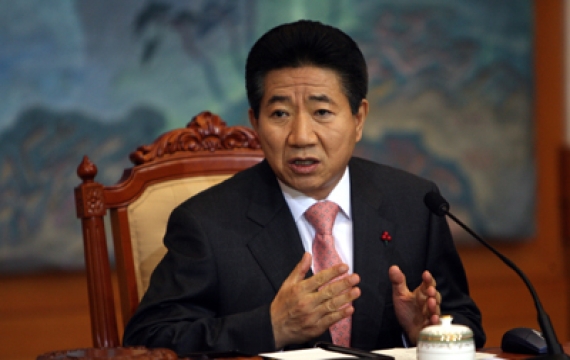
He Could Not Return Empty-Handed
The story of a man who boarded a plane to Japan in April 1963 empty-handed, in search of a packet of ramen
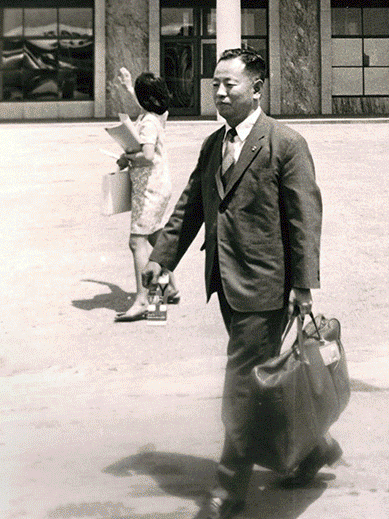

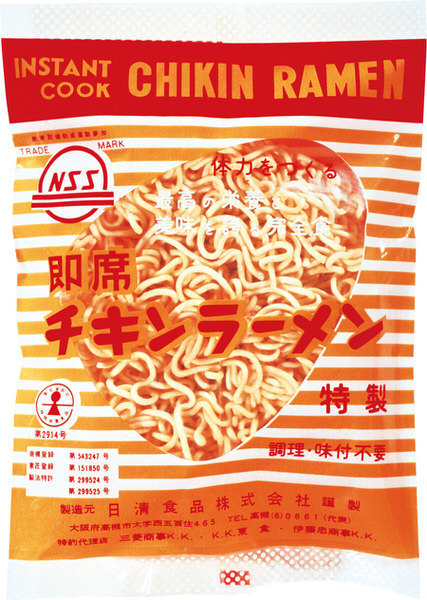
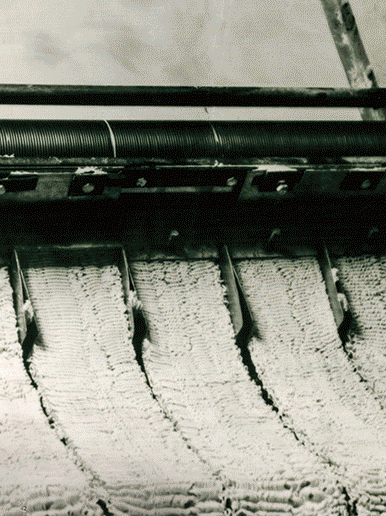
The person the honorary chairman finally tracked down and met in Japan was Kiyosumi Okui, president of Myojo Foods. At the time, Myojo Foods had just launched an instant ramen product to compete with Nissin Foods after learning spaghetti-making techniques from Italy and overcoming various setbacks. The two men were united by their shared concern for the people. Jeon traveled to a factory some distance from Tokyo and went back and forth along the production line more than 20 times to learn the process. Jeon later recalled that Okui had secretly shared the formulation technology, as valuable as a state secret, through his secretary despite opposition within the company.


Ramen, which came across the sea from Japan more than 60 years ago, has emerged as a leading force in the K-food boom and is now challenging its country of origin, Japan.
Japanese company that developed the world's first instant ramen says it faces "an unprecedented sense of crisis"
According to an investor relations (IR) report recently released by Nissin Foods on September 2, the company has launched a new strategic product for the U.S. market, "BOLD TASTES OF TOKYO," and begun an extensive promotional campaign. In November last year, Nissin Foods Holdings President and CEO Koki Ando said during an earnings announcement, "As CEO, I have an unprecedented sense of crisis about the situation our company is facing." Nissin Foods acquired Myojo Foods, which passed ramen-making technology on to Samyang Foods, in 2006.

The concerns of CEO Ando, son of Momofuku Ando, who developed the world's first instant ramen, stem from an actual deterioration in business performance. Nissin Foods' revenue in the Americas fell 2.9%, from 168.6 billion yen (approximately KRW 1.47 trillion) in fiscal 2024 (April 2024 to March 2025) to 163.7 billion yen in fiscal 2025. Core operating profit, calculated by excluding income and expenses related to new businesses and non-recurring "other income and expenses" from operating profit, fell 34.6% year over year to 10.5 billion yen during the same period.
As K-ramen surges ahead... "We fell behind in responding to changing consumer preferences"
A photo released by Japan's Nissin
tells a story
One photo of a German supermarket's ramen shelves. In the image Nissin released to showcase its products, Korean ramen also stands out.
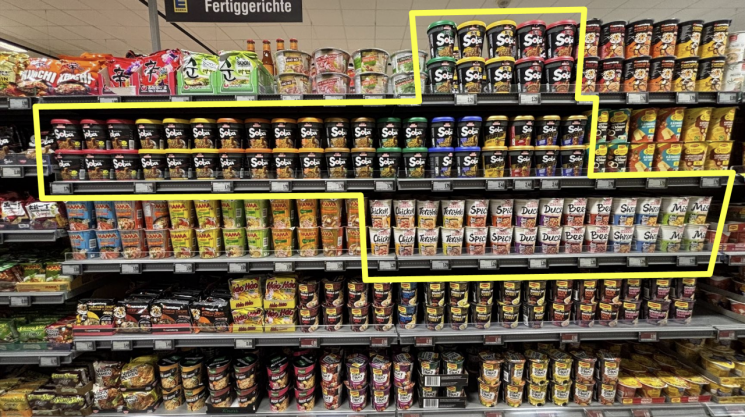
in one photo
featured by Nissin FoodsThe photo appeared in the company's earnings report for last year. Nissin highlighted that its ramen products occupied a central spot on the shelves.
the presence of its own productsBut when you take in the entire shelf, other ramen products also come into view.
Korean ramen sits side by sideNongshim's Shin Ramyun, Soon Ramyun and Kimchi Ramyun are displayed on the same shelf.
a symbol of K-ramen's growthA photo of a German supermarket shelf released by a Japanese ramen company also captures the growing presence of Korean ramen in overseas markets.
Nissin Foods began explicitly describing its competitive position against Korean companies in its earnings presentations in 2023. At the presentation of its fiscal 2023 results in May that year, Nissin Foods said it had "also launched products to counter the spicy flavors and chewy noodles characteristic of Korean products" as part of its differentiation strategy in the U.S. market. It also stressed that "our product lineup is more diverse, including competing products and premium products."
In the second half of the same year, the company said the premium product market in the United States was gaining momentum with the entry of Korean companies, adding that it would respond with promotions and new product launches.
But last year, Nissin Foods ultimately acknowledged that it had been slow to respond to K-ramen's growth. In May last year, while announcing an organizational restructuring at its U.S. subsidiary during a briefing on fiscal 2024 results, it said, "We fell behind in responding to changes in consumer preferences." It added, "Consumers are becoming more sensitive to texture and flavor, and their tastes and preferences are evolving through social networking services (SNS)." The company also said it had "confirmed that sales of Korean companies' instant ramen are accelerating through TikTok and word of mouth." It also emphasized that it was responding to the spicy flavors of major Korean ramen products with a brand called Geki.

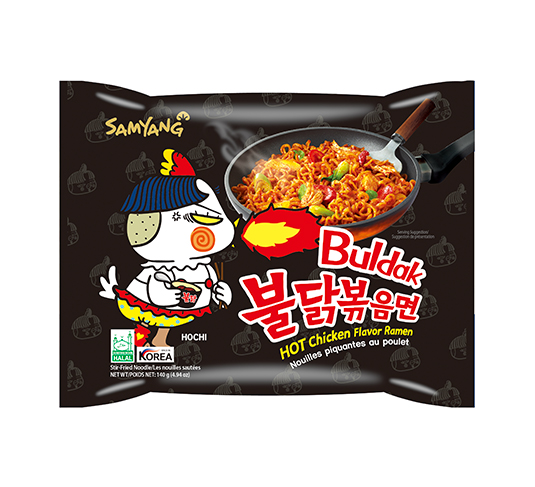


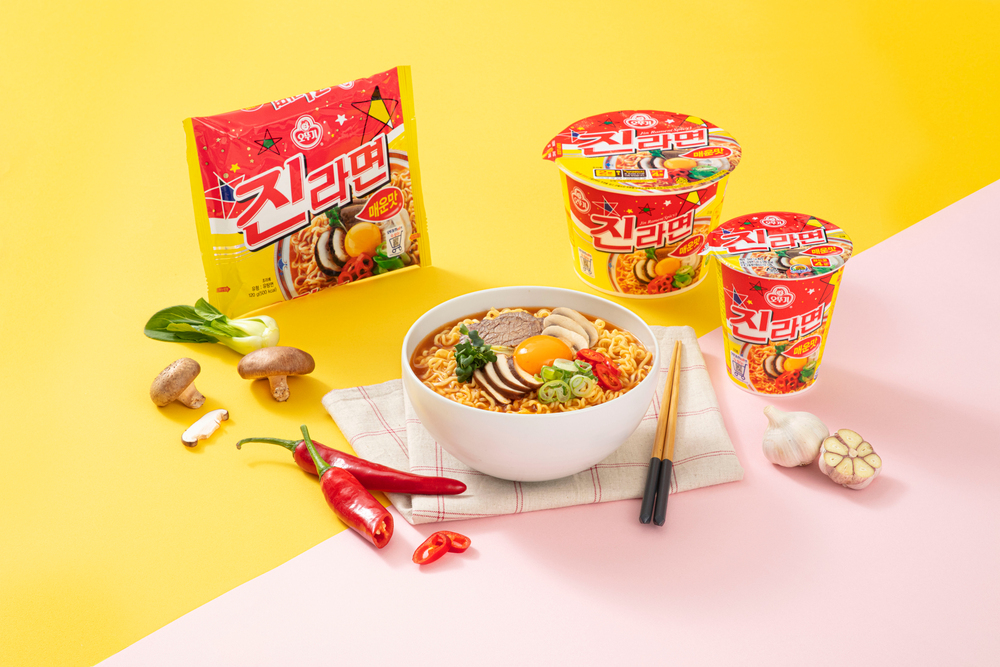
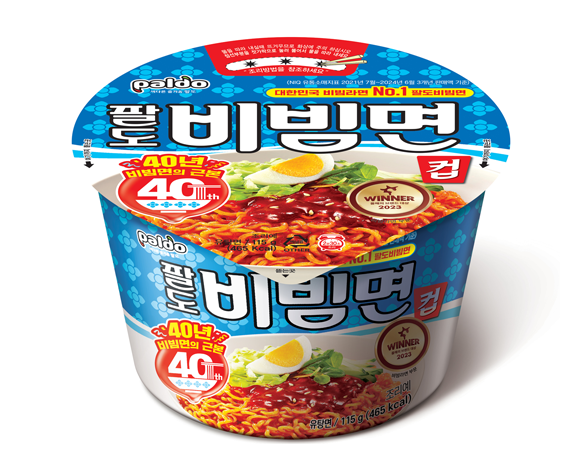

In May this year, Nissin also said in its earnings announcement that "(its ramen products) are still growing, but growth appears to be slowing."
By contrast, Samyang Foods' revenue rose from KRW 388.6 billion in 2021 to KRW 1.3359 trillion in 2024, the first time it topped KRW 1 trillion, and then reached KRW 1.8838 trillion last year. Last year, Samyang Foods surpassed KRW 2 trillion in annual revenue for the first time since its founding. In the second quarter of this year, announced recently, overseas revenue exceeded KRW 600 billion for the first time on a quarterly basis, and the company is expected to surpass KRW 2 trillion in overseas revenue for the full year.
Nongshim's overseas revenue has also continued to grow, reaching KRW 1.4927 trillion last year after first surpassing KRW 1 trillion in 2021. Some forecasts suggest it could exceed KRW 2 trillion in overseas revenue next year, once its Busan Noksan plant, dedicated to export production, is completed in October.

Promotional material for "Yakisoba Stir-Fried Noodles Korean Style Spicy Sweet Carbo" currently sold by Japanese company Nissin Foods. From the Nissin Foods official website.
원본보기 아이콘Nissin Foods previously sparked controversy in 2023 when it launched "Yakisoba Stir-Fried Noodles Korean Style Spicy Sweet Carbo," a product similar to Samyang Foods' Buldak Bokkeum Myun. The product Nissin Foods released closely resembles Samyang Foods' Carbo Buldak Bokkeum Myun in everything from its packaging to its flavor. Its packaging uses a similar pink color to Samyang Foods' product and displays the Korean words for "stir-fried noodles." The product is still on sale.
-

Reporter Jeong Hyunjin jhj48@asiae.co.kr
-
Edit Kim Inwook kiminuki@asiae.co.kr
© The Asia Business Daily. All rights reserved. Unauthorized AI training and use prohibited.