Fatigue with Commercialization in Seongsu-dong and Euljiro
Spaces Discovering Unexpected 'Treasures'
Young Generation Thinks of It as a 'Retro Sanctuary'
Spaces Discovering Unexpected 'Treasures'
Young Generation Thinks of It as a 'Retro Sanctuary'
by Park Jaehyun
by Choi Yujeong
Published 01 Sep.2026 15:28(KST)
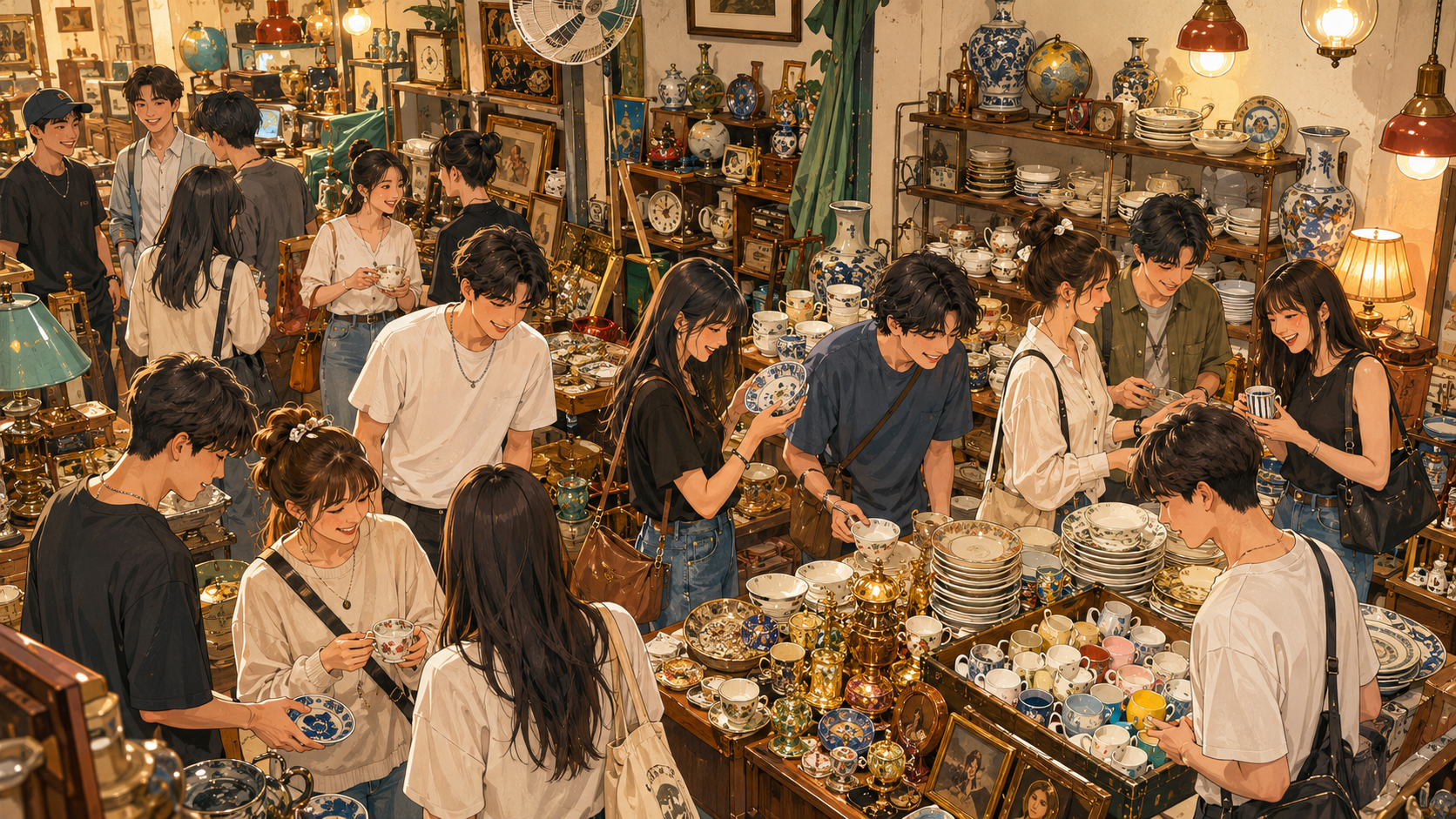
On August 30, I visited the Seoul Folk Flea Market in Dongdaemun-gu, Seoul. As soon as I stepped inside, the musty scent unique to old goods tickled my nose. Faded boxes, antiques, and items imbued with the traces of time filled every aisle, exuding a retro atmosphere. Word of mouth spread that the market sells hard-to-find LP records, vintage tableware, and rare whiskey, and as a result, the market comes alive with young customers on weekends.
The sudden surge in popularity has also been a fresh experience for the merchants. One bowl shop owner explained, “We never advertised, but it seems word spread on Instagram, and since late last year, young customers have been coming non-stop.” Ko, a 58-year-old LP shop merchant, said, “In the past, almost all our customers were people in their 60s or 70s, but now, it’s mainly those in their 20s and 30s. The influx of young people itself has become a major source of energy.”
The Seoul Folk Flea Market, traditionally a venue for antiques and secondhand items, is emerging as a “retro sanctuary” for younger generations. Experts analyze that young people, fatigued by the commercialization of established hotspots like Seongsu-dong and Euljiro, are attracted by the fun of directly hunting for rare vintage items and by the affordable prices. Some point out that for the rise in visitors to become more than just a temporary trend, the market needs a sustainable development strategy.
According to the Seoul Metropolitan Government on September 1, the Seoul Folk Flea Market originated from Hwanghak-dong Dokkaebi Market, an area where antique shops clustered before and after the Korean War in the 1950s. Later, the market was relocated to Dongdaemun Stadium in 2004 due to the Cheonggyecheon restoration project, and it finally settled in its current location in Sinseol-dong, Dongdaemun-gu, in 2008. The market was designated as a Seoul Future Heritage site in 2015 and, in 2023, was named one of the top ten K-Tourism Markets by the Ministry of Culture, Sports and Tourism and the Korea Tourism Organization, solidifying its position as a traditional commercial district. Currently, the market houses 821 stores across a site measuring 7,941 square meters (about 2,402 pyeong).
The market welcomes millions of visitors each year. There were 3.89 million visitors in 2023, 5.51 million in 2024, and 4.45 million last year. As of the first half of this year, 2.29 million people have visited. A Seoul city official explained, “The increase in visitors is due in part to our own online promotion efforts,” but added, “Last year, our promotional budget was cut, which led to a reduction in offline events and a slight decrease in visitor numbers.”
The market’s popularity is interpreted as being connected to changes in other established commercial districts such as Seongsu-dong and Euljiro. Analysts say that as Seongsu-dong has been reorganized around brand-oriented pop-up stores and Euljiro has also experienced commercialization, the younger generation has begun to feel fatigued by artificially designed spaces. Jinju Hwang, adjunct professor of consumer studies at Inha University, explained, “If Seongsu-dong is a space for consuming curated content, the Folk Flea Market is a place where consumers themselves become explorers and collectors, enjoying the discovery of unexpected treasures. This trend reflects the desire of youth to express their unique identities through discontinued vintage props and rare items.”
The low price of antiques and vintage goods is also seen as a factor that increases their so-called “price-satisfaction ratio” (gashimbi). Kim Jihui (26), whom we met at the market, said, “After moving out on my own, I was looking for tableware and came here after seeing a post on social networking services saying you could get dishes for only 1,000 won.”

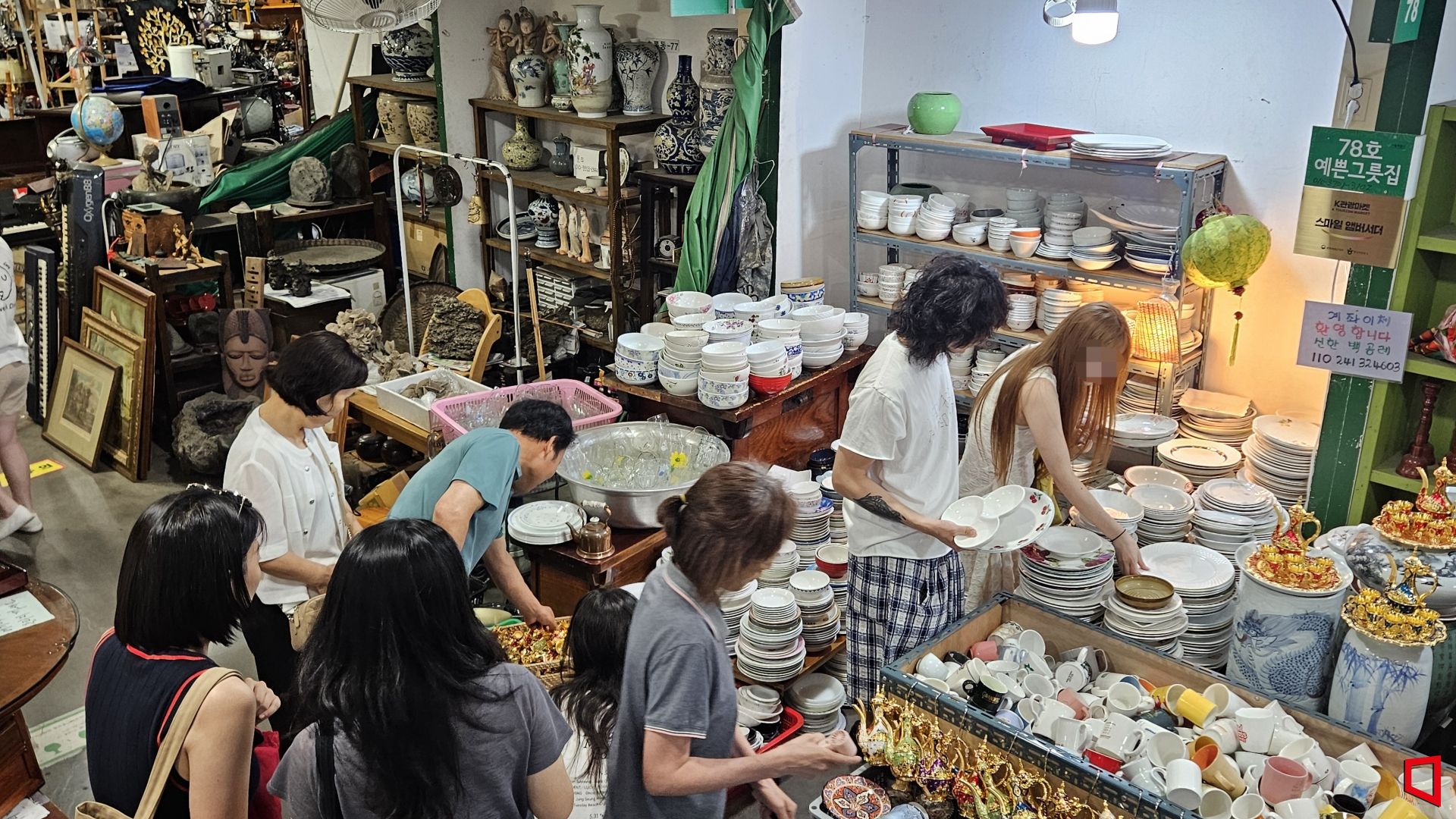
On the 30th of last month, antique shops lined up in Seoul Folk Flea Market in Dongdaemun-gu, Seoul. Every year, the number of visitors to the Seoul Folk Flea Market reaches several million. As of June 30th this year, 2.29 million people have visited. Photo by Jaehyun Park
원본보기 아이콘Experts emphasize the need to seek out sustainable development strategies to ensure that the market’s increase in visitors is not a temporary phenomenon. Jongryn Mo, professor at the Graduate School of International Studies at Yonsei University, said, “Neighborhood commercial districts tend to thrive with coffee, bakeries, and independent bookstores at the core, but the Folk Flea Market stands out with its unique focus on vintage. It should not remain a one-off spot for buying used and secondhand items, but be developed as a cultural production hub where visitors can pursue new cultural and analog experiences.”

Park Jaehyun now@asiae.co.kr
Choi Yujeong yjchoi@asiae.co.kr
© The Asia Business Daily. All rights reserved. Unauthorized AI training and use prohibited.









