During the COVID-19 remote semester
Alumni ties have weakened
Anxiety about digital crime also contributes
Alumni ties have weakened
Anxiety about digital crime also contributes
by Park Hosu
by Choi Yujeong
Published 28 Aug.2026 14:28(KST)
"I feel uncomfortable knowing that alumni I barely know would keep my face in their homes."
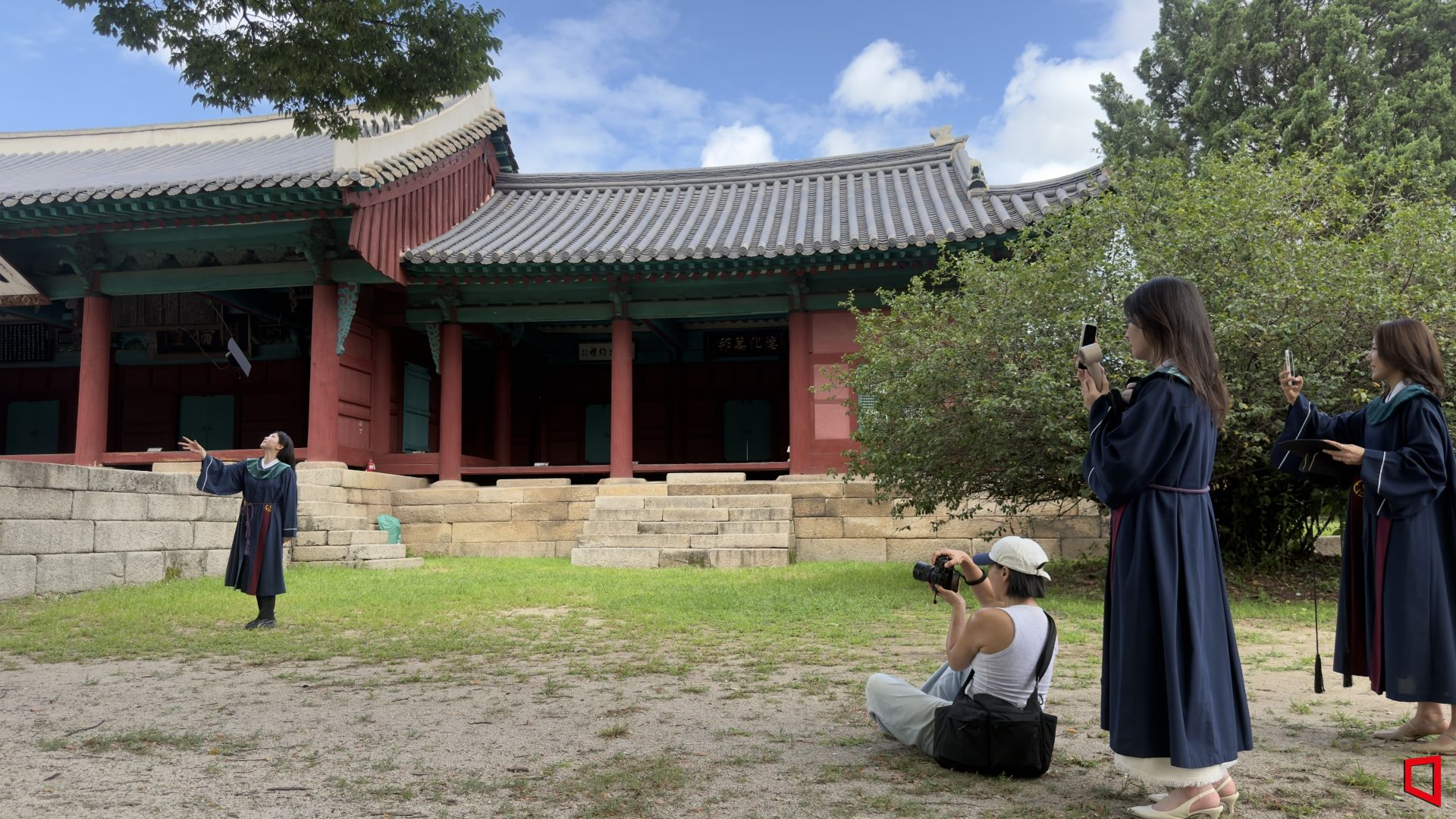
On the afternoon of August 25, in front of Myeongryundang at Sungkyunkwan University in Jongno-gu, Seoul, the sound of camera shutters echoed under the traditional tiled roof and dancheong (multicolored painting on wooden buildings). For the 2026 fall graduation ceremony, graduates dressed in navy gowns threw their caps in the air, fully embracing the "cosmos graduation" tradition. Friends gathered around a freelance snap photographer crouching low to capture the moment, and graduates' friends grouped up, holding their smartphones high to take their own pictures.
This scene is noticeably different from the past, when students took group graduation photos in stiff poses with their fellow alumni. Instead of the traditional graduation album packed with faces of hundreds of alumni, more people now choose to record their own special moments. Choi Jisu (24), who graduated that day, commented, "After attending remote classes, I barely know anyone in my department, so I feel no attachment to a group album," adding, "I asked a freelance snap photographer and my friends to take pictures for me."
This trend shows the traditional group graduation album, once considered an essential keepsake of campus life, falling out of favor—replaced by personal snap photography and affordable framed photo booths that students can choose according to their own preferences.
Even the staff of on-site photo studios, who tried to attract graduates, sighed in frustration. Lee (61), a studio photographer who had set up a large stand on one side of Myeongryundang displaying past sample photos, confessed, "I worked for a long time in broadcasting before opening my studio, but students these days rarely take studio photos. Now that everyone has their own camera or smartphone, the so-called graduation photography season is a thing of the past."
Lee opened a two-page photo album made in a personal album style, offering to take pictures for "50,000 won," but passing students and parents reacted coldly. Most students had already hired a snap photographer through social media platforms of their choice. One graduate commented, "Albums only gather dust after you buy them. As long as I get a few good shots to post on my Instagram feed, that's all I need."
Even without spending hundreds of thousands of won to call in a professional snap photographer, many students opt for a light memory shot with friends using a school-branded photo booth for just 4,000 to 5,000 won. For students concerned about their budgets, this is an affordable option that leaves lasting memories with much less financial burden.
In fact, the graduation album purchase rate on university campuses has dropped to single digits. This year at Korea University, only 350 out of 3,885 graduates (9%) bought an album. A representative from Sungkyunkwan University also stated, "We still sell personal albums every year, but the sales volume is shrinking, and this year we didn't even reach 100 copies in total."
Behind these changes are weakened departmental ties after the COVID-19 pandemic and growing anxiety about digital sexual crimes such as deepfakes.

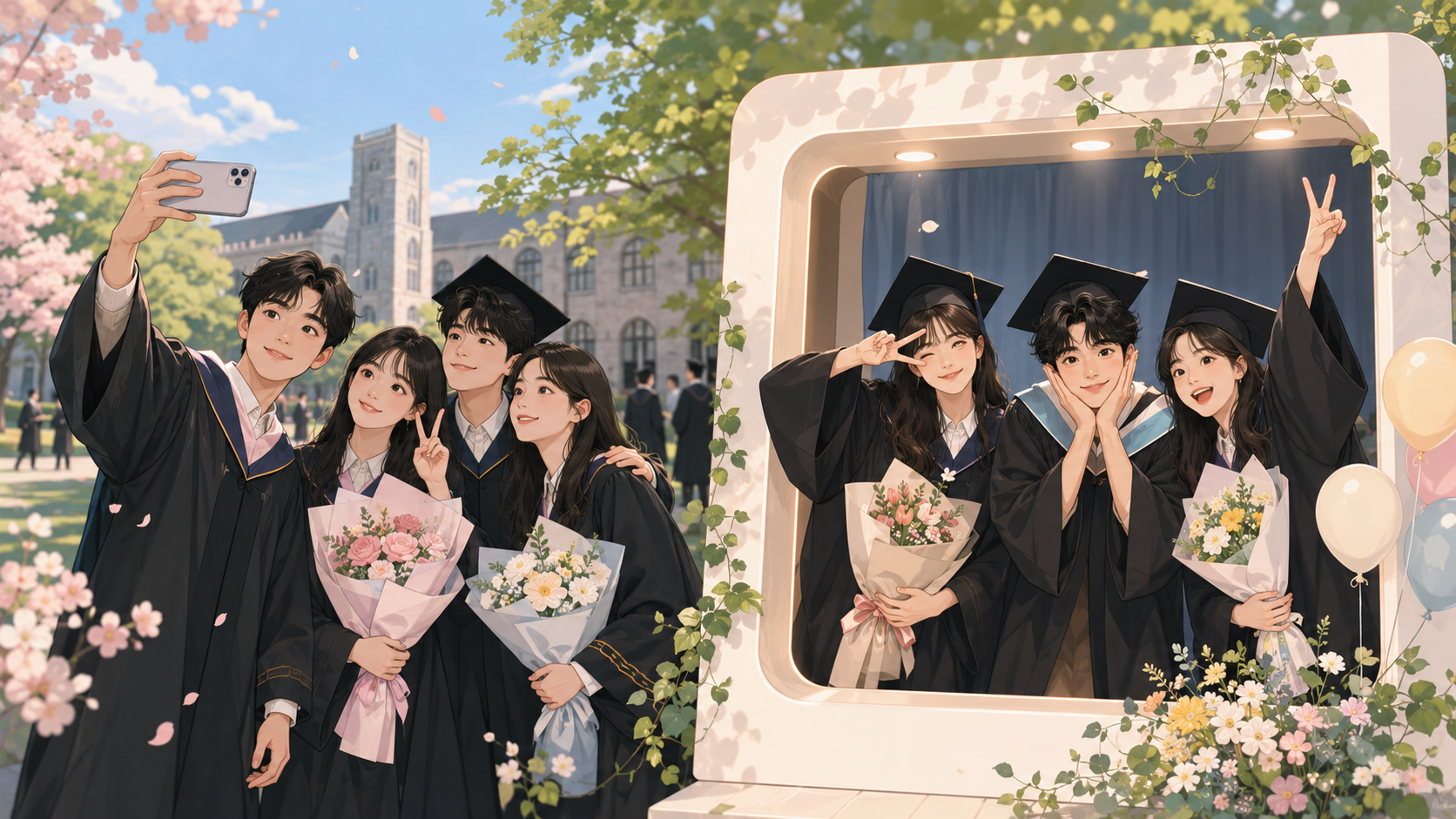
Na-yeon Kim (25), a 2026 graduate of Sookmyung Women's University, Department of Chinese Language and Literature, Class of 2021, and her friend Jeong-in Heo (25) are posing holding a photo taken with the school's exclusive frame. Photo by Na-yeon Kim
원본보기 아이콘In fact, a survey of 3,537 kindergarten, elementary, middle, and high school teachers nationwide by the Korean Federation of Teachers' Associations found that 93.1% of respondents are concerned that graduation album photos could be misused in crimes such as deepfakes, underscoring the depth of public concern. On campuses as well, students increasingly avoid exposing their faces and personal information to strangers, accelerating the disappearance of the group photo culture that included professors and alumni..
Experts point to the disappearance of graduation albums as a structural change resulting from both generational characteristics and digital risks. Lee Youngae, professor of consumer studies at Incheon National University, said, "It is the result of individualistic tendencies combined with anxieties about private information exposure through deepfakes. The standardized, school-centered culture of group records will rapidly disappear not only on campuses but also throughout society as a whole."

Park Hosu lake@asiae.co.kr
Choi Yujeong yjchoi@asiae.co.kr
© The Asia Business Daily. All rights reserved. Unauthorized AI training and use prohibited.