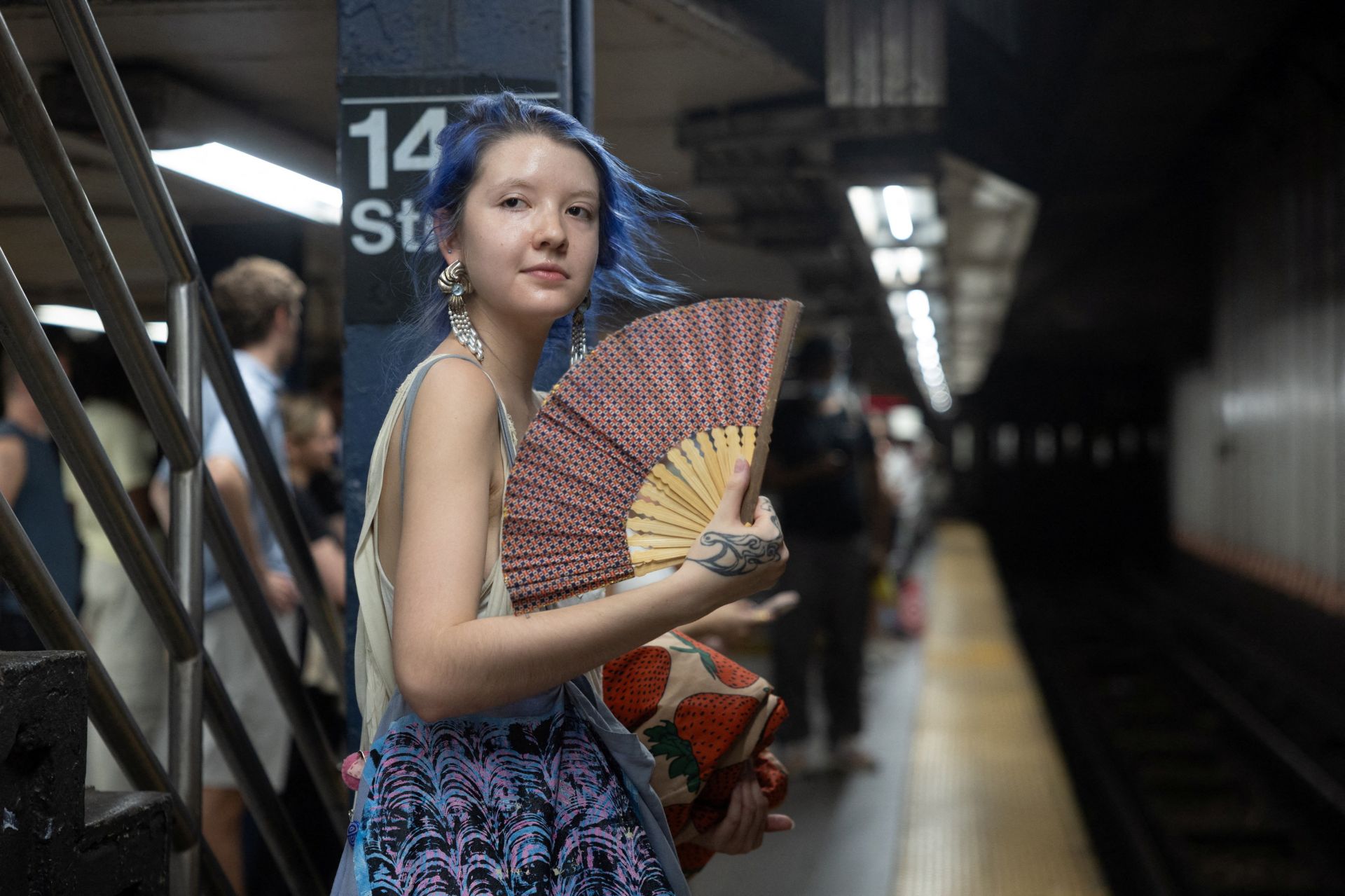
New York City's "Subterranean Sauna" Problem, a Century in the Making
"It's a waste to just discard all this subway heat." An unconventional solution emerges.


The City of New York is set to experiment with storing the heat generated in subway platforms during the hot summer months deep underground. The plan is to capture the heat that accumulates during the summer and store it underground, then release it during winter to provide heating for nearby public buildings.
According to reports from the New York Times and New York Post on August 10 (local time), New York City Mayor Zohran Mamdani announced that the city will launch a feasibility study for a "thermal energy network" system at the Brooklyn Bridge–City Hall/Chambers Street station near City Hall in Lower Manhattan. The study is supported by the New York State Energy Research and Development Authority with a budget of 800,000 dollars (about 1.1 billion KRW). Depending on the outcome, design work could begin as early as the beginning of next year.
Subway-Generated Heat,
Becomes a City Heating Resource
A plan to capture heat from subway platforms on hot summer days, store it in the bedrock below, and then release it in winter to provide heating for nearby city-owned buildings through a thermal energy network.
Platform temperature during peak summer
Borehole depth below the unused platform
Provided by New York State Energy Research and Development Authority
Recycling waste heat from platforms as a heating resource

We are finally putting an end to the infamous reputation of Chambers Street Station, one of the hottest and least comfortable stations in the 100-year-old New York subway system.

“This project could become a model that can be applied to other subway stations in the future.”
“It's still unclear how much this technology will lower station temperatures.”
“If it works as intended, it could be a win for everyone.”
During summer, temperatures on New York City subway platforms soar to around 38 degrees Celsius. Mayor Mamdani has described the phenomenon as an "underground sauna." This improvement project is the first of its kind in the U.S. public transportation system.
The city and transit authorities plan to bore holes 500 to 600 feet (approximately 152 to 183 meters) below the unused platforms at Chambers Street Station to store excess heat. The collected heat will be transported through pipes and stored underground, then recovered during winter for heating nearby city-owned buildings. Similar geothermal energy recovery systems are already in use at St. Patrick's Cathedral, residential apartment buildings in New York, and in several European cities.
Cooling subway platforms in New York is particularly challenging due to the open design and complex infrastructure. Although subway cars are equipped with air conditioning, the hot air released from train cabins escapes into stations and tunnels, causing platform temperatures to spike.
Not Traditional Cooling,
But a Redesign of the City's Heat Flow
The key is not simply to cool down the hot air on the platforms. The core of this experiment is to capture that heat, store it underground, and then use it again when the seasons change.
After cooling down the train cabins, the hot exhaust air, along with other heat emissions from the system, is released into stations and tunnels.
A study is underway to bore deep holes below the unused platforms at Chambers Street Station and install heat exchange piping.
A seasonal storage system that traps summer heat underground until it is needed in winter.
When temperatures drop, the stored heat is recovered and used for heating nearby city-owned buildings.
Will this transform the platform experience?
The MTA notes that it remains unclear how much the actual temperature will decrease. The first focus of the study is to see whether there is a noticeable change for passengers.
Turning wasted heat into a valuable energy resource
If the summer heat that was discarded can be redirected for winter heating, a perennial city problem can become a seasonal resource.
Potential for expansion to other New York stations
The MTA believes that if this system proves effective, it could be expanded as a model for other subway stations as well.


-

Reporter Choi Young zero02@asiae.co.kr
-
Edit Oh Hyunyoung hyun05@asiae.co.kr
© The Asia Business Daily. All rights reserved. Unauthorized AI training and use prohibited.