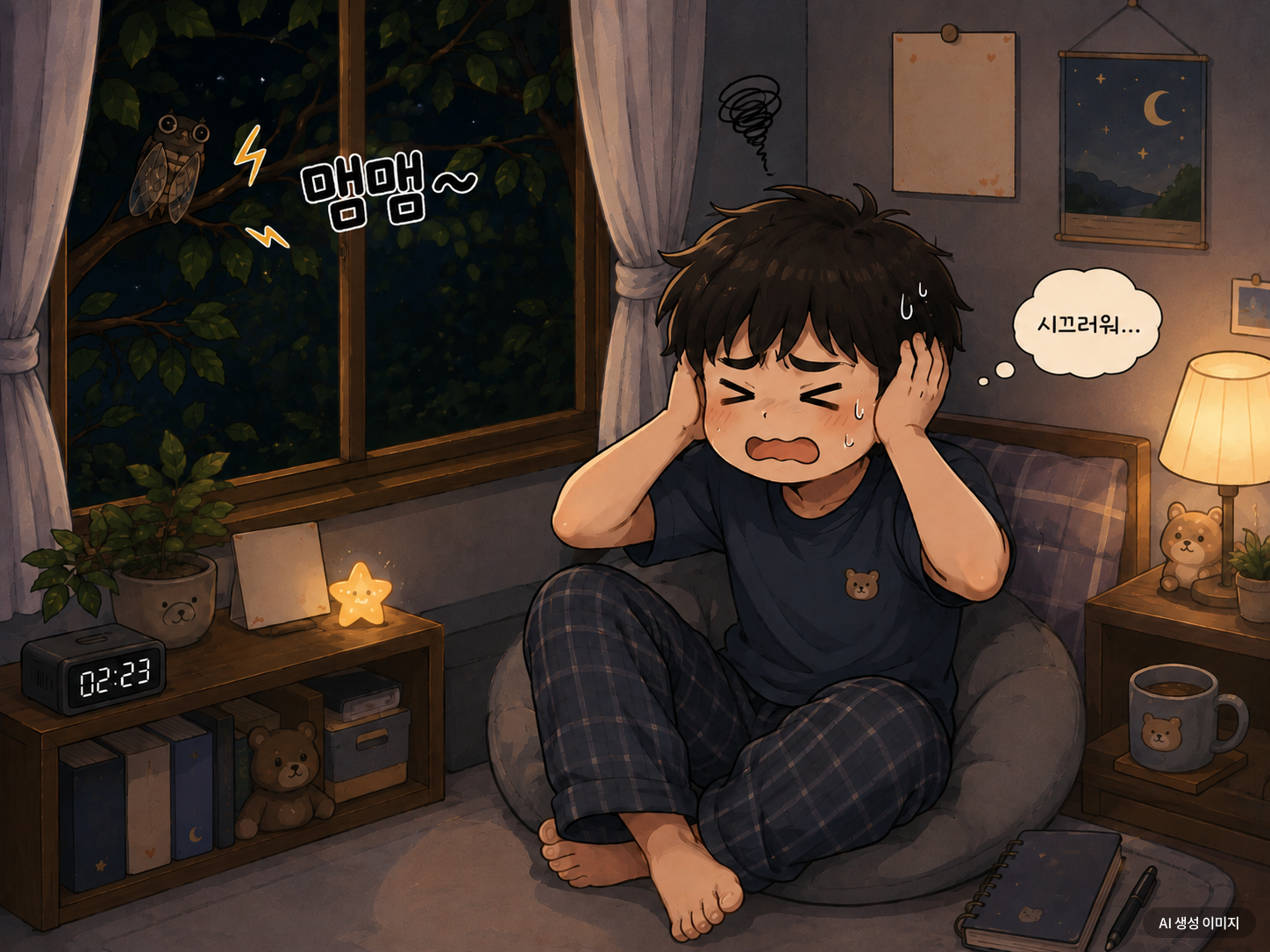
A case in China where a man developed noise-induced hearing loss after prolonged exposure to cicada sounds has attracted public attention.
Recently, a man living in Hangzhou, China, visited the hospital due to a sudden hearing problem and was diagnosed with noise-induced hearing loss in the high-frequency range.
Quality of Sleep Impacted by Cicada Noise Every Night

A man residing in Hangzhou, China, sought medical attention after experiencing a sudden issue with his hearing and was diagnosed with noise-induced hearing loss. The attending physician determined that various factors contributed to this sudden hearing loss, including prolonged exposure to cicada sounds. The man reported that the incessant cicada noises every night even reduced his quality of sleep.
Dr. Diaotongxiang, an otolaryngologist at Beijing People's Hospital, explained that noise-induced hearing loss is a gradual sensorineural hearing decline that results from prolonged exposure to sound levels exceeding 85 dB (decibels).
The Sound of Swarming Cicadas Is Comparable to a Power Drill

The sound produced by a single male cicada at close range is about 70 dB, which does not directly damage hearing. However, when swarms of cicadas cry out at the peak of midday heat, the noise can rise to between 80 and 85 dB, and in severe cases, may even exceed 90 to 100 dB. Dr. Diao said, "A portable power drill generates about 83 to 88 dB of noise," adding, "The noise in a forest filled with swarms of cicadas can match or even surpass the sound produced by a power drill."
He further explained that cicada sounds are concentrated in the high-frequency range of 3,000–8,000 Hz, which can directly impact the basilar membrane and auditory cells in the human cochlea. Prolonged stimulation by high-frequency noises leads to fatigue in auditory cells, eventually causing them to perish.
Dr. Diao advised, "Although it may vary depending on the intensity of the noise and length of exposure, if the hearing loss is temporary swelling or functional decline, or simply a functional impairment, hearing often gradually recovers after leaving the noise environment." However, he emphasized, "Because auditory cells, once destroyed, do not regenerate, it is important to avoid prolonged exposure to noise."
Go Home Avoiding the Cicadas!
-

Reporter Kim Jinsun carol@asiae.co.kr
-
Edit Kong Sumin hyunhj@asiae.co.kr
© The Asia Business Daily. All rights reserved. Unauthorized AI training and use prohibited.