
"100 Days Since Entering Korea...The Secret to 'ChaZi's Success"
Kim Jwahyun, CEO of Charge Korea: "A brand that naturally blends into customers' everyday lives"
"I hope that ChaZi does not become just a fleeting trend, but grows into a brand that naturally becomes part of customers' daily lives."
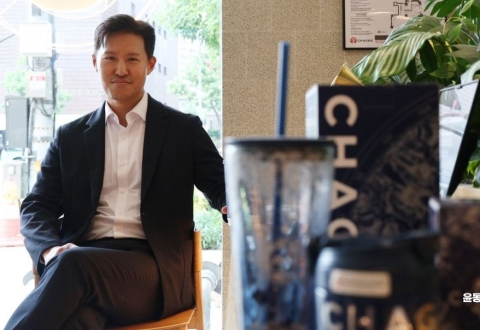
Kim Jwahyun, CEO of Charge Korea, said this during an interview with The Asia Business Daily as the company approaches its 100th day in the Korean market on July 27, 2026.

"Premium Milk Tea Strategy Proved Effective Amid Price Competition"
ChaZi, commonly known in Korea as the "Jang Wonyoung Milk Tea," is a modern global tea brand that opened its first store in Yunnan Province, China, in 2017 and has rapidly expanded since then.
During a period when low-priced milk tea brands were flooding the Chinese market, ChaZi achieved rapid growth by targeting health-conscious younger generations with a premium strategy—freshly brewed tea at the store combined with fresh milk. Their modern store interiors and sophisticated branding also played key roles. Inspired by leading global coffee brands such as Starbucks, founder and chairman Zhang Junjie aimed to expand ChaZi as a global modern tea brand.
As of May 2026, ChaZi operates around 7,500 stores in Greater China—including mainland China, Hong Kong, and Taiwan—as well as in Malaysia, Thailand, Singapore, Indonesia, the Philippines, Vietnam, and the United States. In April 2025, the company was listed on the NASDAQ, earning a corporate valuation of 6.2 billion dollars (approximately 9.1 trillion won).
Seven Stores in Seoul Alone... Four-Hour Wait Lines on Opening Day
On April 30, 2026, ChaZi opened three stores in key commercial districts such as Gangnam, Yongsan, and Sinchon in Seoul, officially introducing its products to Korean consumers. In just three months, the number of stores in Seoul alone increased to seven. Soon, an eighth store will open in Jongno. The first store opening drew wait lines of up to four hours, and even now, posts on social networks indicate that customers must sometimes wait up to an hour to get a drink. CEO Kim said, "The response has exceeded our expectations," adding, "We are seeking ways to encourage repeat visits and ensure lasting customer experiences at our stores."
Such achievements by Charge Korea have been closely watched by the global headquarters of ChaZi. Chairman Zhang visited Korea discreetly for the opening of the first local store last April to observe the scene in person. Due to ChaZi's rapid rollout to five other countries last year, visiting all locations was not feasible; however, this year, the Korean market is receiving special attention and Chairman Zhang even witnessed the opening day crowds. Born in 1993, Chairman Zhang lost both parents at age 10, spent seven years homeless, and spotted his opportunity while working at a Taiwanese milk tea chain at 17—eventually founding ChaZi and building a rags-to-riches success story.
Kim noted, "Both the founder and the global headquarters are very interested in Korea. The Korean tea market itself is important, and at the same time, Korean culture has a significant impact on other countries," adding, "When we opened the Gangnam flagship store (one of our first), it became the talk of the town in both China and the United States." He also explained, "Not only the founder, but global executives frequently visit Korea. As Korea is seen as a crucial market for expansion, there is a lot of communication aimed at growing the brand and enhancing customer experience for local consumers."
According to Kim, Chairman Zhang focuses less on specific business methods and more on reminding the team of the core values and vision that ChaZi should pursue.
"Coffee Republic Korea? The Potential for Tea Growth Is Clear"
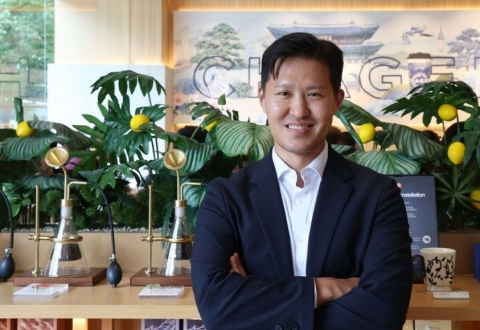
Marking its ninth anniversary this year, ChaZi has been accelerating its overseas expansion since last year. The brand places a strong emphasis on delivering a consistent premium tea experience. Approximately 7,000 stores worldwide use the same standardized tea leaves produced in China and follow unified manufacturing processes. For this reason, all Korean stores will be directly operated for the foreseeable future.
CEO Kim commented, "Ensuring consistent service and high quality is crucial—especially at the early stage of business, maintaining quality is of utmost importance." In line with its localization strategy, the company is also working to develop menu items tailored to the Korean market.
Kim sees significant potential for tea in Korea’s beverage market, which has long been dominated by coffee and often referred to as a "coffee republic." He said, "When we analyze sales data, there are certain peaks—such as after lunch or late in the afternoon—where customers continuously seek out our products," adding, "We see great potential in this, and our long-term goal is for ChaZi to become more integrated into daily life." He also noted that rather than competing with other domestic tea companies, it is more important to cooperate in expanding the overall tea market in Korea.
Meanwhile, global headquarters ChaZi Holdings reported sales of 12.91 billion yuan (about 2.8 trillion won) in 2025, a 4.1% year-on-year increase. In the first quarter of 2026, sales reached 3.546 billion yuan, up 4.5% compared to the same period last year. Chairman Zhang, in a recent earnings announcement, stated, "ChaZi has now entered a stage of mature, stable, and sustainable high-quality growth," adding, "This year, our goal is to perfect every point of contact with our customers."
-

Reporter Jeong Hyunjin jhj48@asiae.co.kr
-
Edit Lee Seonju sjlee109@asiae.co.kr
© The Asia Business Daily. All rights reserved. Unauthorized AI training and use prohibited.
Recommended Content
-

-

-
 F-35 Base... 'Cheongju Air Base' Confirmed as Final Choice 2026.11.27 07:02
-
 From Five Airlines to Two... The Air Route Map Is Being Redrawn 2026.11.26 11:23