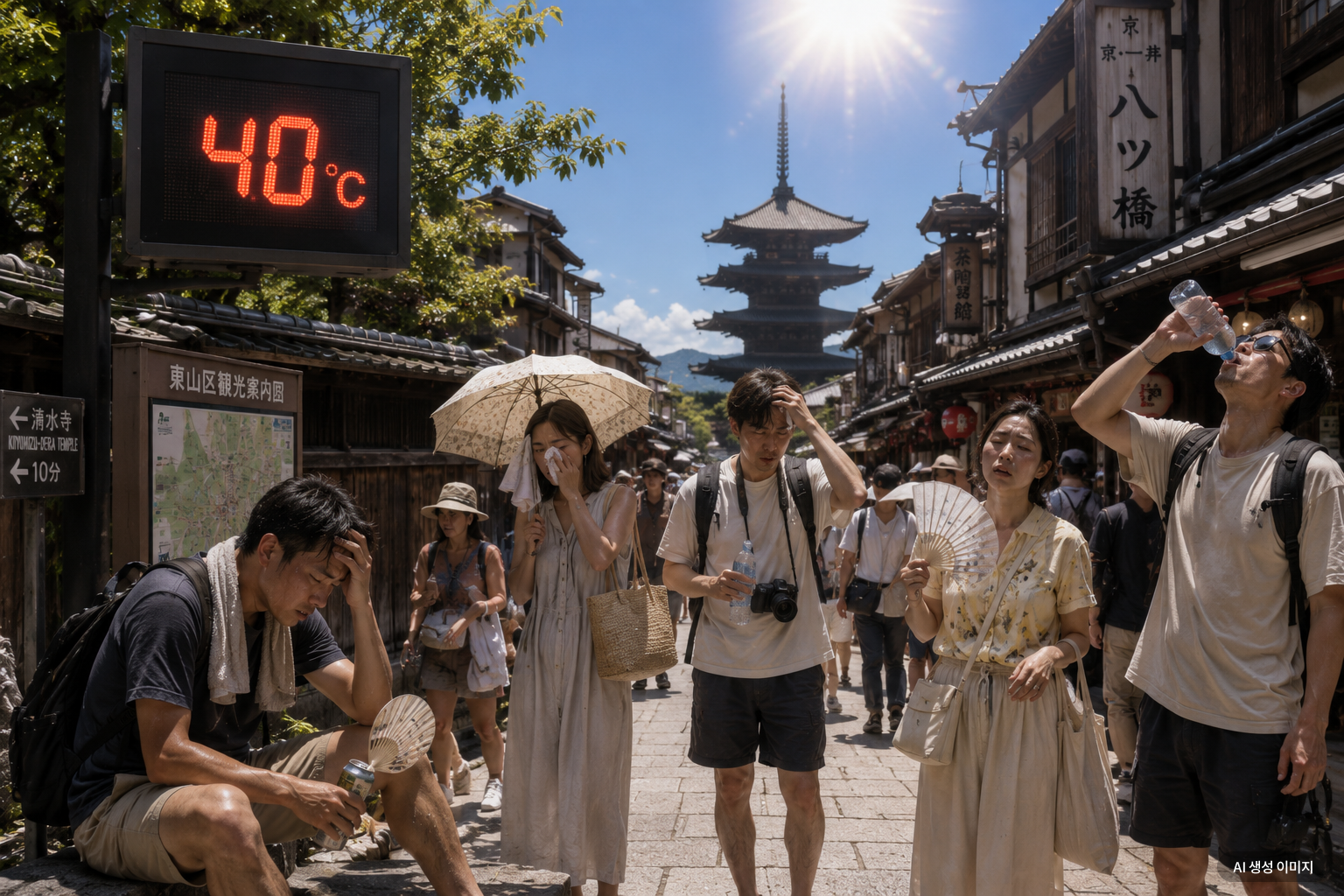

The photo is not directly related to the specific content of the article. Photo by Reuters and Yonhap News.
원본보기 아이콘Over 10,000 Hospitalized in a Week... Most Victims Are Elderly
According to Japanese public broadcaster NHK on the 22nd, Japan's Fire and Disaster Management Agency announced that 10,857 people were hospitalized for heat stroke nationwide between July 13 and July 19. This figure is more than double the previous week's total of 4,580. Compared to the 4,064 transported in the entire month of June, it is well over twice as many.
Among those taken to hospital, 14 people died. There were 4,382 patients in serious or moderate condition and 6,361 with minor symptoms. By region, Osaka Prefecture reported the highest number of cases with 1,041 patients. By age group, those aged 65 or older accounted for 6,734 cases, representing more than half of the total.

Most heat stroke cases occurred at home rather than outdoors. About 42% of all those transported—4,523 people—collapsed in their own homes or apartments. The next most common location was roadways (2,326 cases), followed by outdoor stadiums, parking lots, and train stations, where cases also surged.
40-Degree Regions Multiply... Response Measures Strengthened
The ongoing heatwave continues to shatter meteorological records. According to BBC, on the 21st, Tajimi City in Gifu Prefecture reached 40.3 degrees Celsius, Toyota City in Aichi Prefecture hit 40.1 degrees, and Hachiman District in Gujo City, also Gifu Prefecture, recorded 40 degrees. For both Toyota City and Hachiman District, these were the highest-ever temperatures observed since records began.
On that day, out of 914 weather observation points nationwide, 278 locations recorded highs exceeding 35 degrees. Among them, three sites surpassed 40 degrees Celsius. In 42 out of Japan’s 47 prefectures, heat stroke alert warnings were issued.

The Fire and Disaster Management Agency stated, "A heatwave that results in many people being hospitalized or dying can only be described as a disaster," urging, "You should drink water frequently before you even feel thirsty and make full use of air conditioning." The agency also emphasized, "During outdoor work, please take sufficient breaks and strictly follow all preventive measures."
As the extreme heatwave shows no sign of ending, authorities are stepping up their response. Tokyo Metropolitan Government, for example, is expanding countermeasures this summer by recommending staff wear lightweight clothing such as T-shirts, shorts, and sneakers instead of suits and ties while at work.
-

Reporter Choi Young zero02@asiae.co.kr
-
Edit Kim Yumi ymkim91@asiae.co.kr
© The Asia Business Daily. All rights reserved. Unauthorized AI training and use prohibited.







