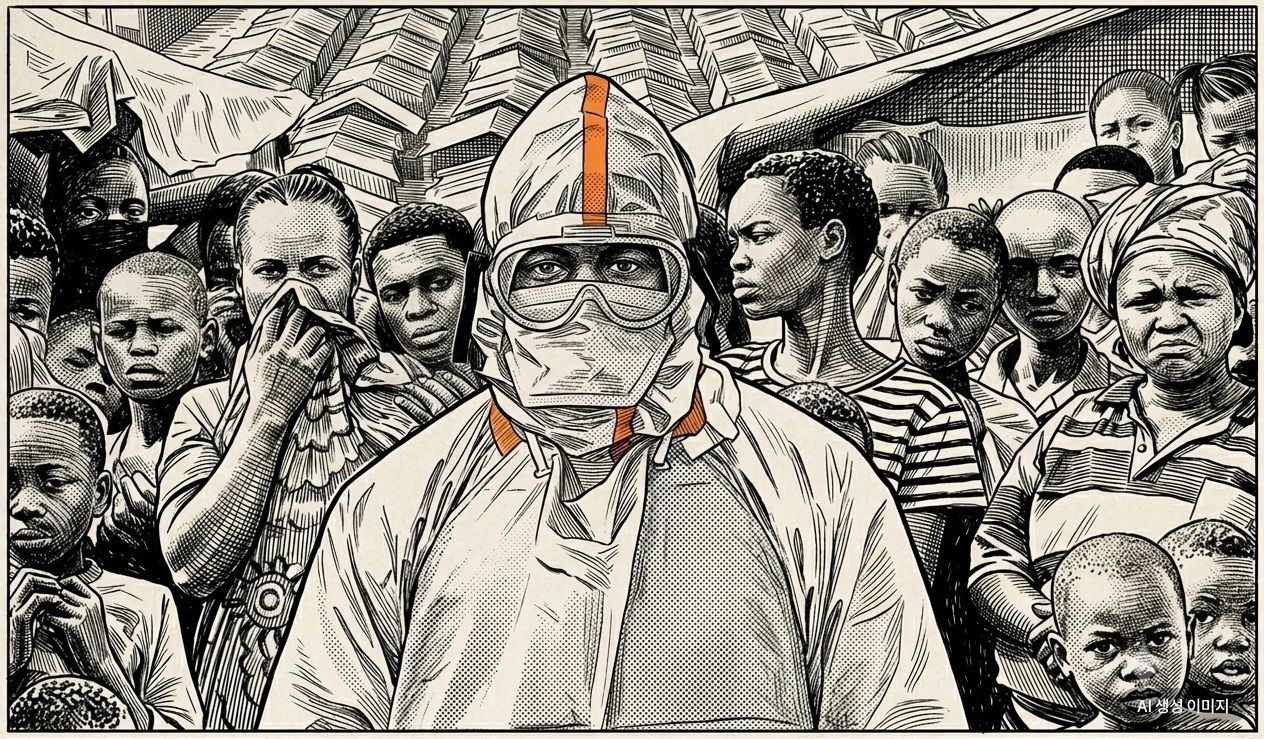


Nearly two months after the Ebola outbreak began in the Democratic Republic of the Congo (DR Congo), the cumulative death toll has approached 1,000. The rapid spike is being driven by a rising number of cases where the route of infection cannot be identified.
According to the Associated Press on the 22nd (local time), the Ministry of Health of DR Congo announced that, as of the 20th, there were 2,473 cumulative confirmed cases of Ebola and 999 deaths. At least 737 patients are currently being treated in quarantine centers and hospitals.
The cause of this outbreak, which was officially declared on May 15, 2026, is the Bundibugyo virus, a rare strain for which no approved vaccine or treatment exists. To date, there is no authorized vaccine for the Bundibugyo lineage, although experimental vaccines are under development.
This Ebola outbreak is recording the fastest increase in fatalities ever seen in history. During the 2013–2016 outbreak, known as the worst on record, at least 28,000 people were infected and more than 11,000 died, but it took roughly eight months for the cumulative death toll to reach 1,000.
While Ebola outbreaks are rare, the disease is extremely contagious. It is transmitted through bodily fluids such as vomit, blood, and semen from infected individuals, and can be fatal if it progresses to severe stages.
Health authorities stated that, for 80% of new confirmed cases, the source of infection remains unidentified. The Associated Press reported that "this indicates that disease-control authorities are unable to keep pace with the spread".
The Congolese authorities have stepped up epidemic control in Ituri—the epicenter—and across four additional provinces where confirmed cases have emerged.
However, repeated attacks targeting medical facilities and public health teams have led to the withdrawal of healthcare workers and international aid organizations from certain areas. Some healthcare workers have also gone on strike, citing non-payment of wages since the outbreak began.
On July 21, Jean Kaseya, Director General of the Africa Centres for Disease Control and Prevention (Africa CDC), called for the strengthening of measures to curb the Ebola outbreak during the Africa Health Summit in Ghana. Kaseya emphasized, "If this outbreak is not contained now, it could become one of the most catastrophic Ebola crises ever recorded worldwide".
1,000 Deaths in Just 2 Months...
Ebola in DR Congo The Worst Disaster on Record
Ebola in DR Congo is spreading at the fastest rate in history, with explosive growth that remains uncontrollable due to the lack of an available vaccine and inability to track routes of transmission.
3 Main Risk Factors
That Broke the Pandemic Defense
Rare Mutant Virus
Bundibugyo virus detected—a rare strain with no approved vaccine or treatment
80% Infection Route Unknown
Most new cases unknown source, spreading to five provinces including Ituri
High Contagion via Bodily Fluids
Extremely high risk of fatality from severe infection through vomit, blood, semen, or other bodily fluids
Triple Hardships
Paralyzing the Medical Response
Security Instability
Attacks and violence targeting medical facilities and public health teams have forced major international aid groups to withdraw
Medical Staff Strike
Local healthcare workers have launched mass strikes after not receiving wages since the outbreak
Breakdown of Disease Control
The absence of frontline medical personnel has left on-site response capacity completely paralyzed
"If We Fail to Contain It Now,
Catastrophe on a Global Scale"
Unless this outbreak is contained now, it will be remembered as one of the most devastating Ebola crises in recorded history.
-

Reporter Yun Seulgi seul97@asiae.co.kr
-
Edit Hong Jayeon hongzaa@asiae.co.kr
© The Asia Business Daily. All rights reserved. Unauthorized AI training and use prohibited.