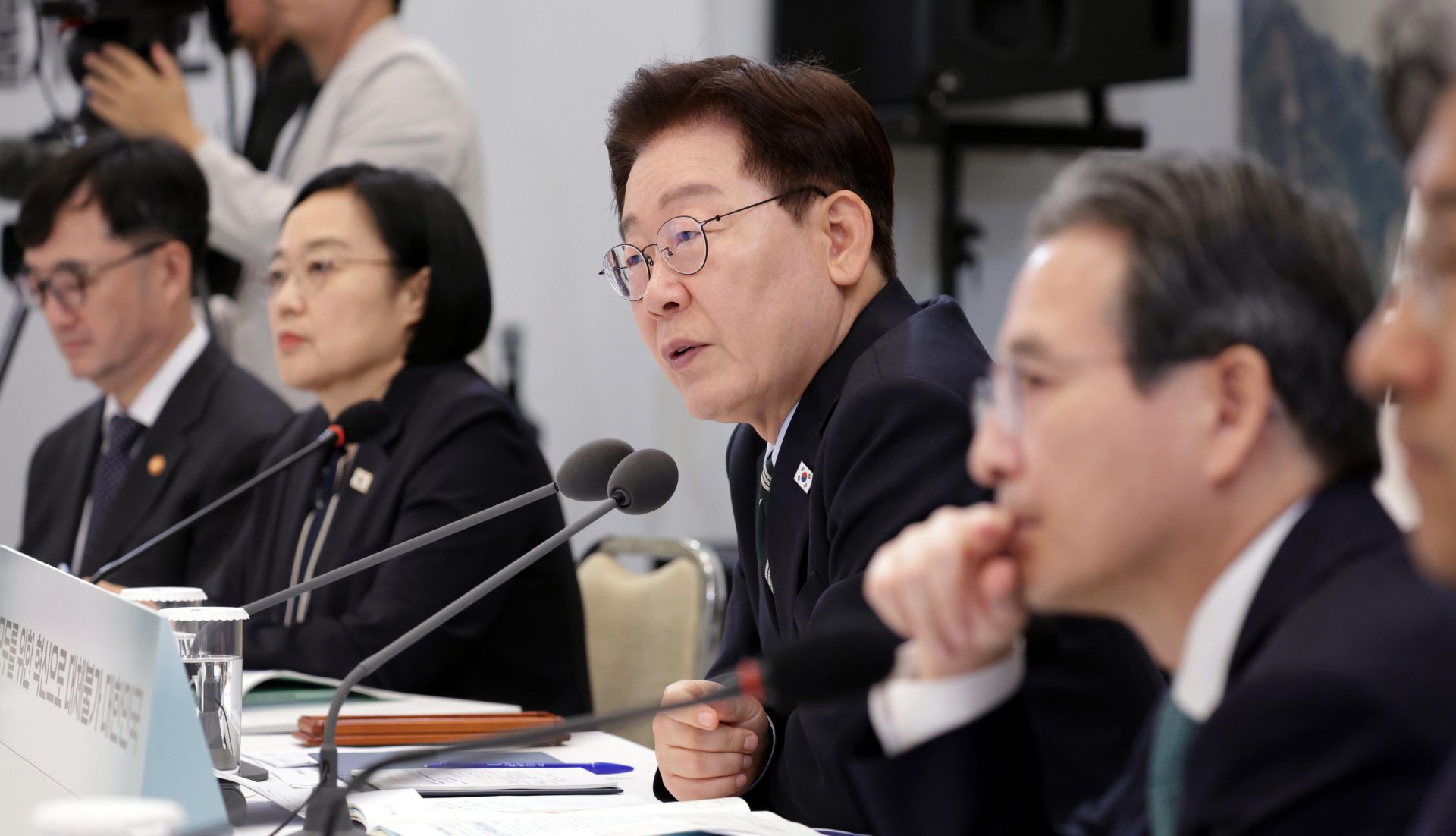
President Lee Jae-myung pointed to excessively low fares in relation to the increased share of rail transportation.
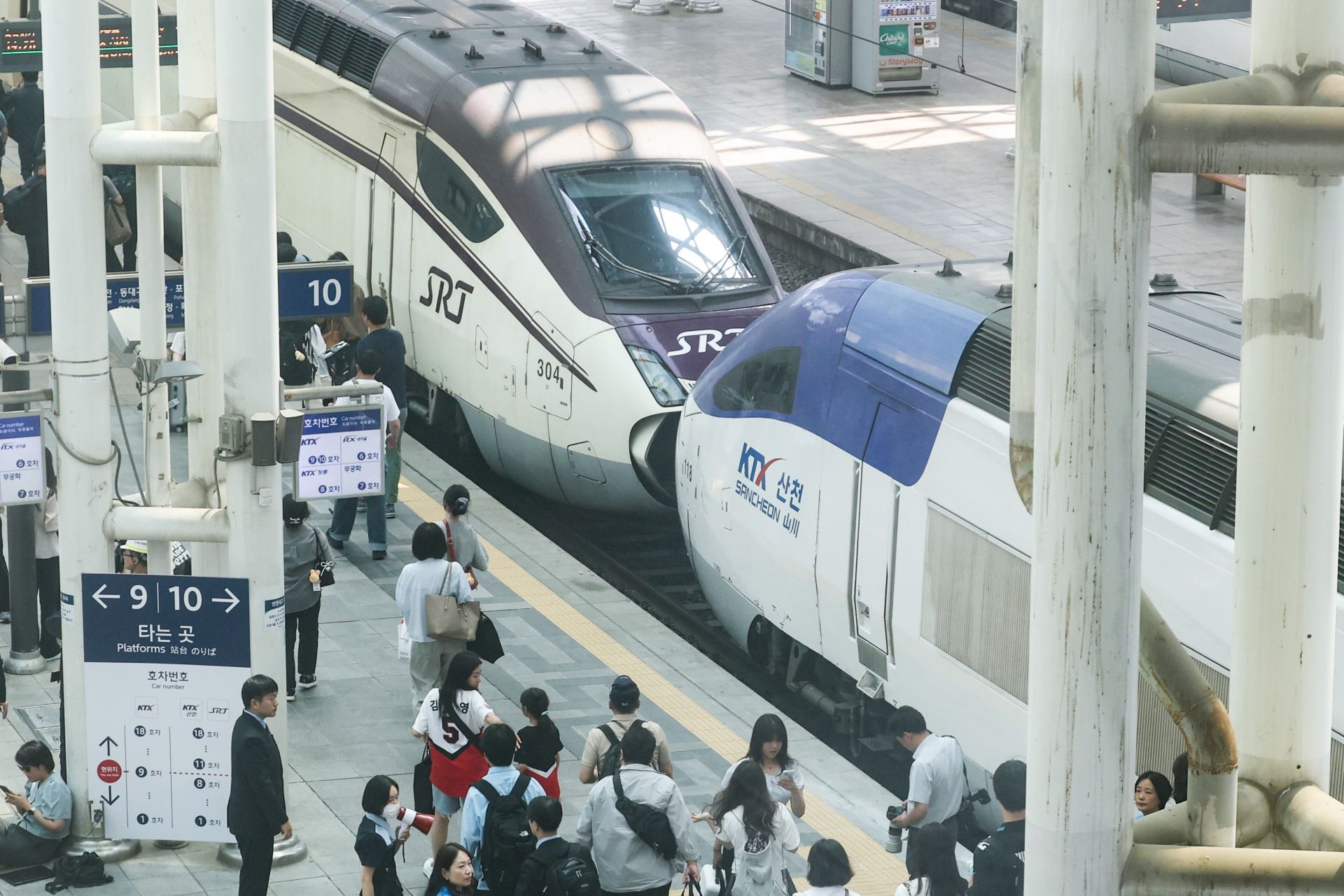
High-speed rail fares have been frozen for 15 years, and Korea Railroad Corporation (KORAIL) has consistently raised the need for fare increases during that time.
Reader Poll
Do you agree with Korail's fare increase?
Results will be released after you make your selection.
Reader Poll Results0 Participants
Agree
0%
Disagree
0%
Loading results.
You can only participate once per browser.
KTX Fares Frozen for 15 Years... Even the President Says "It's Too Cheap"
Nevertheless, concerns remain about triggering a chain reaction of fare increases across other public transit modes, as well as the prevailing sentiment among fiscal authorities that Korail, as a state-owned company, should prioritize internal cost-control efforts. As a result, arguments for a fare hike have not gained traction.
In this context, the President himself stepped in to lend weight to the need for a fare increase. Ironically, however, the plan to integrate high-speed rail operators, which is being advanced on his orders, is likely to make a fare hike difficult for now. Following the integration, Korail will become a monopoly operator of high-speed rail, increasing the likelihood of tighter monitoring by competition authorities.
At the Ministry of Land, Infrastructure and Transport's second-half work report held on July 16, President Lee Jae-myung pointed out, "The rail share of transportation is rising too high," and added, "Meanwhile, the share of bus transportation is falling, and electric express bus routes are being shut down." He continued, "Because it's much cheaper to take the train than a bus, express bus services are disappearing," and emphasized, "Since this is a structural issue, the Ministry must consider the disappearance of express bus routes and other related issues comprehensively."
The share of rail in public transportation continues to increase each year. The rail share rose from 15.5% in 2011 to 16.8% in 2020, and expanded further to 18.2% in 2023. By contrast, the bus share fell from 24.1% in 2011 to 19.5% in 2023. As bus use has dropped, a total of 491 intercity and express bus routes across the country have been discontinued between 2020 and 2024.
Diverging Trends in Prices and Korail's Performance
Consumer Prices Up Over 30%, Korail’s Deficit Deepens
Consumer Price Index
Compared to 2011
30% or more
According to the Ministry of Data and Statistics, last month's Consumer Price Index was up over 30% compared to 2011.
2011Last month
Korail’s Financial Performance
Last year
Revenue
7.317 trillion won
Year-on-year
+6.6%
Operating loss (previous year)
73.6 billion won
Operating loss (last year)
352.4 billion won
Revenue increased but losses widened
The fundamental reason is that high-speed rail fares are low. The Consumer Price Index, as tallied by the Ministry of Data and Statistics, shows that prices as of last month are up over 30% compared to 2011. Given that KTX and SRT fares have been frozen during this period, regular high-speed rail users are likely to perceive the fares as cheap.
Korail has openly asserted for years that a fare hike is inevitable in order to address prolonged financial deterioration. The fare freeze, now in its 15th year, is cited as a considerable burden on the company's financial status. Korail's revenue last year was 7.317 trillion won, up 6.6% from the previous year, but its operating loss widened to 352.4 billion won from 73.6 billion won the year before. The company especially stresses that as high-speed rail service ages beyond 20 years, fare hikes are necessary to secure the massive funds required for new rolling stock.
SR Fares 10% Cheaper than Korail... What Happens After the Merger?
Despite resistance from fiscal authorities, Korail has continued to press for the need to raise fares. However, discussions on fare adjustments have been suspended since the current administration began pushing to merge the high-speed rail operators. In fact, after the integration, Korail is expected to match the lower fare structure of SR, which is about 10% less expensive, resulting in a further perception of lower fares. Korail has previously cited expanded seat supply and cost reductions as key justifications for the integration—a situation that offers little rationale for subsequent fare hikes.

Last October, participants held placards urging the integration of high-speed rail services (KTX-SRT) at a general mobilization rally for railroad workers held near Samgak Station in Yongsan District, Seoul. Photo by Yonhap News Agency
원본보기 아이콘Competition authorities may directly regulate fares. Typically, during corporate mergers, authorities scrutinize the possibility of product or service price increases, and companies often pledge not to raise prices for a set period. For example, in the Korean Air–Asiana Airlines merger, fares were not to be raised for 10 years.
Fare hikes after a merger are often seen as a clear reduction in consumer benefits. According to a Ministry of Land, Infrastructure and Transport official, "With respect to the fare structure after the merger, a final decision will be made following the merger review process. Before a decision by the Fair Trade Commission, it is not possible to disclose any changes to the fare structure."
Tae-seung Kim, President of Korail, emphasized the need for political and governmental discussion regarding fare increases. At a press briefing held in Gwangsan District, Gwangju, in May, President Kim stated, "Fares have not increased once in the last 15 years, resulting in significant financial pressure," and cautioned, "At this rate, while trains will continue to run, the inability to generate profits could trigger a crisis." He added, "We also want to consider making the fare system more flexible, for example, raising fares during peak times to adjust demand." However, he stressed, "National consensus is fundamentally needed, and there must also be agreement with the economic ministries and political circles."
-

Reporter Lee Jieun jelee0429@asiae.co.kr
-
Edit Lee Seonju sjlee109@asiae.co.kr
© The Asia Business Daily. All rights reserved. Unauthorized AI training and use prohibited.