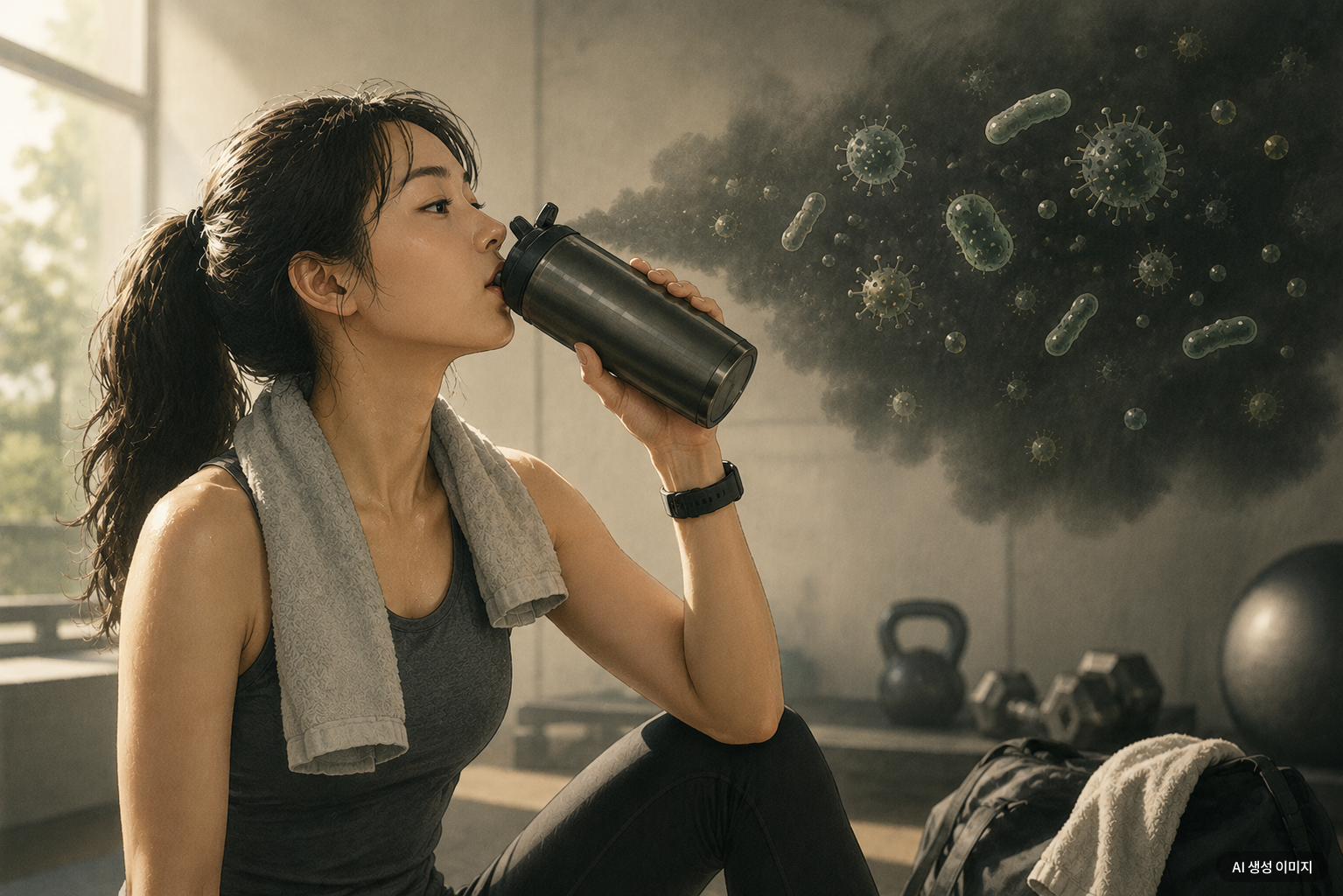

According to an analysis by Korea Water Resources Corporation, while the number of germs was initially almost nonexistent, it increased to about 900 after taking a sip directly from the tumbler. After 3 hours at room temperature, the number of germs rose to around 30,000, and after 24 hours, it surpassed 40,000. This is because bacteria from the mouth entered the tumbler and proliferated rapidly in the warm environment.

Overseas studies have also confirmed hygiene issues related to tumblers. In an experiment conducted in the United States, the number of germs detected in a regular tumbler was up to 40,000 times greater than those found on a toilet seat. In a university study, some water bottles were found to contain bacteria - including coliforms - far exceeding hygiene standards.

Experts explain that the internal structure of tumblers actually creates a favorable environment for bacteria growth. In particular, narrow and damp gaps such as the rubber seal on the lid, the straw, and the drinking spout can easily trap beverage residue. When drinks that contain sugar and protein, such as coffee, lattes, or protein shakes, are stored inside, bacteria can multiply even faster. In the summer, higher temperatures and humidity accelerate the breeding speed even more.

Experts recommend that, instead of rinsing only with water, you should use a neutral detergent or baking soda for thorough cleaning, and rinse with hot water above 60 degrees Celsius. Additionally, they stress that the lid, rubber seal, and straw must be separated and scrubbed inside every nook and cranny, and then all parts should be completely dried before reassembling, to minimize bacterial growth.
-

Reporter Choi Seungwoo loonytuna@asiae.co.kr
-
Edit Hur Eunmi eungmimon@asiae.co.kr
© The Asia Business Daily. All rights reserved. Unauthorized AI training and use prohibited.




!["Any Hair Loss Treatment Tech?" VC Announces the Startups It's Looking For [VC Now]](https://cwcontent.asiae.co.kr/asiaresize/304/2026101321374959503_1791895068.jpg)