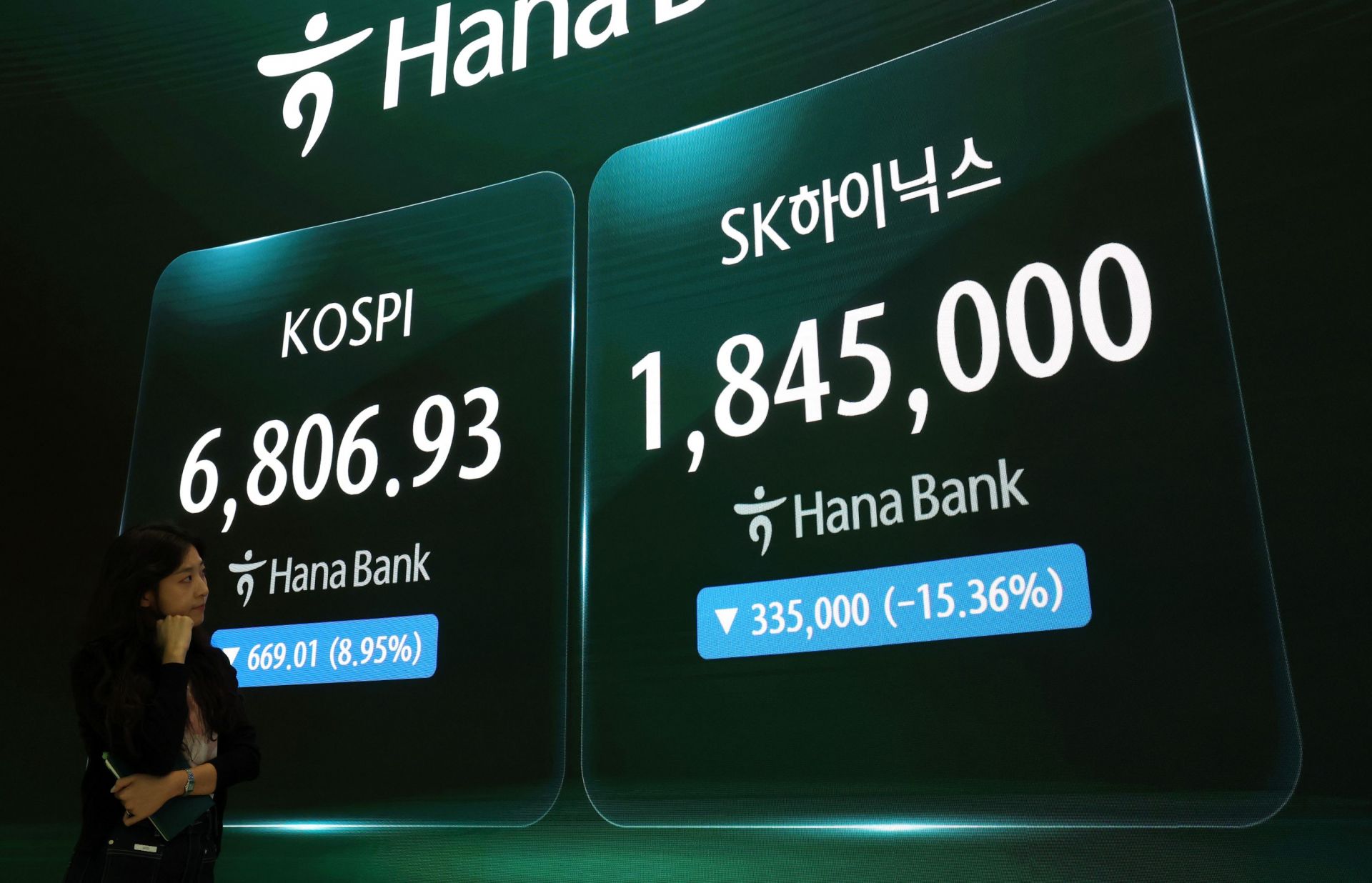
On July 14, global investment bank Goldman Sachs analyzed that mechanical selling by single-stock leveraged exchange-traded funds (ETFs) amplified the decline in the KOSPI index.
In its report titled "KOSPI, Testing Key Technical Supports," Goldman Sachs explained, "The rapid deleveraging (forced selling) of recently launched single-stock leveraged ETFs has increased intraday volatility."
The report noted that some 2x leveraged ETFs that use Samsung Electronics and SK hynix as their underlying assets fell by more than 30% in a single day. As a result, asset management companies carried out additional sales of the underlying stocks in order to maintain the target leverage ratio. This process created a vicious cycle where falling stock prices triggered more selling.
Samsung Electronics and SK hynix Underlying Assets Leverage ETF Falls 30% in One Day Further Selling of Underlying Assets to Match Target Leverage Stock Price Decline Triggers a Vicious Cycle of Selling
Estimated 62% of Domestic Institutional Net Selling Comes from ETF-related Liquidation Volume
KOSPI 6800 Level Is a Critical Support Line If Not Maintained, Falls to 6500 Level If This Breaks, Could Drop to 6100~6000 Level
Goldman Sachs estimated that 62% of domestic institutional net selling came from ETF-related liquidation volumes. Most of the net selling by foreign investors originated from passive funds such as program trading, with the volume of program selling reaching 1.18 billion dollars.
However, Goldman Sachs pointed out that, relative to the index's drop, there were not many block trades (large-scale sales) by institutional investors. Selective selling appeared only among some trend-following hedge funds.
Goldman Sachs identified the 6,800-point level as the most important technical support for the KOSPI. If the KOSPI fails to maintain this level, the next support is at the 6,500 level, about 4.5% below the previous day's closing price. If this is also breached, the index could fall further to the 6,100–6,000 range.