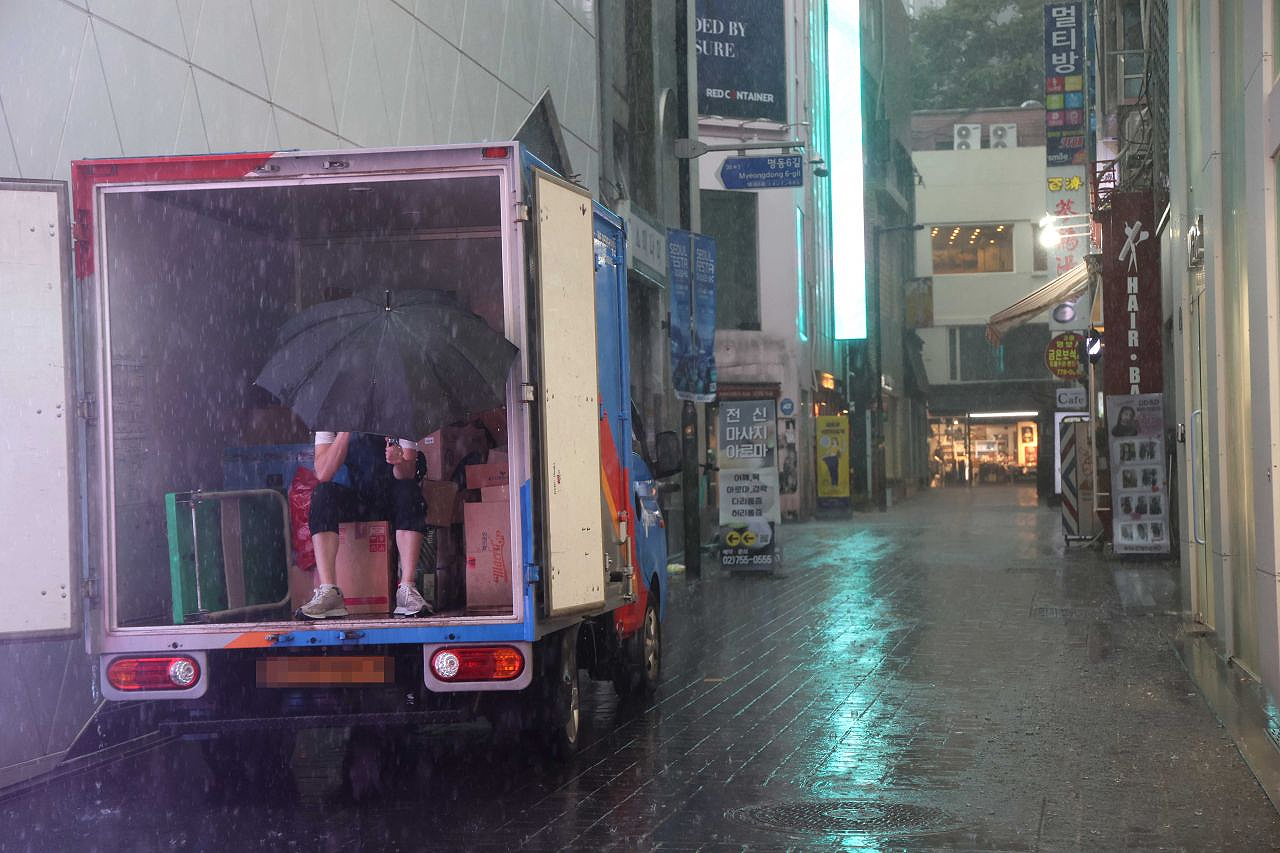
The competition for speed in the parcel delivery industry is getting fiercer by the day.
The number of work-related injuries recognized for parcel delivery workers has nearly tripled over the past five years.
According to the Korea Workers’ Compensation & Welfare Service, the number of work-related injury cases officially recognized in the parcel delivery industry
soared from 561 cases in 2021 to 1,516 last year.
Based on last year's data, incidents accounted for 1,341 cases (88.5%), representing the overwhelming majority.
This was followed by illness with 103 cases (6.8%), and commuting-related cases were 72 (4.7%).
'Rule Without Blood or Tears' - Reality of Work-Related Injuries Among Parcel Delivery Workers
STEP 01
Work-Related Injury Metrics Tripled
1,516 casesAnnual work-related injury recognition
88.5%On-site accident share
STEP 02
Bodies Broken Down by Overwork
84.4%Musculoskeletal disorders
12.6%Cerebrocardiovascular shock
STEP 03
Record-High Fatalities
14 peopleAnnual fatality record high
[Legislative proposal for protection remains stalled in the national parliament]
When breaking down the types of illnesses, musculoskeletal disorders accounted for 87 cases (84.4%), the highest among all illnesses.
This was followed by cerebrocardiovascular diseases, with 13 cases (12.6%).
Musculoskeletal diseases are mainly caused by accumulated physical tasks.
Cerebrocardiovascular illnesses are often due to excessive workload.
The surge in late-night and dawn deliveries as well as same-day and 7-day shipping, all fueled by fierce speed competition in the parcel delivery industry, is being pointed to as a key reason behind the sharp rise in nighttime and overnight delivery loads.
Additionally, the so-called ‘Cleansing System’—which allows companies to reclaim delivery zones or terminate contracts even before the end of the contract period if delivery rate or Fresh Bag return rate and other requirements are not met—is another factor.
Discussions aimed at improving these issues have repeatedly reached an impasse.
The social dialogue organization on parcel delivery led by the Democratic Party of Korea
is currently discussing measures such as limiting nighttime delivery working hours to 46 hours per week.
However, opposition from delivery service firms has made reaching consensus difficult.
Officials from the Delivery Workers' Overwork Death Countermeasures Committee held a press conference condemning Coupang in front of Coupang headquarters in Songpa-gu, Seoul, regarding the recent death accident of a delivery driver dedicated to overnight deliveries. / Photo by Jin-Hyung Kang aymsdream@
Specially employed and platform workers, such as delivery riders and parcel couriers, who are not even guaranteed minimum wage,
have also seen no progress in discussions on instituting a 'minimum compensation policy' to secure their basic livelihoods.
Furthermore, the Ministry of Employment and Labor is pushing for the enactment of the ‘Basic Workplace Rights Act’ and the ‘Presumption of Employment Act’ to protect specially employed and platform workers,
but the legislative process in the National Assembly remains stalled.
"
The fact that work-related fatalities in the parcel delivery industry rose sharply in 2025 despite various government countermeasures shows that previous policies remain out of touch with reality and have failed to get at the root structural causes.
The government must shift away from policies focused solely on regulations and instead establish practical, preventive measures.