Snack Bags Changed by Naphtha Supply Instability

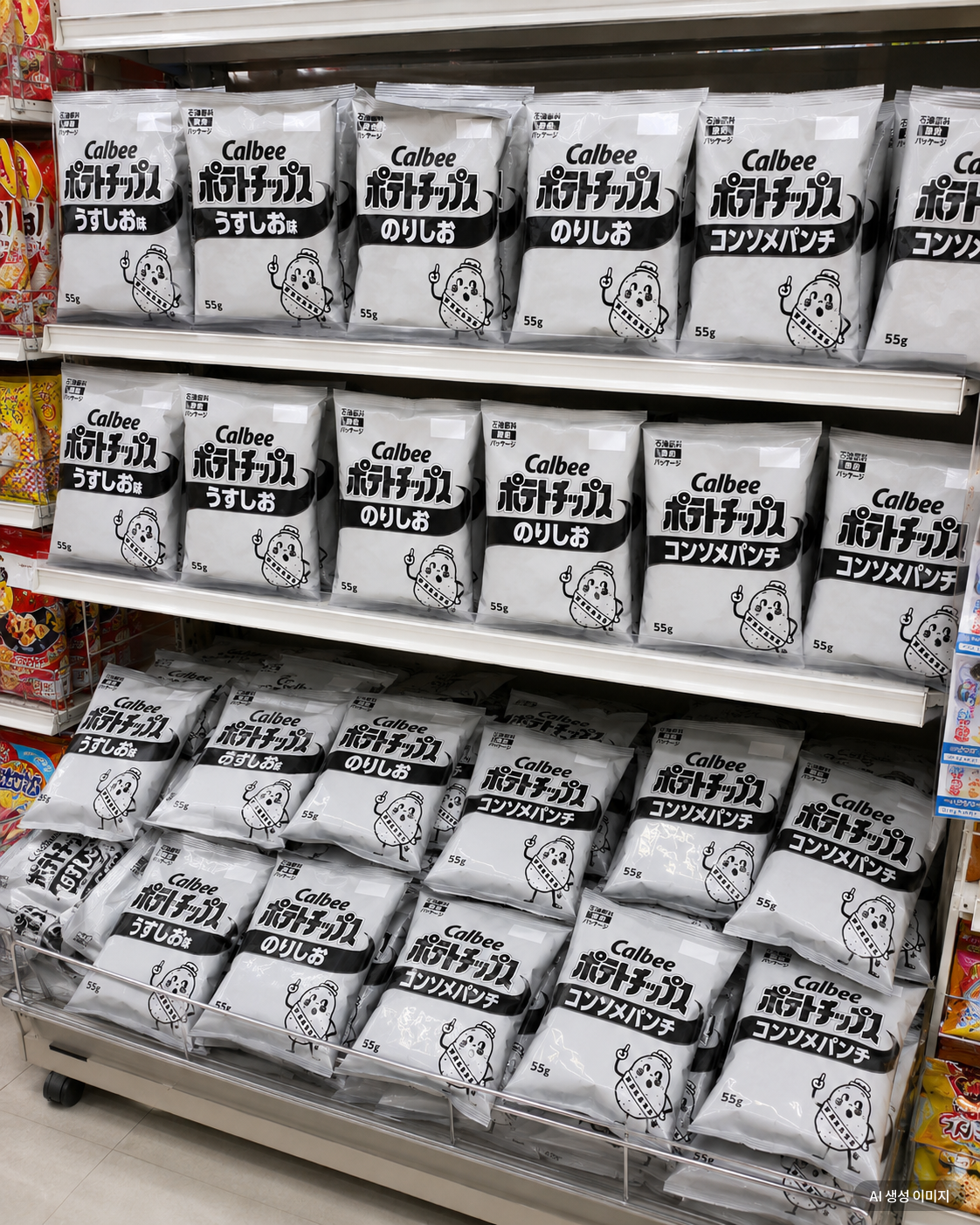
On the 11th, according to the Nihon Keizai Shimbun (Nikkei), Japanese snack company Garubi announced on the 9th that it would revert the packaging of some products, such as "Potato Chips," back to color.
This move is the result of a partial easing of the unstable naphtha supply caused by the prolonged U.S.-Iran conflict. Naphtha is a key ingredient used in the production of vinyl, film, ink solvents, and resins, directly impacting every stage of the packaging process.
Previously, starting at the end of May, Garubi switched the packaging of 14 products, including potato chips and shrimp chips, to black and white. This was an unavoidable decision not simply to cut costs, but to maintain supply in the face of a raw material shortage.
Black-and-White Potato Chips Become "Limited Edition"

Instead of a full return, Garubi is choosing a phased approach. Starting on the 27th, two types of cereal products, such as "Frugra," will have their packaging returned to full color. Then, from next month, six products, including "Potato Chips Mild Salt Flavor," "Potato Chips Consomme Punch Flavor," and "Kappaebisen," will have only the front of the package in color.
The other products will continue to use black-and-white packaging for now. This decision considers both conserving raw materials and ensuring a stable supply. The company explained, "We started with the front of the package, which most effectively communicates product information, for color restoration."
| Product Name | Full Color Restored | Front Only Restored | Black-and-White Maintained |
|---|---|---|---|
| Frugra (2 types) | ○ | - | - |
| Potato Chips Mild Salt Flavor | - | ○ | - |
| Potato Chips Consomme Punch Flavor | - | ○ | - |
| Kappaebisen | - | ○ | - |
"If I'd Known, I Would Have Bought 10 Bags"

Interestingly, the return to color packaging is actually boosting demand for the black-and-white versions. On Japanese social media, reactions such as “It’s become a limited edition,” “If I’d known, I would have bought 10 more bags,” and “Will they become a premium item?” are spreading.
Some consumers regard the black-and-white packaged products as "historic limited editions" and are rushing to purchase them. This is seen as a textbook "limited effect," where supply constraints increase scarcity, thus driving demand even further.
Supply Chain Shock Hits the Entire Industry
This example is not limited to a particular company. Earlier, Japanese snack producer Yamayoshi Confectionery temporarily halted production of its flagship product "Wasabip" in March. That was due to difficulties in securing the heavy oil used to run the boilers for frying potato chips.
When news of the production halt broke, consumers responded immediately. On second-hand online marketplaces in Japan, these potato chips were being traded at prices higher than their official retail price, as reselling spread rapidly.
Supply Instability Learned from Oil Shock, Earthquake, and COVID-19

Experts say that memories of past experiences are influencing consumer sentiment. The memory of critical daily necessities running out during the 1973 oil crisis lingers, so even initial signs of supply instability quickly lead to hoarding. In fact, similar phenomena occurred again during the Great East Japan Earthquake and the COVID-19 outbreak.
-

Reporter Seo Jiyeong zo2zo2zo2@asiae.co.kr
-
Edit Lee Seonju sjlee109@asiae.co.kr
© The Asia Business Daily. All rights reserved. Unauthorized AI training and use prohibited.