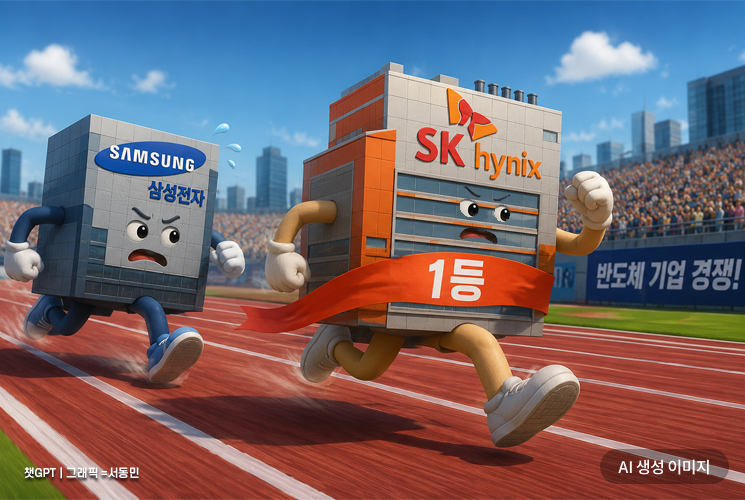
In fact, the overall net profit growth rate of the KOSPI this year is expected to be 235%, and 30% next year, with profit growth for Samsung Electronics (570%·33%) and SK hynix (410%·38%) significantly exceeding the market average. This is interpreted as meaning that the profit structure centered on semiconductors remains robust.
KOSPI: 'Excessive Temporary Correction'
Recently, as the KOSPI plunged 20% in a short period, pessimism has spread throughout the market. In this environment, a securities firm report that accurately predicted the market's peak two months ago is now drawing intense attention. Particularly, the analyst who made this analysis has defined the recent correction as an 'excessive temporary adjustment' rather than a structural breakdown, reiterating his long-term forecast that the KOSPI will eventually surpass the 10,000-point mark. This outlook is now in the spotlight.
"SK Hynix Overtakes Samsung Electronics in Market Cap? Bull Market Has Ended" – Forecast Realized
On May 18, Jaeman Lee, Head of Global Investment Analysis at Hana Securities, published a report titled "KOSPI, The Era of 10,000 Points Has Begun," where he presented a signal for the end of the current bull market. The core rationale was the reversal in market capitalization between SK Hynix and Samsung Electronics. He analyzed that "if SK Hynix's market capitalization, despite lower net profit estimates for 2026–2027 compared to Samsung Electronics, surpasses that of Samsung Electronics, it signifies the bull market has reached its peak."

The KOSPI index and circuit breaker activation. On the 13th, the KOSPI index is displayed on the dealing room monitor at the Hana Bank headquarters in Jung-gu, Seoul. On this day, the KOSPI plunged more than 8%, dropping below the 7,000-point level during the session, which led to the temporary suspension of trading due to the activation of a circuit breaker. Photo by Yonhap News.
원본보기 아이콘
This scenario played out exactly as forecast. On June 22, SK Hynix surpassed Samsung Electronics in market capitalization for the first time ever, and on the same day, the KOSPI hit an all-time high of 9,114.55 points. Afterward, the index plunged about 20%, falling to 7,291.91 on July 9, entering a correction phase.
This is interpreted as a sign of structural overheating, reminiscent of the “dot-com bubble” in March 2000, when Cisco Systems topped the S&P 500 market capitalization rankings ahead of Microsoft (MS) and General Electric (GE), followed by a market collapse.
"Currently at the Bottom Range"… Entering Technical Rebound Territory
However, in a recent report, Mr. Lee re-evaluated the current market as being in a bottoming phase. He diagnosed, "At present, the KOSPI has technically reached a complete bottom range."
The basis for this assessment is the historical pattern of a 'maximum 20% decline.' Since 2023, the KOSPI has repeatedly rebounded after falling about 20% from its previous high. Applying this to the latest peak of 9,114 points suggests that a bottom would be around 7,290 points. Since the index has indeed fallen to this level, there is a high likelihood of a technical rebound.
The short-term rebound target presented by Mr. Lee is 9,240 points. This is calculated using the recent average '20-day moving average deviation ratio' of 103.3%, which measures the divergence between the stock price and its moving average. The interpretation is that the excessive price gap caused by temporary panic sentiment could sufficiently normalize as prices converge back toward fundamentals.
"No Issue With Fundamentals"… Forecasts KOSPI at 11,450 Points
What is even more notable is the long-term outlook. Mr. Lee has set the upper bound for the KOSPI at a maximum of 11,450 points. This figure is based on projected net profits of KOSPI-listed companies in 2027 (946 trillion won), applying the average price-to-earnings ratio (PER) of 9.96 times since 2010. This is a quantitative analysis combining corporate earnings and valuation, highlighting that the current decline is a 'psychological overselling' phase rather than a deterioration of fundamentals.
AI Investment to Continue…"Talk of a Peak Is Premature"
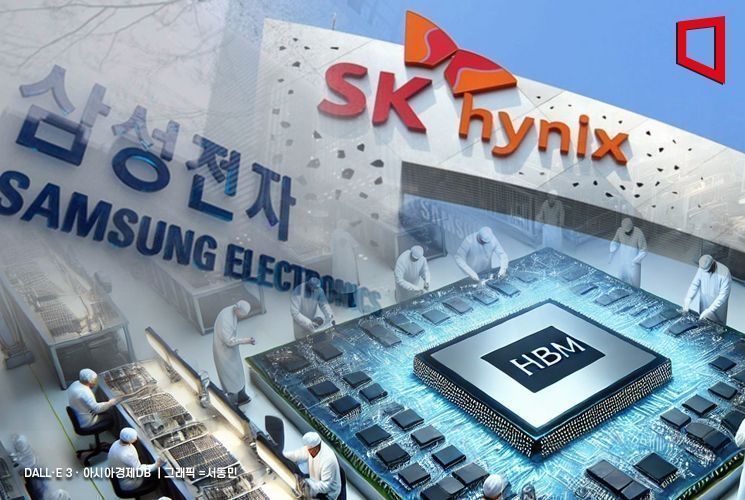
He also dismissed concerns raised in some quarters about a peak in semiconductors and a slowdown in artificial intelligence (AI) investment. Capital expenditures (CAPEX) by major U.S. big tech companies increased by 81% year-on-year in the first quarter of this year, and are expected to expand by up to 90% in the third quarter.
However, there are variables in the mid- to long-term. The free cash flow (FCF) of big tech companies plummeted from $51.8 billion in the third quarter of last year to $19.1 billion in the first quarter of this year. If investment expansion continues, there is a possibility that FCF could temporarily turn negative in the third and fourth quarters of this year. It is expected to return to positive territory and enter a phase of investment recovery starting in the first quarter of next year.

This suggests that from 2027 onwards, concerns about an "investment peak-out" could begin to surface. However, Mr. Lee believes that, at this point, it is unnecessary to interpret these concerns as excessive fear already reflected in stock prices.
"Not a Structural Breakdown, But a Short-term Overheating Correction"
Ultimately, the current sharp decline is being interpreted as a process of correcting short-term overheating, not a structural collapse. Considering past patterns, valuations, and profit estimates, the current index level is analyzed as being close to a 'bottom-confirmation zone'.
In the market, there is even a "pilgrimage" to find this report, with trust in future forecasts rising as a result. However, the continued concentration on semiconductors and changes in the global liquidity environment remain key variables. The direction of the market going forward is likely to be determined by the balance between earnings and the investment cycle.
-

Reporter Seo Jiyeong zo2zo2zo2@asiae.co.kr
-
Edit Kim Hyunhee faith100@asiae.co.kr
© The Asia Business Daily. All rights reserved. Unauthorized AI training and use prohibited.







