US NHTSA Confirms Final Defect in 'DTN60DB' Inflator
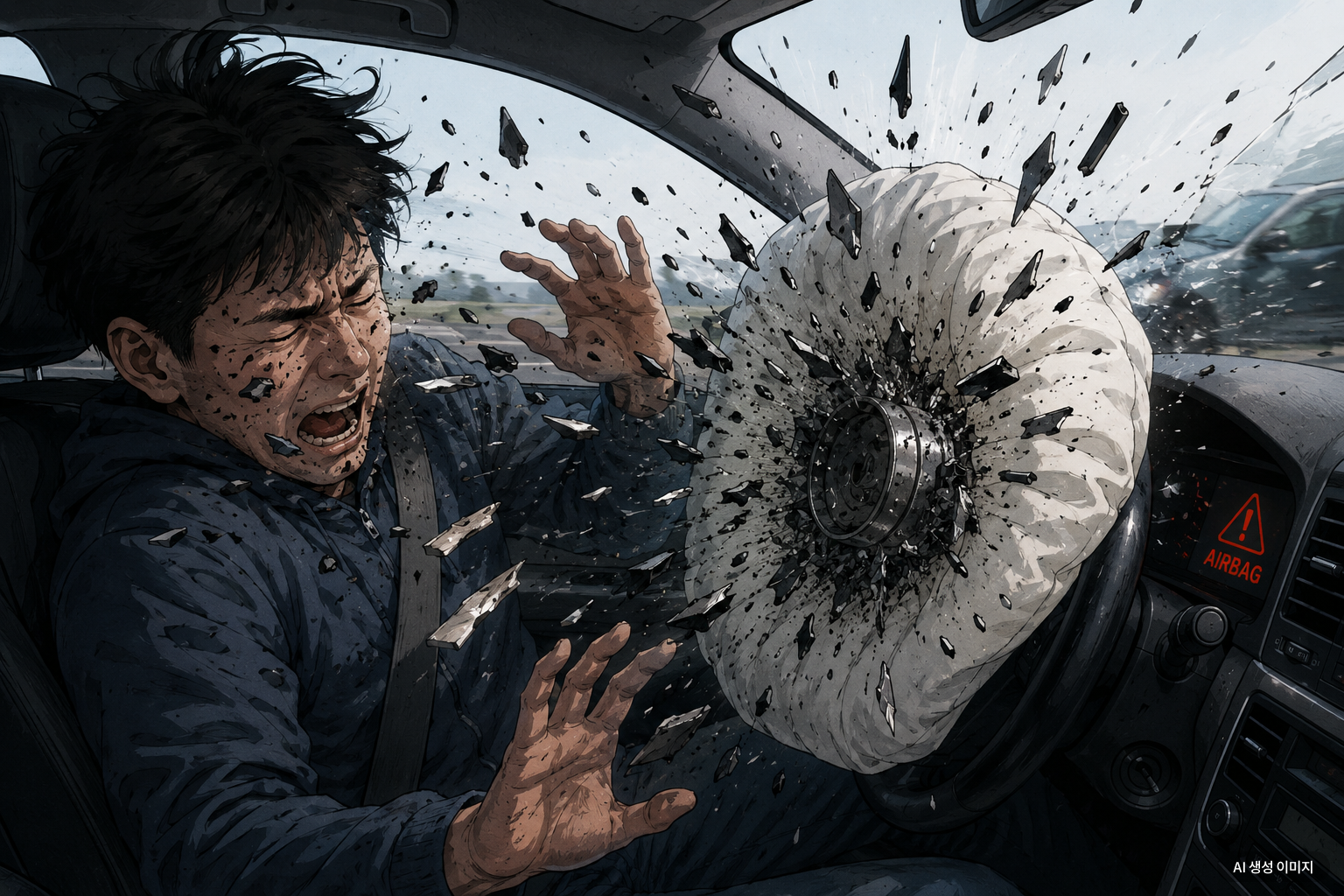
A device meant to protect people’s safety—an airbag—transformed into a deadly weapon that fired metal fragments at the moment of collision, causing the death of the driver.
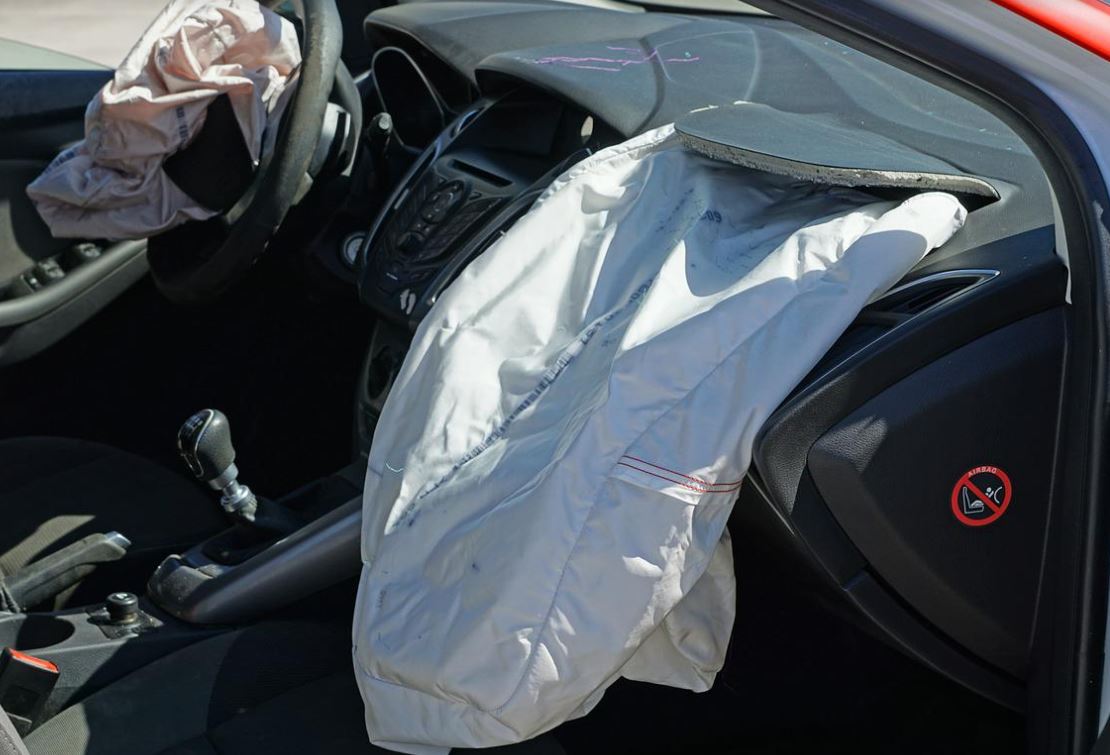
On July 8 (local time), The Wall Street Journal (WSJ) reported, citing an announcement by the U.S. National Highway Traffic Safety Administration (NHTSA), that the front driver’s airbag inflator marked ‘DTN60DB’ ruptured in 13 accidents in the United States, resulting in 10 deaths and 3 serious injuries to date. The defective inflator is supposed to inflate the airbag upon impact, but investigations found that in actual accidents, the inflator housing exploded, scattering metal fragments into the driver's face, neck, and chest.
10 Dead and 3 Seriously Injured Due to Shattered Airbag Metal Fragments
Most Accident Vehicles Are Used Cars Equipped with Non-Genuine Parts
Low-Cost Replacement Parts Distributed on Platforms Such as eBay
Korean International Student Also Seriously Injured, Underwent Reconstructive Surgery
In April, NHTSA concluded that these inflators have safety defects and banned their import and sale in the United States. The ban mainly targets inflators marked ‘DTN60DB,’ which are believed to have been manufactured in 2021 or 2022. The manufacturer of the airbag is a Chinese company; however, the company claimed it did not sell this product in the U.S. market and argued that the problematic inflators might be counterfeits of its products. NHTSA, however, stated that no evidence was provided to support this claim, and concluded that regardless of who manufactured them, inflators with this marking have repeatedly shown fatal defects in real-world accidents.
Most of the affected vehicles were used cars in which the airbags had previously deployed in accidents and were later replaced with inexpensive replacement parts instead of genuine ones. According to WSJ, these defective airbag modules were distributed on online platforms such as eBay and Facebook Marketplace at a fraction of the price of genuine parts. In some cases, distribution and import routes reportedly involved hiding parts inside packages for toys.

A Korean international student was also among the victims. According to the WSJ, Lee-Seok Kang, who was staying in the U.S. to attend flight school, was involved in an accident while driving a Chevrolet Malibu in Texas in October 2023. At that time, the driver’s airbag deployed, the inflator ruptured, and metal fragments struck Kang’s face. WSJ reported that Kang lost part of his lower jaw and many teeth, requiring treatment for infection and facial reconstructive surgery. Investigations found that the problematic airbag had been purchased on eBay and installed by the used car dealer.
Similar incidents have been confirmed in other states as well. The NHTSA list includes accidents in Oklahoma City in 2024, Phoenix, Arizona in 2025, as well as West Valley City, Utah; Hayward, California; Wichita, Kansas; Toledo, Ohio; Austin, Texas; and Clarksdale, Mississippi. So far, the affected vehicles have mainly been Chevrolet Malibus and Hyundai Sonatas, but NHTSA stated there is no information indicating that the risk is limited to these models only.

Manufacturer claims "counterfeit"...NHTSA says "no evidence"
Illegal distribution causes difficulties in tracking and recalling equipped vehicles
Confirmed in Malibu and Sonata...Not limited to specific models
Advising to check used car accident and airbag replacement history
"Do not dismantle airbags yourself, get them checked at a professional shop"
The core issue is that tracking is nearly impossible. Genuine parts leave a record of manufacturing, import, sale, and installation, but these inflators appear to have been illegally imported, making it difficult to even estimate how many are in circulation in the United States. NHTSA ultimately ordered a recall for manufacturers and importers, but explained that a typical VIN-based recall is practically impossible since there is no list of affected vehicles.
NHTSA advises used car buyers and owners to check for accident history, airbag deployment history, total loss or theft history, and unauthorized repair records. If the vehicle’s airbag has ever been deployed, the airbag system should be professionally inspected at an authorized dealership or a trusted repair shop. Opening the steering wheel cover or disassembling the airbag yourself is extremely dangerous, and NHTSA strongly warns against attempting any self-inspection.
-

Reporter Bang Jeil zeilism@asiae.co.kr
-
Edit Kang Dongwon kangdw76@asiae.co.kr
© The Asia Business Daily. All rights reserved. Unauthorized AI training and use prohibited.