What’s Wrong with City Gas Bills?
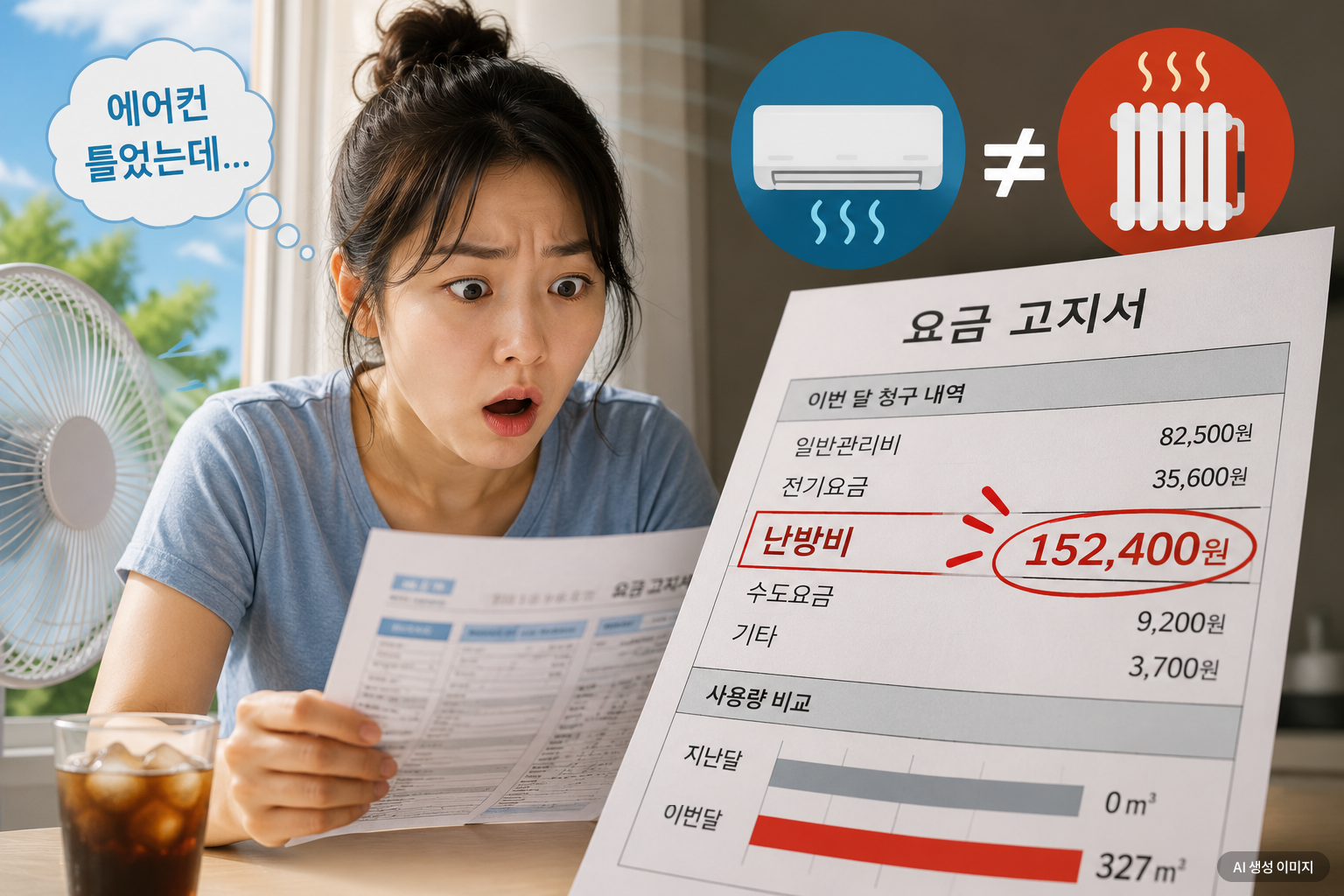
Although the weather is getting hotter, heating charges that were never used have shown up on the maintenance fees.
City gas meter reading errors are repeated every year, but the refund and adjustment procedures vary in each case.
We looked into why people experience different outcomes for similar damages, with real-life examples.
Case 1

In May, Mr. A, who lives in an apartment in Seocho-gu, Seoul,
discovered that a heating bill of 130,000 won had been charged to his maintenance fees, even though he did not use any heating.
The cause was an incorrect input of the meter reading.
The city gas supplier told him to contact the apartment management office,
and the management office explained that, since the total usage for the entire apartment had already been reported, there was no regulation for individual refunds.
Instead, they said the amount would be deducted from the October maintenance bill, when heating resumes.
However, Mr. A found that a heating charge was billed again on his June maintenance bill.
Case 2

Mr. B, who lives in Busan, experienced a similar situation.
Due to a meter reader's mistake, his city gas bills were switched with those of his neighbor.
Mr. B contacted the city gas supplier and corrected the error,
but he continued to receive overdue payment notices afterwards.
Because the cumulative usage was also entered incorrectly, he had to call the customer center multiple times.
Why does this happen?
It’s because the structure of city gas supply and settlement differs by household.
⛽ Korea Gas CorporationSupplies LNG to local city gas companies
🏭 Local city gas suppliersMeter reading · Billing · Handling complaints
🏢
Settlement via management officeEach household’s usage is collected and reflected in the maintenance bill🏠
Direct settlement by supplierBills are issued directly to each householdMeter Reading MethodsAny settlement method may use these.
👷
Meter reader visitChecks the meter numbers📱
Self-readingResidents enter the numbers themselves📡
Remote readingAutomatic transmission↓
If a meter reading error occurs, depending on the settlement method,the timing and method of refunds, deductions, and processing can all differ.
These problems keep recurring because the meter reading and settlement structure for city gas differ from home to home.
Korea Gas Corporation supplies city gas to local gas suppliers,
and these suppliers then sell it to each household and business.
Suppliers are responsible for meter reading, billing, and complaint handling.
However, in many apartment complexes, the management office collects the usage for each household and includes it in the maintenance bill.
The method of reading meters also varies.
In some places, a meter reader visits in person; in others, residents enter the meter numbers themselves (self-reading).
There is also a remote reading method, where meter data is transmitted automatically.
Therefore, even if the same meter reading error occurs,
the person who checks, who settles, and when the refund is processed can all be different.
Consumer Data
Plenty of Consultations, Only a Few Actually Helped
More than 100 consumer consultations about unfair city gas charges are received every year, but the number of actual relief cases remains in the single digits.
2023
142 casesRelief granted in 6 cases
2024
118 casesRelief granted in 8 cases
2025
148 casesRelief granted in 12 cases
First half of 2026
86 casesRelief data not tallied
Number of consultationsNumber of relief cases
In 2025, out of 148 consultations, only 12 cases were actually granted relief.
Source: Korea Consumer Agency / 2026 figures are for the first half of the year
Consultations are continuously being received.
According to the Korea Consumer Agency, consumer consultations regarding unfair city gas charges
numbered 142 cases in 2023, 118 cases in 2024, and 148 cases in 2025.
There were already 86 cases in the first half of this year alone.
However, only a small number of cases resulted in actual relief.
There were 6 cases in 2023, 8 cases in 2024, and 12 cases in 2025.
In terms of percentage, this is only 4.2%, 6.8%, and 8.1% respectively.
Even though there are over 100 consultations every year, the number of actual relief cases remains in the single digits.
Principle VS Reality
“Resolved Within 2-5 Days”—But That’s Not Always the Case
While companies claim that refunds should be processed quickly, in reality, the process can differ depending on the settlement structure at each site.
✔ Principle
Excess payment confirmationBecomes eligible for settlement when a meter reading error is confirmed
Processed within 2-5 daysRefund or deduction settlement
Quick notificationMinimizes consumer burden
VS
⚠ Reality
Through management officeMay be delayed depending on billing cycle
Additional verificationExtra step to confirm if it was a meter reading error
Varied handling proceduresTiming of refund or deduction can differ
Actual procedures may vary depending on the settlement structure of each apartment complex.
Major city gas suppliers explain that, when an overpayment due to a meter reading error is confirmed,
the principle is to provide a refund or deduct the amount from the next bill within 2-5 days.
However, the reality is somewhat different.
In apartments where the management office handles settlement, immediate refunds may be difficult due to maintenance billing procedures.
There can also be an additional step to verify whether the error was the meter reader's fault.
As a result, consumers are often left having to resolve the issue themselves by going back and forth between the city gas supplier and the management office.
Consumers cannot freely choose a local city gas provider.
Yet, the refund and deduction procedures following an error differ from home to home.
In order to prevent different outcomes for the same type of meter reading error,
there is a growing call for clear, standardized guidance that consumers can easily understand.
-

Reporter Oh Jieun joy@asiae.co.kr
-
Edit Maeng Jiae mjiae@asiae.co.kr
© The Asia Business Daily. All rights reserved. Unauthorized AI training and use prohibited.