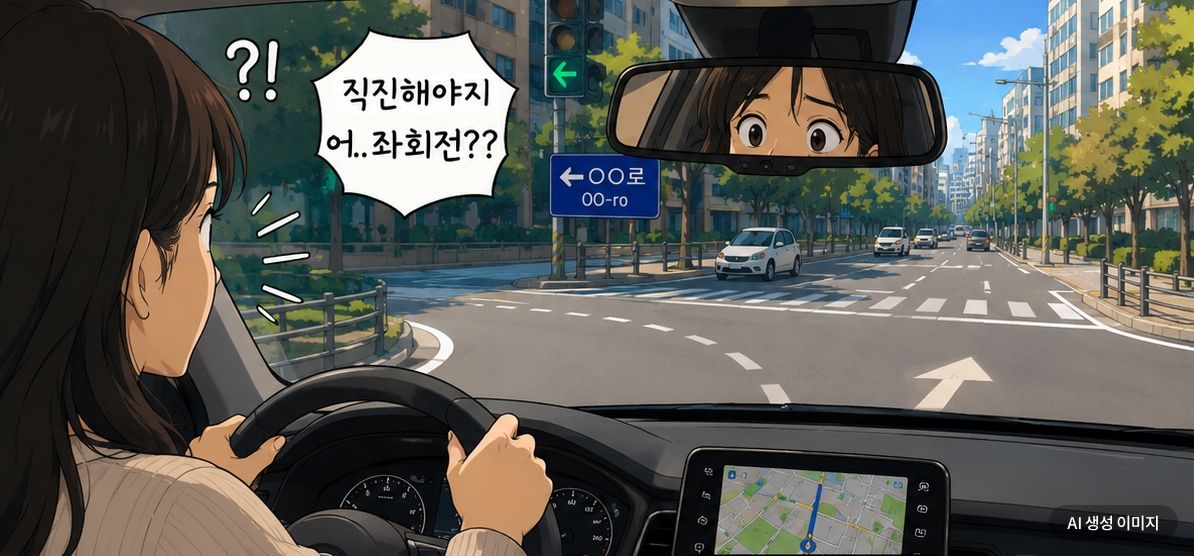
Navarra University Researchers Identify Counterclockwise Walking Tendency
▶Both right-handed and left-handed individuals tend to turn left while walking
▶"Brain function and biological factors have an influence"

A study has found that people have an unconscious tendency to veer to the left when walking.
According to the New York Post on July 1 (local time), a team of researchers at the University of Navarra in Spain published their findings in the international journal Nature Communications, reporting that humans tend to move in a counterclockwise direction when walking.
The researchers conducted walking experiments with hundreds of participants ranging from kindergarteners to university students in Spain and Japan. The participants were filmed by drones and cameras as they walked through open spaces and circular areas, and their walking paths were analyzed. The team also observed outdoor activities of kindergarten and elementary school students. Additionally, university students were surveyed on which direction they expected people would walk.
According to the analysis, most participants naturally turned to the left. The tendency to veer left was consistently observed even when more than 200 participants walked alone.
This tendency was independent of group size or the shape of the experimental space. There was no difference between right-handed and left-handed participants, and even among those who said they usually turned right, many actually veered left while walking. The same results were found in both Spain and Japan, despite differences in walking culture.
This characteristic was more pronounced in younger participants. The researchers concluded that this behavior is more likely a trait that appears from early stages of development, rather than a habit formed through social experience.
The reason why people tend to walk to the left has not yet been clearly identified. However, since similar behaviors have been observed in other animals, such as ants and budgerigars, the researchers explained that it is possible that brain function or biological factors may be influencing this tendency.
The research team suggested that their findings could be used to help design the flow of movement in spaces used by many people, such as stadiums, airports, and shopping malls.
-

Reporter Choi Young zero02@asiae.co.kr
-
Edit Hong Jayeon hongzaa@asiae.co.kr
© The Asia Business Daily. All rights reserved. Unauthorized AI training and use prohibited.







