Five Campus Bookstores Closed in Three Years at Major Universities in Seoul
Tablets Take the Place of Disappearing Textbooks
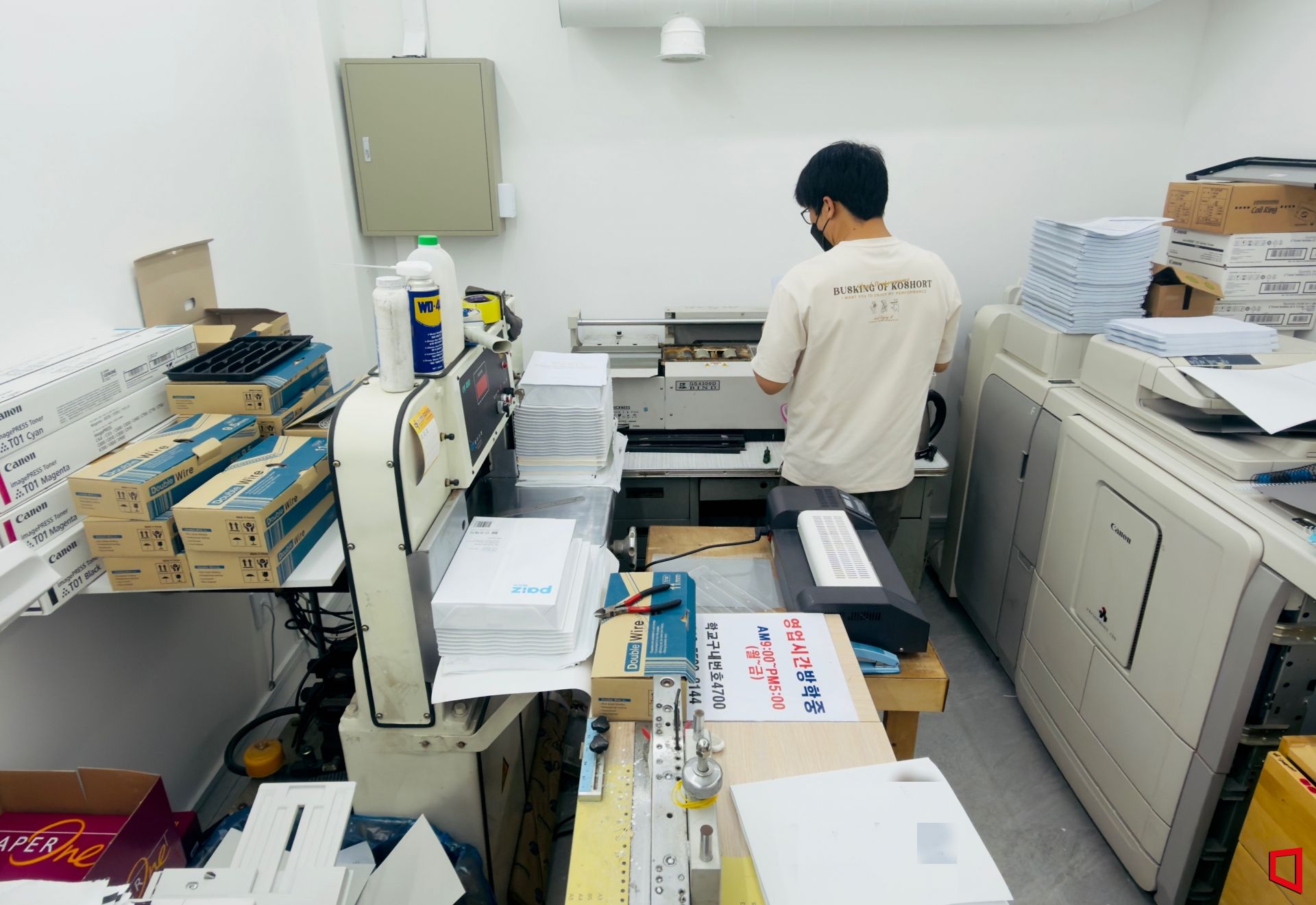
Whirring, clicking, whoosh. On the afternoon of June 23, on the first floor of the Alumni Hall at Hanyang University in Seongdong-gu, Seoul, the only sounds filling the quiet space were the muffled noises of machines and the hiss of compressed air being released. Plastic rings and covers for bookbinding were stacked everywhere, left unused and gathering dust with nowhere to go.
Gong Yudeok (age 49), who has been running a copy shop here for three years, sighed, "Sales are decreasing by 20–30% every year, and it is burning me out." Hoping that business would improve by moving onto campus, he relocated from a site near the subway station three years ago, but his expectations were dashed. Even at the start of a new semester, it is rare to see students coming in to bind their textbooks or print out lecture materials uploaded by professors. Gong remarked bitterly, "These days, even theses are not read on paper anymore," letting out a wry laugh.
Textbooks in PDF... Bookstores and Copy Shops See a Sharp Drop in Customers
One in Two People in Their 20s Use Tablets... Paper Books Avoided
E-Textbooks Make Up Nearly 30% of University Textbooks
An employee is doing bookbinding work at a binding shop located on the first floor of the Alumni Hall at Hanyang University in Seongdong-gu, Seoul. The operator, Gong Yu-deok, lamented, "Sales have been decreasing by 20-30% every year." Photo by Hosoo Park
The wave of digitalization is transforming the landscape of university areas. Thick textbooks and piles of printed handouts, once a common sight on classroom desks, have disappeared, replaced by tablets and laptops. Bookstores and print shops, once fixtures on campus, have been quietly shutting down in this age of "paperless" campuses due to worsening profitability.
According to a survey conducted by The Asia Business Daily on June 26 regarding bookstore operations at 10 major universities in Seoul, at least five campus bookstores have closed in the past three years. The closures began with Sogang University in August 2023, followed by Chung-Ang University (October 2023), Sungkyunkwan University (2024), Hankuk University of Foreign Studies, and Hanyang University (2025). The space where Gong’s copy shop is located was formerly occupied by a bookstore selling textbooks until June last year.
Scenes of students lining up outside bookstores to buy textbooks at the start of the semester have become rare. Jo Gayoun (age 24), a student at Dongguk University, said, “After our campus bookstore closed once, it reopened as a small shop inside the main library, but hardly anyone uses it. It’s much easier and more efficient to just open a laptop or download PDF e-books for note-taking during class.” Han Jein (age 23), a student at Hanyang University, also commented, “Even though the bookstore is gone, I don’t really feel inconvenienced. Since I download all my course materials onto my laptop, I haven’t set foot in a bookstore since I turned 20.”

The reasons students are turning away from paper books are clear: the physical burden of carrying heavy books, the high prices, and the convenience offered by digital devices. According to the National Statistical Portal, the tablet ownership rate among people in their 20s increased from 33.4% in 2021 to 45.2% last year. In other words, nearly half of people in their 20s own a tablet. The rate is even higher among teenagers, reaching 54.9% last year. The trend toward digitalization in education is expected to intensify moving forward.
The shift toward choosing e-books over paper is also evident in the statistics. According to an analysis by Kyobo Book Centre of on- and offline university textbook sales, the share of e-books among total university textbook sales grew from 7.1% in 2021 to 29.9% last year, more than quadrupling in five years.
Students can now avoid the physical effort of carrying several heavy textbooks—each weighing up to 1.5 kilograms—by using a single device. As demand has surged, so-called “scan rooms” near some university districts, which convert textbooks into digital files, have been thriving and are often fully booked during the start of the semester.
University Campus Bookstores Quiet Even at the Beginning of the Semester
Major Textbook File Conversion 'Scan Rooms' Are Thriving
Laptops and Tablets Used Instead of Printing Lecture Materials
Copy Shops' Sales Decline 20~30% Every Year
Posters Move to SNS... Campus Goes Digital
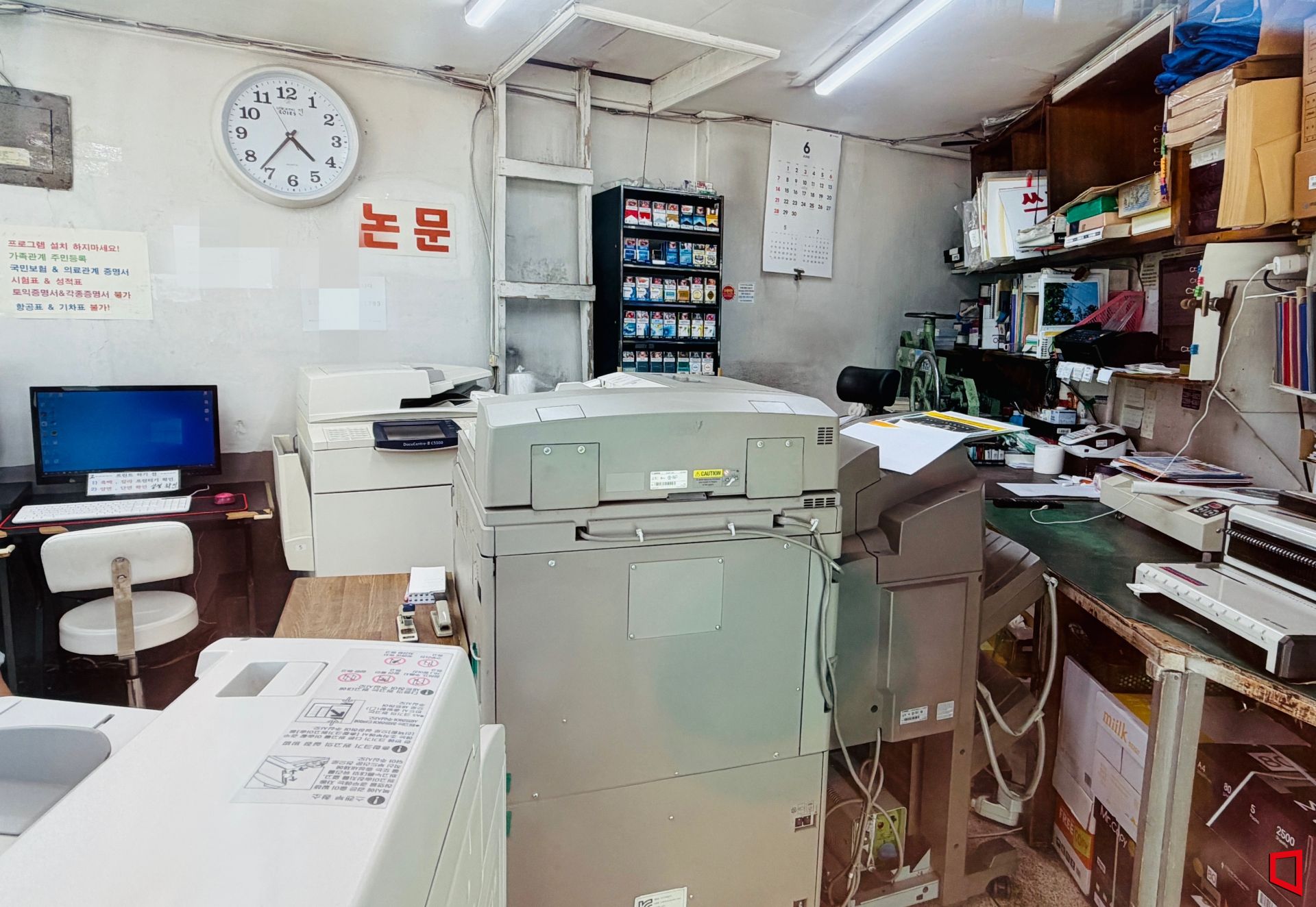
Inside a printing shop near a university in Seongbuk-gu, Seoul, the place appears quiet. A printing shop official said, "In the past, opening season was bustling with students, but now many lecture materials are viewed as electronic files, so the number of customers has greatly decreased." Photo by Hosu Park
The disappearance of paper on campus has not only transformed the business environment but also changed the unique ways students communicate. The “daejabo,” handwritten posters that once filled campus walls with bold messages, have now been replaced by posts on social media. Group projects, once involving students gathering in empty classrooms or club rooms, have shifted to digital collaboration using video chat apps like Zoom or Google Meet and shared platforms such as Notion.
Kang Insu, a professor of economics at Sookmyung Women’s University, described this change as an inevitable trend of the times. Professor Kang said, “It’s only natural that younger generations now feel more comfortable with e-books and devices that are easier for note-taking and carrying than paper. What’s important is that students understand the course content well, so we should accept the changing landscape on campuses and follow up with appropriate adjustments.”
-

Reporter Park Hosu lake@asiae.co.kr
-

Reporter Lee Jiye easy@asiae.co.kr
-
Edit Kang Dongwon kangdw76@asiae.co.kr
© The Asia Business Daily. All rights reserved. Unauthorized AI training and use prohibited.