Popular Among Young People in China Who Cannot Keep Pets Due to Various Circumstances
Gaining Popularity by Promoting Real-Name Verification and Owner Accompaniment
Another Animal Rights Controversy After the 2021 "Shared Cat" Incident
A so-called "dog rental service" that allows people to take dogs for walks by the hour has appeared in China, sparking controversy. For young people who want to raise pets but find it difficult due to housing conditions or work environments, this is being received as a new experiential service. However, some critics argue that it treats animals as emotional commodities.

2000 to 13,000 Won Per Hour... Choose Your Desired Pet Dog for a Walk
'Pet Sharing' Platforms Expanding Through Schedule Coordination with Dog Owners
"Emotional Bonding Experience" vs "Animal Commodification" Heated Debate
Repeated Walks with Strangers... Growing Concerns Over Animal Welfare
On June 23, local Chinese media, including the South China Morning Post (SCMP), reported that "pet sharing" services connecting dog owners and users are trending in major cities such as Beijing, Shanghai, Guangzhou, and Shenzhen. This pet sharing service is called "Wangbu" locally, a name that combines "Wang" (the sound of barking) and "Bu" (meaning walk).
From Around 2,000 Won Per Hour: "Opportunity for Experience" vs. "Animal Commodification"
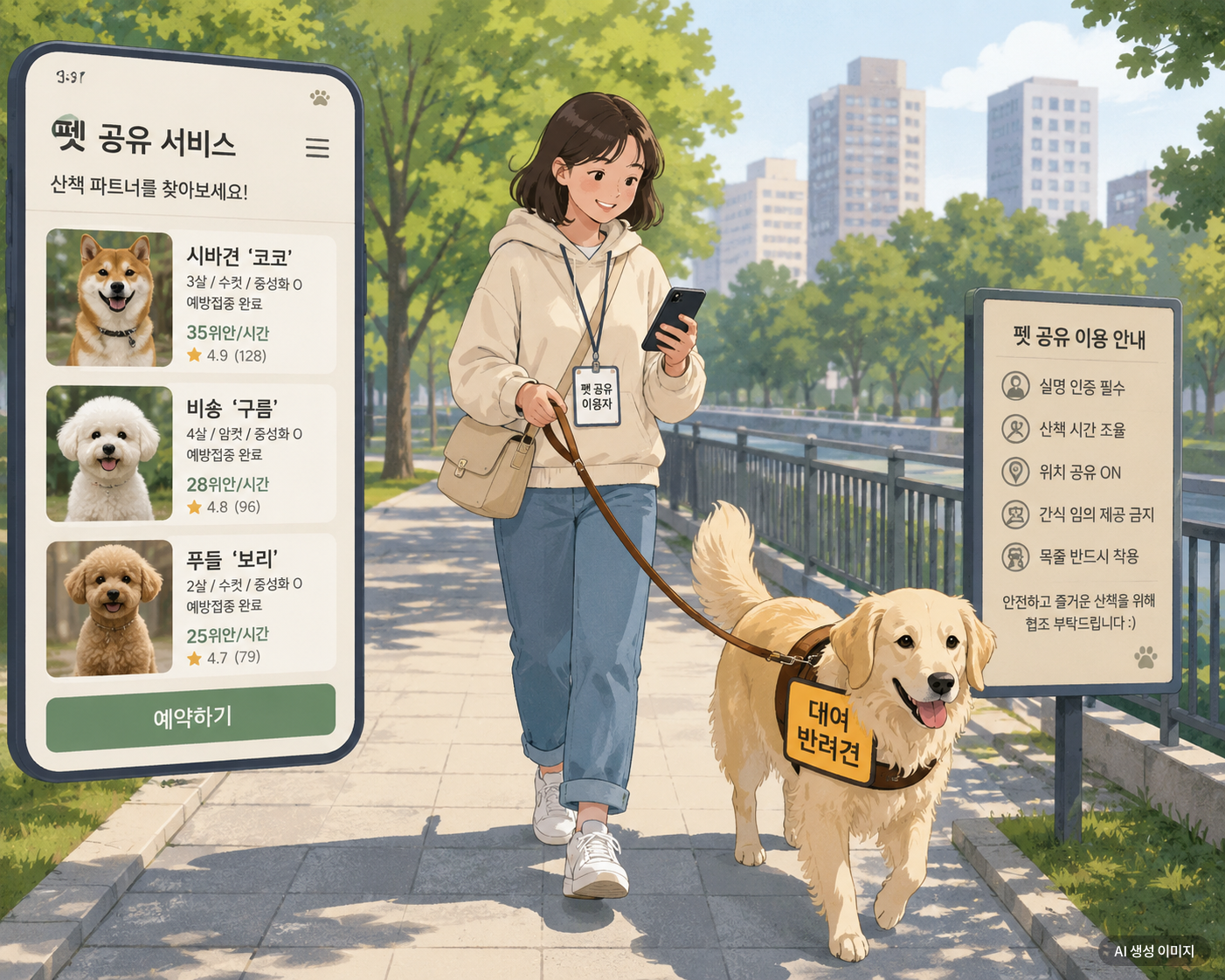
In this service, dog owners register their pets' profiles and available time slots, allowing users to select the dog they want and coordinate walk schedules. The platform displays photos, names, personalities, ages, vaccination status, neutering status, and user reviews of the dogs. Some local media have commented that this setup is reminiscent of a "pet matchmaking app."
Fees vary depending on the breed, duration, and service method. According to the SCMP, the cost ranges from 10 to 60 yuan (about 2,000 to 13,000 won) per hour. Some popular breeds are reportedly priced even higher. In one instance, a user reserved a Shiba Inu for 35 yuan per hour and later commented, "It was like I paid to walk someone else's dog."

Responsibility unclear in case of biting or escape accidents
Safety measures like real-name verification and location sharing implemented but controversies continue
Popular dog breeds booked up, leading to comparisons with 'pet dating apps'
Platform claims 'sharing, not renting'... Dog owners argue it helps socialization
'Shared cats' failure follows, reigniting animal welfare debates once again
The platform prefers the term "pet sharing" over "dog rental." They explain that, rather than simply renting out animals for money, the service allows more people to experience the emotional comfort and connection that pets provide. Dog owners also claim that "it's less about making money and more about giving their sociable dogs more opportunities for walks and socialization."
Some safety measures have been established. Users must register with their real names and undergo identification and facial verification. In some services, the dog owner accompanies the walk in a "shared walk" format. Even when solo walks are permitted, owners typically require that walks take place only in familiar neighborhoods or walking routes and that users enable real-time location sharing. Feeding treats or taking off the leash is also strictly prohibited.
However, the controversy has not subsided. The main issue is animal welfare. Critics point out that repeated contact with strangers and frequent changes in walking environments and handlers can cause emotional stress for the dogs. Some veterinarians and animal protection advocates warn that "just because dogs enjoy walks doesn’t mean they will be comfortable repeatedly being entrusted to strangers."
Responsibility for Accidents Remains Unclear
Liability in the event of an accident is another problem. If a dog bites someone, clashes with another animal, or runs away during a walk, it is unclear whether the user, the owner, or the platform bears responsibility. Disputes can also arise if a dog damages a user’s belongings, or if the user causes harm to the dog.
Local media have noted that "Wangbu" differs somewhat from traditional pet rental services. Rather than renting animals for extended periods or sending them to unfamiliar homes, this service operates on an hourly basis and usually involves direct coordination with the owner. Platform operators emphasize that dogs do not spend the night in other homes and only take short walks within familiar living areas.
However, this is not the first time that "shared pets" have sparked controversy in China. In 2021, a pet shop in Chengdu offered a "shared cat" service for 9.9 yuan per day but faced fierce backlash. At that time, numerous concerns were raised that "pets may experience severe stress if they are moved between different people and environments," ultimately leading the shop to close the service.
-

Reporter Bang Jeil zeilism@asiae.co.kr
-
Edit Kang Dongwon kangdw76@asiae.co.kr
© The Asia Business Daily. All rights reserved. Unauthorized AI training and use prohibited.