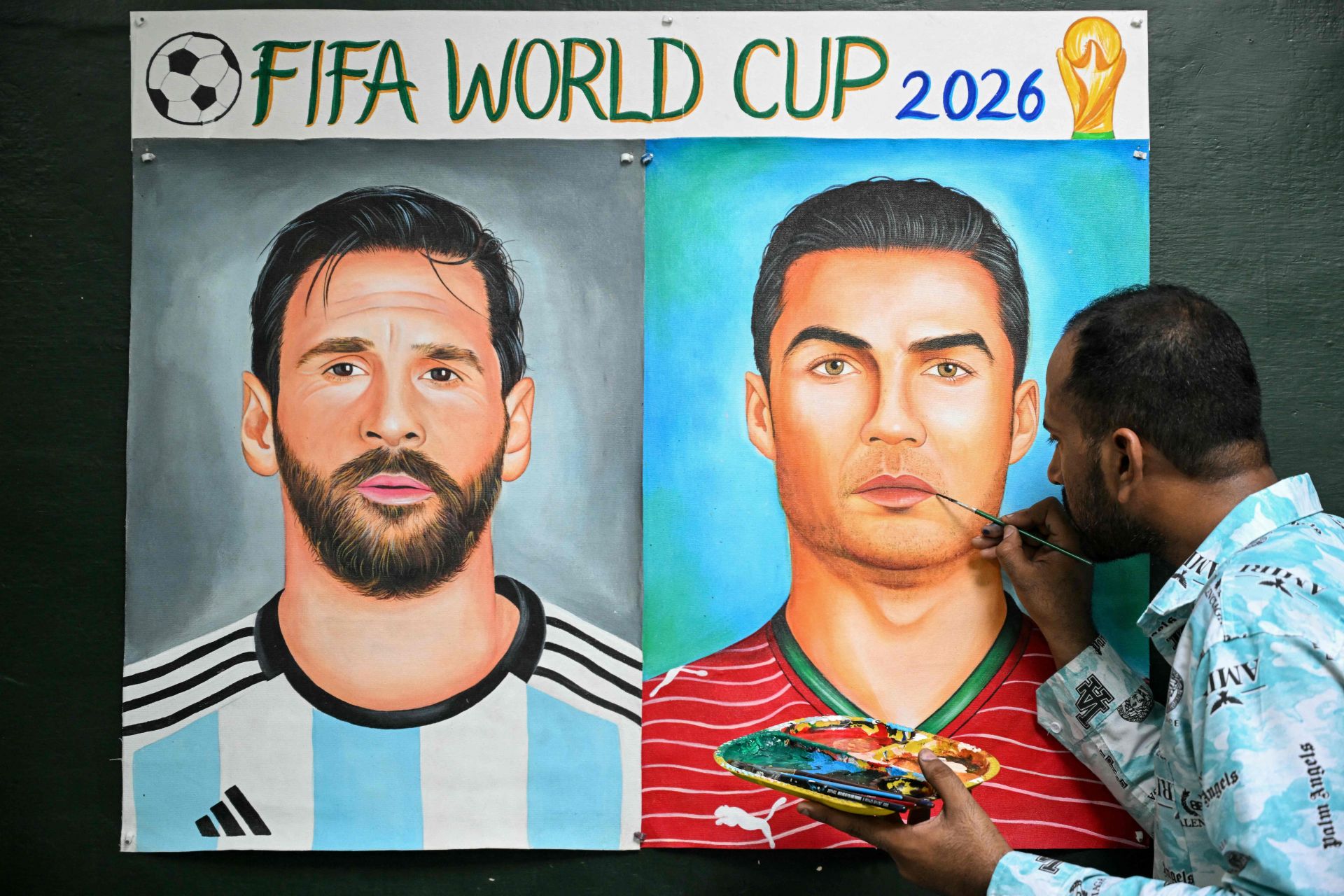


A research study has found that the long-standing debate over the "greatest soccer player in history," centered around Lionel Messi and Cristiano Ronaldo—often referred to as the "Meho rivalry"—extends beyond a simple comparison of performance and can be linked to individual values.
A research team led by Nanyang Technological University in Singapore conducted a survey last month of 10,661 people across 26 countries, including South Korea, asking about their favorite soccer player, political orientation, media consumption habits, and more. The subjects of the study were Messi and Ronaldo, the two modern football rivals. The researchers explained that since both players are highly recognized across countries and cultures, their rivalry provides an ideal context for examining how cultural preferences relate to individual dispositions.
Conservative respondents tend to choose Ronaldo
Age, gender, education level, and country—
Preference persists even after considering various factors
Political orientation and player preference are even more closely related among the younger generation

The analysis found that people who identified themselves as progressive tended to prefer Messi, while those who identified as conservative were more likely to prefer Ronaldo. These results held true even after accounting for various factors such as age, gender, education level, and country. In particular, the relationship between political orientation and player preference was even more pronounced among younger participants.
Preferences also varied by country. Countries with a stronger preference for Messi included South Korea, Argentina, Finland, Spain, the United Kingdom, Norway, the United States, and Canada. On the other hand, countries that preferred Ronaldo more were Indonesia, Türkiye, Mexico, Egypt, Malaysia, Portugal, Singapore, China, France, India, and Nigeria. In the Netherlands, Germany, Australia, Brazil, the Philippines, Japan, and South Africa, there was no clear preference for either player.
The most notable point is the relatively strong preference for Messi in South Korea. The researchers explained that South Korea and Argentina belong to the group of countries with the most prominent preference for Messi among the surveyed nations. However, in the case of South Korea, the findings suggest that this is less due to an exceptionally high evaluation of Messi and more influenced by a relatively lower favorability toward Ronaldo.


Argentine forward Lionel Messi scored his 18th World Cup goal, setting a new record for the most goals in men's World Cup history. Photo by AFP Yonhap News
원본보기 아이콘Player preference was also related to media consumption habits. The higher the proportion of news accessed through short-form social media such as TikTok and Instagram, the stronger the preference for Ronaldo. The researchers suggested that Ronaldo's strong presence on short-form platforms, along with his repeated exposure as someone who actively displays personal achievement and self-expression, may have influenced this trend.
The study emphasized that it was not making definitive claims about the actual personalities of Messi or Ronaldo, but rather analyzing how the public perceives them. Messi is often seen as having a quiet, team-oriented image, while Ronaldo is perceived as ambitious and actively displaying personal achievement. Ultimately, the evaluation of sports stars reflects not only their abilities but also, to some extent, the values and identities that people consider important.


Dr. Saifuddin Ahmed, who led the research, explained, "This study shows how political identity and psychological traits are reflected in cultural preferences," adding, "The symbolic images that the public attributes to each player create differences in preference." However, these results should not be used to conclusively state that "Messi fans are progressives and Ronaldo fans are conservatives." The research team also emphasized that they only identified a statistical correlation between the two phenomena, and did not establish a causal relationship demonstrating that a preference for a particular soccer player determines political orientation, or vice versa. The study was published on the academic platform Social Science Research Network (SSRN).
-

Reporter Bang Jeil zeilism@asiae.co.kr
-
Edit Choo Myeonghoon chox2mh@asiae.co.kr
© The Asia Business Daily. All rights reserved. Unauthorized AI training and use prohibited.







