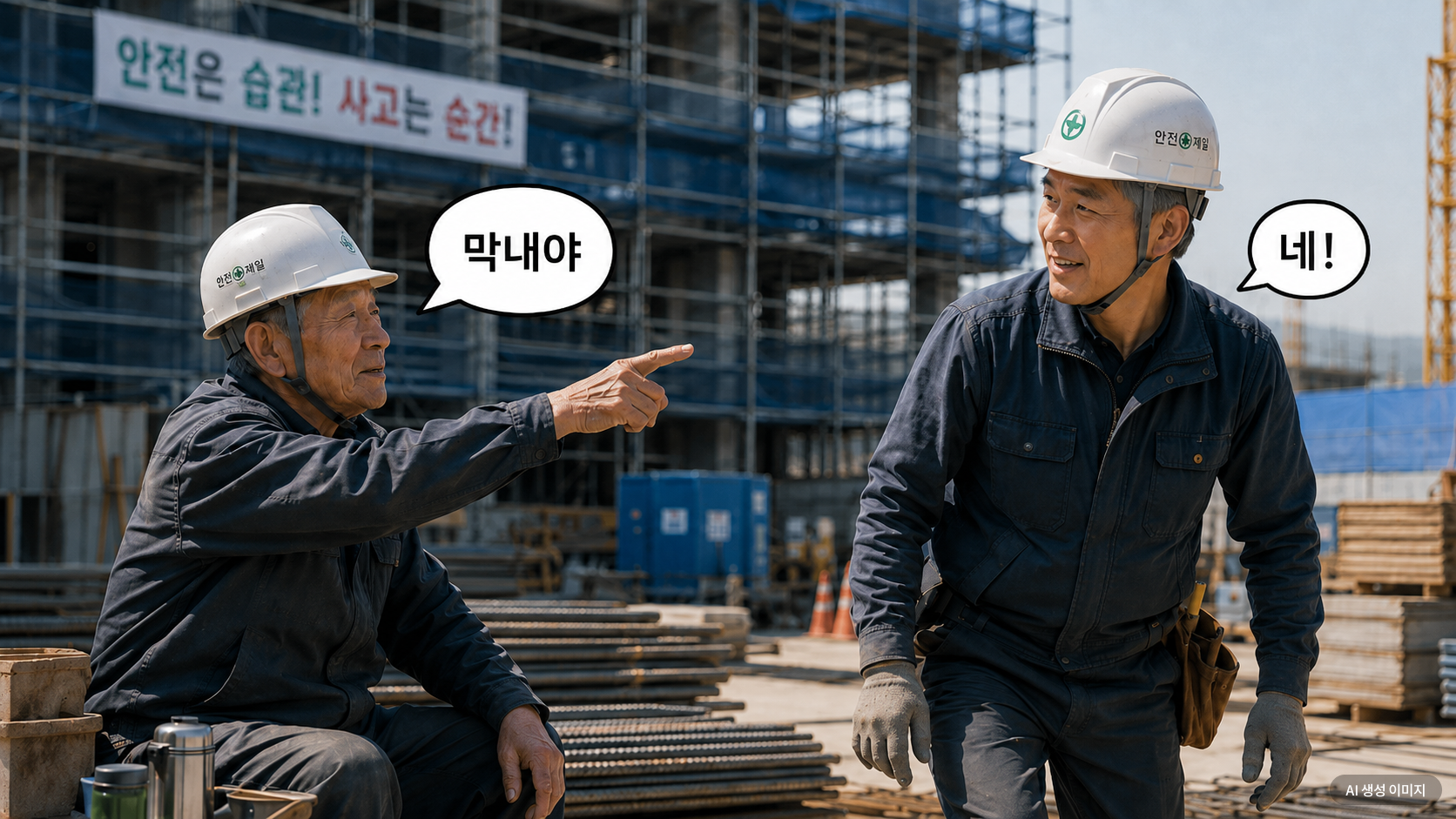
At an apartment remodeling site in Seoul, Lee (age 66) took off his hard hat in a corner of the rebar-laden workspace, catching his breath. Large beads of sweat trickled down from his graying hair. Kim Hansoo (age 53), who has worked in construction for five years, said, "Even I can't act young here," and laughed, "When I work hard among these 'older brothers,' some of whom are 10 or 15 years older than me, they say I'm at the 'prime age' and treat me affectionately." On construction tasks that require skills—such as rebar, plastering, formwork, and waterproofing—it was these older skilled workers leading the site, passing down their expertise to others.

On the 10th, workers were working at a remodeling construction site of an apartment in Seoul. The construction industry points out that as the inflow of young workers decreases, dependence on older workers is increasing, leading to concerns about a shortage of skilled personnel and safety accidents. Photo by Hosoo Park
원본보기 아이콘The aging of the construction workforce is deepening, raising growing concerns about a shortage of skilled workers. While fewer young people are entering the industry, the reliance on older workers is increasing, which in turn heightens the risk of workplace safety accidents.
The Average Age of Skilled Construction Workers Is 51.7... Nearly 30% Are Over 60
According to the Construction Workers Mutual Aid Association on June 15, the number of skilled construction workers in Korea last year was 1.34 million, a decrease of 117,000 compared to the previous year. The largest proportion was in their 50s at 33.7%, and those aged 60 and above accounted for nearly 30%. The average age of skilled construction workers rose to 51.7, up 2.8 years from a decade ago. Among all construction workers, 83.2% are over 40.

Aging has become routine at worksites. The site manager at an architecture office in Yeongdeungpo-gu, Seoul, said, "In the past, workers in their 20s and 30s would follow their seniors around to learn the trade, but now, even if we offer 400,000 won a day, it's hard to find anyone. Our biggest concern is that once the skilled workers start retiring, there will be no one to take over their skills."
Direct Link to Safety Issues... 4 Out of 10 Construction Fatalities Are in Their 60s
This aging trend in construction sites is directly linked to safety problems. According to the Korea Occupational Safety and Health Agency, from 2019 to 2023, there were 2,061 deaths from work-related accidents in the construction industry. Of these, 900 were workers aged 60 and above, accounting for 43.7%. Including those in their 50s, the figure jumps to 78.6%. In other words, 8 out of 10 construction site fatalities are workers aged 50 or older—essentially, "father workers."

Accidents involving older workers continue to occur. In July of last year, at a highway construction site connecting Hamyang-gun and Changnyeong-gun in South Gyeongsang Province, a worker in his 80s lost his life when his safety harness got caught in equipment during a drilling operation. In the recent collapse of the Seosomun overpass in Seoul, 60-something site supervisors and managers lost their lives. In June 2024, at a senior welfare center construction site in Namwon, North Jeolla Province, an 87-year-old worker died after falling while moving around the site.

On the 10th, a worker in his late 50s was performing stonework at a construction site in Yongsan-gu, Seoul. Photo by Hosoo Park
원본보기 아이콘Major construction companies restrict hiring for high-risk tasks to those under the age of 65 or require separate physical fitness tests. However, at small and medium-sized sites, especially in regional areas, severe labor shortages make it difficult to enforce such standards. A safety manager at one of Korea's top five construction companies said, "Many day laborers are brought in on a daily basis to meet urgent project needs. When accidents do happen, it is often the older workers who are victims, so we are particularly cautious."
Deepening Reliance on Older Workers... "Crisis of Sustainability for the Industry"
Although some seek to fill the gap with foreign workers, experts at worksites agree this is not a fundamental solution. One official at a major construction company noted, "Tasks like formwork or demolition can be partly supplemented with foreign labor, but finishing work such as plastering and tiling requires at least 20 to 30 years of experience. If the skilled workers currently supporting the sites retire, we could face a sudden and widespread skills gap."
The aging problem is not limited to skilled trades but is also present in supervision and management roles. A representative from the Korea Construction Engineers Association said, "Many supervisors choose this career as a second job after retiring from general construction companies, so their average age is over 70. It's not uncommon to see supervisors in their 80s on site."

The problem is that while industry insiders recognize this as a risk, they are reluctant to address it publicly. The representative said, "Because of the shortage of supervisory staff, as long as someone is qualified, even the elderly are often assigned to worksites. Everyone knows about this, but unless an accident occurs, it remains an open secret."
There is growing concern that the aging of the construction workforce is becoming a structural risk for the entire industry. If the inflow of young workers remains cut off and skilled workers retire en masse, not only will productivity decline, but there will also be gaps in safety management systems. Jeong Jinwoo, professor of safety engineering at Seoul National University of Science and Technology, said, "The aging of construction sites is not simply a labor shortage issue, but one directly tied to safety. Structural solutions are needed, such as increasing the influx of young skilled workers and expanding the introduction of smart construction technology."
-

Reporter Park Hosu lake@asiae.co.kr
-
Edit Kim Yumi ymkim91@asiae.co.kr
© The Asia Business Daily. All rights reserved. Unauthorized AI training and use prohibited.







