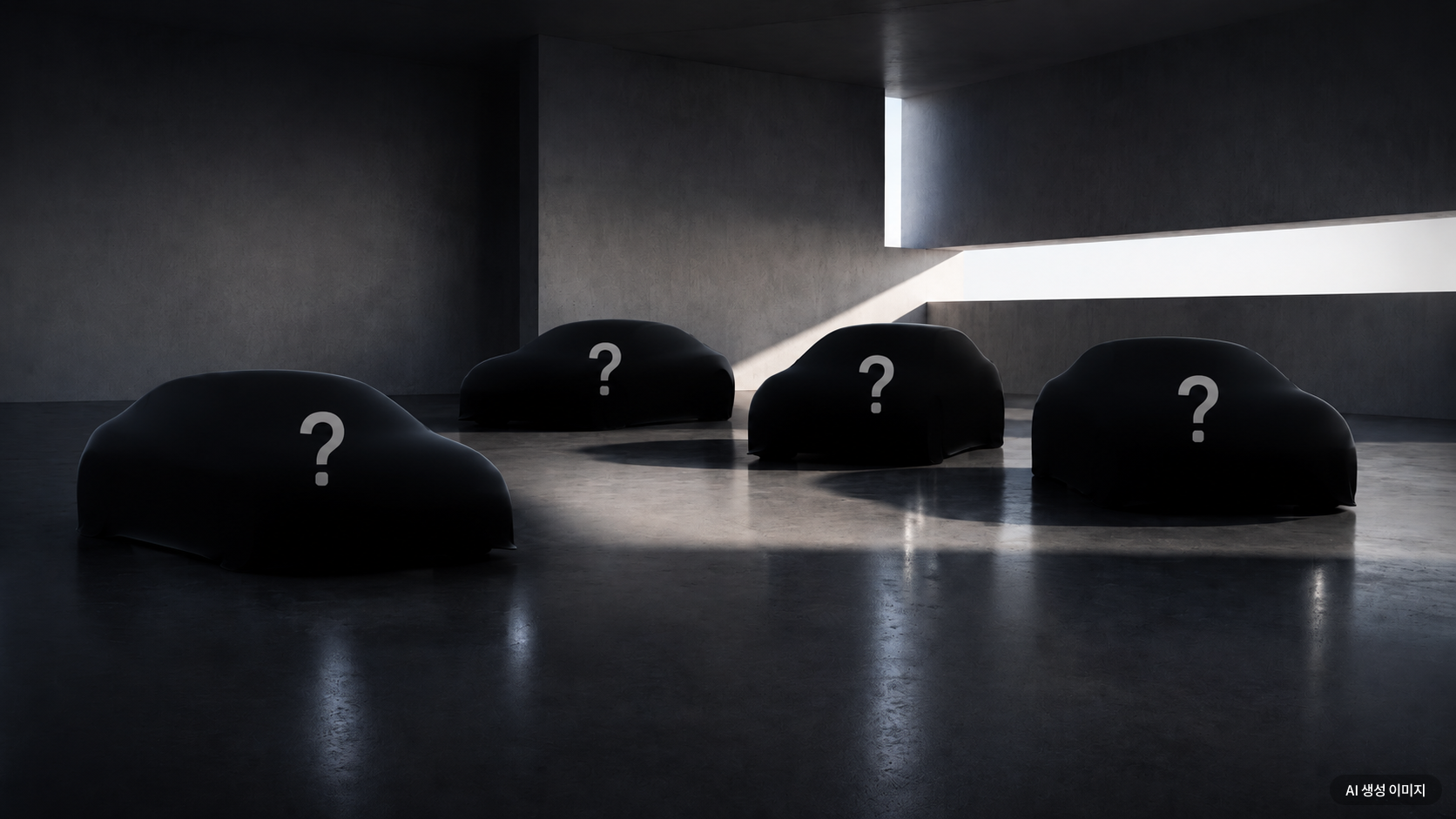

The Kia labor union has identified Chinese electric vehicles as a new variable for future employment, following the rise of artificial intelligence (AI). The union has begun to focus on the global competitive landscape and changes in industrial structure, moving beyond traditional concerns such as wages and working conditions.

Increasing Market Share for Chinese Electric Vehicles... "A Vision for Domestic Plants Is Needed"
According to industry sources on June 12, the Kia labor union held its second Future Development Committee meeting on June 11, comparing and analyzing the Chinese electric vehicle industry with the competitiveness of Hyundai Motor Company and Kia.
The Future Development Committee is an ad hoc consultative body operated jointly by management and labor to discuss responses to industrial changes such as the spread of AI and robotics and the transition to future vehicles. The Committee's previous meeting, held in April, focused on the topics of humanoids and physical AI.

The topic of the latest meeting drew particular attention. The union is closely monitoring not only employment changes brought by AI and automation but also the rapid growth of the Chinese electric vehicle industry. The union believes that the rise of Chinese companies could affect the competitiveness and production volume of Korea's automotive industry, as well as impact jobs.
The domestic automotive industry is also paying close attention to the rapid growth of Chinese electric vehicles. Hyundai Motor Group recently held a test drive and evaluation event for Chinese electric vehicles, including those from BYD, for employees at the Namyang R&D Center. This was to directly assess the product quality and technological competitiveness of Chinese electric vehicles such as BYD.
The union is also sharing these concerns. At the meeting, the union compared trends in the Chinese electric vehicle market and the competitiveness of Hyundai Motor Company and Kia, and reportedly called on management to strengthen the competitiveness of domestic plants, expand new investments, and create plans for job growth in response to changes in the future market.
Industry insiders are also paying attention to the shift in union priorities. While past labor-management talks focused on wage increases and expanded benefits, recent discussions are increasingly centered on issues directly related to plant survival, such as allocation of new vehicles, securing production volume, and attracting future investments.
BYD Rises to Fourth in Imported Car Market Share, Expands into Hybrids
This shift is largely due to the rapid rise of Chinese automakers.
Chinese electric vehicle manufacturer BYD sold 7,023 units in the Korean market between January and May this year, ranking fourth among imported car brands. Considering that BYD is still in the early stages of entering the domestic market, this is a remarkable achievement. BYD also became the fastest imported brand to reach 10,000 cumulative sales in Korea.
This time, BYD is turning to hybrids, aiming to expand its reach in the Korean market. BYD Korea will participate in the '2026 Busan Mobility Show' at BEXCO in Busan from June 26 to July 5, unveiling its plug-in hybrid (PHEV) technology, 'DM-i' (Dual Mode-intelligent), in Korea for the first time.
Since introducing the world's first mass-produced plug-in hybrid model in 2008, BYD has continued to advance its related technologies. Cumulative global sales have now surpassed eight million units. BYD Korea plans to launch new plug-in hybrid models in the second half of the year.

Zeekr, an electric vehicle brand under China's Geely Group, also began pre-orders for its first model in Korea on June 5, signaling a full-scale entry into the Korean market. Zeekr Korea is currently displaying vehicles at nine key locations nationwide, including Gangnam, Seocho, and Gangseo in Seoul; Pangyo, Ilsan, Incheon, and Suwon in Gyeonggi Province; as well as Daejeon and Busan, and plans to expand its network to 14 locations by the end of the year.

On May 14, Euisun Chung, Executive Chair of Hyundai Motor Group, told reporters at a ceremony celebrating the completion of the lobby renovation at the company's Yangjae headquarters in Seoul, "After visiting the Beijing Motor Show, I saw and learned a lot," adding, "The Chinese government is providing a great deal of support, and everything is moving much faster than us." The fact that Chairman Chung publicly commented on the speed of the Chinese auto industry after visiting the Beijing Motor Show highlights the tangible threat posed by Chinese cars in the domestic market.
An industry official said, "In the past, the union saw automation as the biggest threat, but now the competitiveness of Chinese companies is also recognized as a crucial variable. With the simultaneous rise of AI and Chinese electric vehicles, securing the future competitiveness of domestic plants has become a challenge for both labor and management."
-
Reporter Lee Seungjin promotion2@asiae.co.kr
-
Edit Lee Seonju sjlee109@asiae.co.kr
© The Asia Business Daily. All rights reserved. Unauthorized AI training and use prohibited.







