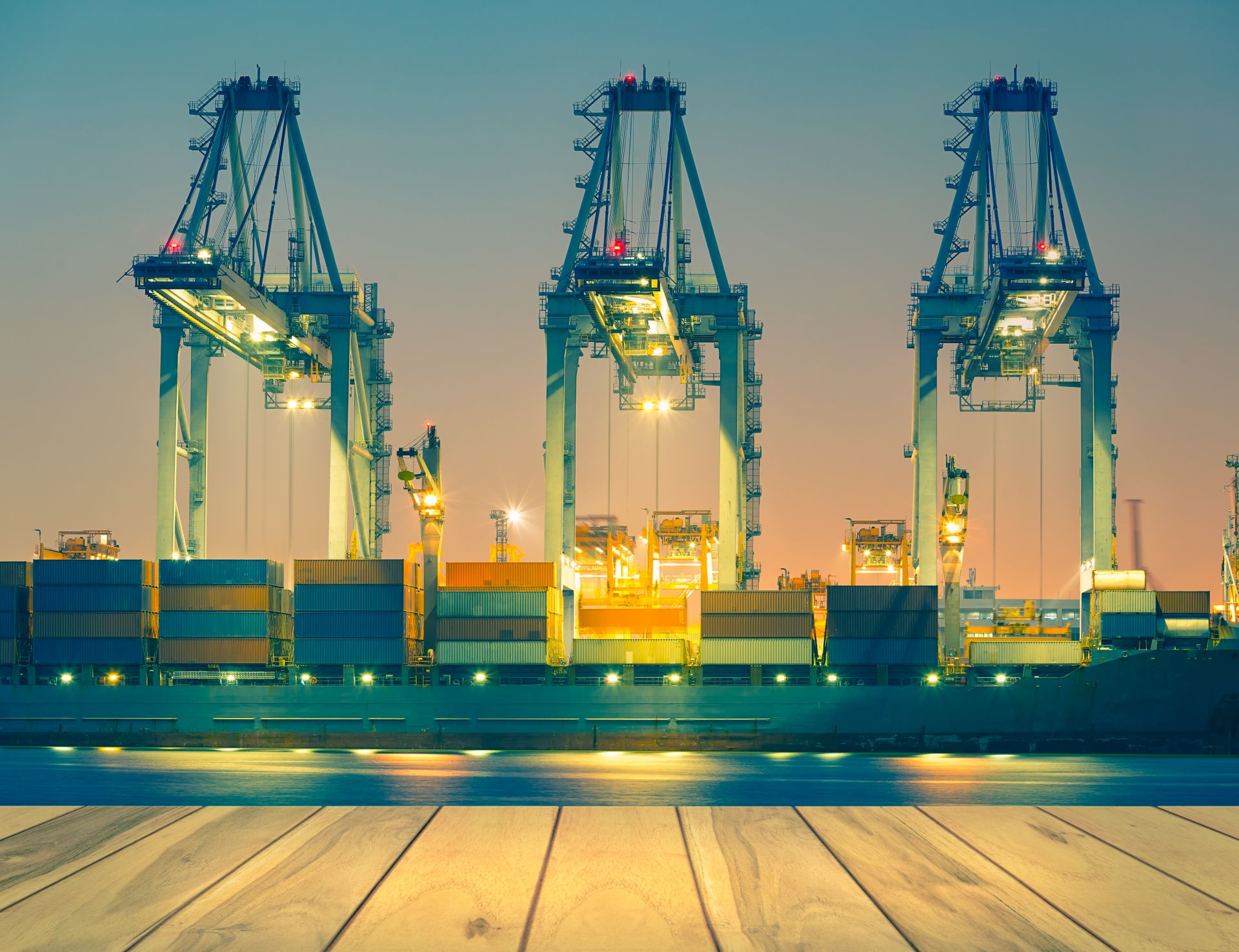

The Korean shipbuilding industry maintains world-class competitiveness in high value-added markets such as LNG carriers and eco-friendly ships. However, this competitiveness ultimately depends on the skill level of the workers.
K-Shipbuilding, The Disappearing Skilled Workforce
Worried About Labor Shortages...No Young Workers Due to Low Wages
"People in Their 20s and 30s Aren't Joining, We Might Be the Last Generation"

The red sun is rising over the liquefied natural gas (LNG) carrier under construction at the Hanwha Ocean Okpo Shipyard yard dock in Geoje, Gyeongnam. Photo by Jinhyung Kang
원본보기 아이콘A shipyard in Ulsan. The view from the highest VIP guesthouse reveals a yard so full of ships under construction that there is barely any empty space. The docks are filled with LNG carriers ordered by shipping companies from around the world, and large cargo holds waiting to be loaded onto ships line up throughout the yard. In the shipyard, where cranes move without rest, there is no trace of the industry's past dark days to be found.
However, the expressions of those who have long observed the scene are not entirely bright. Although there are plenty of backlogged orders, a new challenge has emerged in the form of labor shortages. Beneath the boom in orders lies the heavier burden of shrinking skilled labor and the disruption of technical expertise transfer.
ㅡ
The Skilled Workers Who Left Have Not Returned
"In the Past, We Worried About Not Having Enough Work. Now, We Worry About Not Finding Enough People."
"It's Become Even Harder to Find Skilled Workers to Meet Production Schedules."

A liquefied natural gas (LNG) carrier fully occupies the yard dock at Hanwha Ocean Okpo Shipyard in Geoje, Gyeongnam, continuing construction work with its lights on. Photo by Jinhyung Kang
원본보기 아이콘According to the Korea Employment Information Service, as of the second half of last year, the unfilled job rate in the shipbuilding industry was 14.4%, which is 6 percentage points higher than the all-industry average. Production roles such as metalworking, welding, and painting accounted for 29.5% of the total shortage. The problem is not simply that hiring is difficult; mismatches in working conditions, a lack of experienced workers, and avoidance of certain occupations are converging, leading to a decrease in the number of people entering the field itself.
The root of the labor shortage traces back to the mid-2010s recession. The combination of offshore plant underperformance and a collapse in new orders led to large-scale restructuring, and many skilled workers who left the field scattered into construction and plant industries.
Special Report - K-Shipbuilding K-Shipbuilding,
K-Shipbuilding,
Key Labor Shortage Indicators
Despite a record-breaking order backlog and unprecedented boom, the essential on-site workforce needed to build ships is rapidly drying up.
14.4%
Shipbuilding Industry Unfilled Rate
(Second Half 2025)
This is 6 percentage points higher than the all-industry average, vividly illustrating the severity of the recruitment crisis on shipbuilding worksites compared to other sectors.
8.4%
All-Industry Average
Unfilled Rate
This is the average figure across all industries in Korea, serving as the baseline to show how far the shipbuilding industry's unfilled rate has deviated from the normal range.
29.5%
Production Role Shortage Ratio
This is the core of the labor gap. Shortages are concentrated in essential on-site production processes such as metalworking, welding, and painting, which are fundamental to shipbuilding.
58.5%
Turnover Rate Within 1 Year of Hiring
(2024)
Based on statistics for new hires, more than half of the young workers newly secured for the yards left before completing their first year.
ㅡ
"
A significant number of skilled workers who left the sites during the restructuring in 2016 never returned to the shipyards.
"
By the time orders recovered, the workforce needed on-site had already departed.
ㅡ
Hourly Wage Stuck at the 20,000-Won Range for 18 Years
The problem is not just a simple shortage of workers, but that the structure of the skilled workforce itself is being shaken. According to the Korea Institute for Industrial Economics & Trade, over the past eight years, the biggest decline in the shipbuilding labor force has been among men aged 28 to 35. In contrast, the number of workers aged 60 and above now exceeds those under 27.
ㅡ
"
If a company has 100 employees, you'd be lucky to find even one young person among them. People in their 20s and 30s rarely enter shipyards. In the past, young skilled workers would follow a foreman and learn the trade, but now such scenes are rare. At this rate, I fear our generation could be the last.
"
Back in 2008, the top hourly wage was about 22,000 won, and today it's still only around 25,000 to 26,000 won. Eighteen years have passed, but considering the rise in consumer prices, the real wage has actually declined.
ㅡ
The welding sites at shipyards require workers to carry heavy equipment and squeeze into confined spaces where internal ship temperatures can exceed 60 degrees Celsius in the summer. Most days are spent standing for long hours under exposure to noise, dust, and hazardous gases. In an environment where several years of grueling work are required before independent work is possible, it's no surprise that young people see little reason to pick up a welding torch. In fact, in 2024, 58.5% of new hires in the shipbuilding industry left within the first year.
Special Report - K-Shipbuilding Skilled Worker,
Skilled Worker,
Wage Change Indicators
Over the span of 18 years, the hourly wage for on-site skilled workers has essentially remained stagnant. Taking into account the sharp rise in consumer prices, their real income has actually declined.
22,000 won
When Joining in 2008
This is the starting hourly wage for skilled workers when they first set foot on the yard 18 years ago.
25,000
~ 26,000 won
Current (18 Years of Experience)
Despite nearly two decades of accumulating expertise, the wage has remained stuck within this range.
3,000
~ 4,000 won
Increase Over 18 Years
The reward for years of struggle and skill-building on the yards has amounted to only this much of an hourly wage increase.
Approx. 13.6%
~ 18.2%
Wage Growth Rate
This cumulative increase rate over 18 years is extremely low, falling short of Korea's cumulative inflation rate for the same period.
ㅡ
"Foreman, There Is No One Left to Teach"

Skilled workers are working at the headquarters of Daewoo Shipbuilding & Marine Engineering in Geoje, Gyeongnam. Photo by Yonhap News
원본보기 아이콘In the past, shipyards had a relatively clear pathway for skills transfer. Workers would gain experience with subcontractors and, once their proficiency was recognized, move on to main contractors or key partner companies. However, this structure has significantly weakened in recent years.
"
Hiring of main contractor production workers has now been drastically reduced.
"
A steady influx of young workers is necessary for them to grow into intermediate and highly skilled workers. As the connecting structure weakens, the middle generation that should inherit technical skills is disappearing.
ㅡ
The proportion of foreign workers is rising rapidly to fill the labor gap. However, experts point out that simply increasing the number of foreign workers will not solve the problem.
"
While utilizing foreign labor is necessary, the core issue is the system of skill development.
"
Unless the structure that allows young workers to enter and grow into skilled labor is restored, the problem of interrupted skills transfer will persist.
"
Shipbuilding is an industry where automation is difficult, so ultimately, competitiveness depends on the skill level of the workforce.
"
With the decline in the working-age population, the foundation of the on-site workforce itself is weakening.
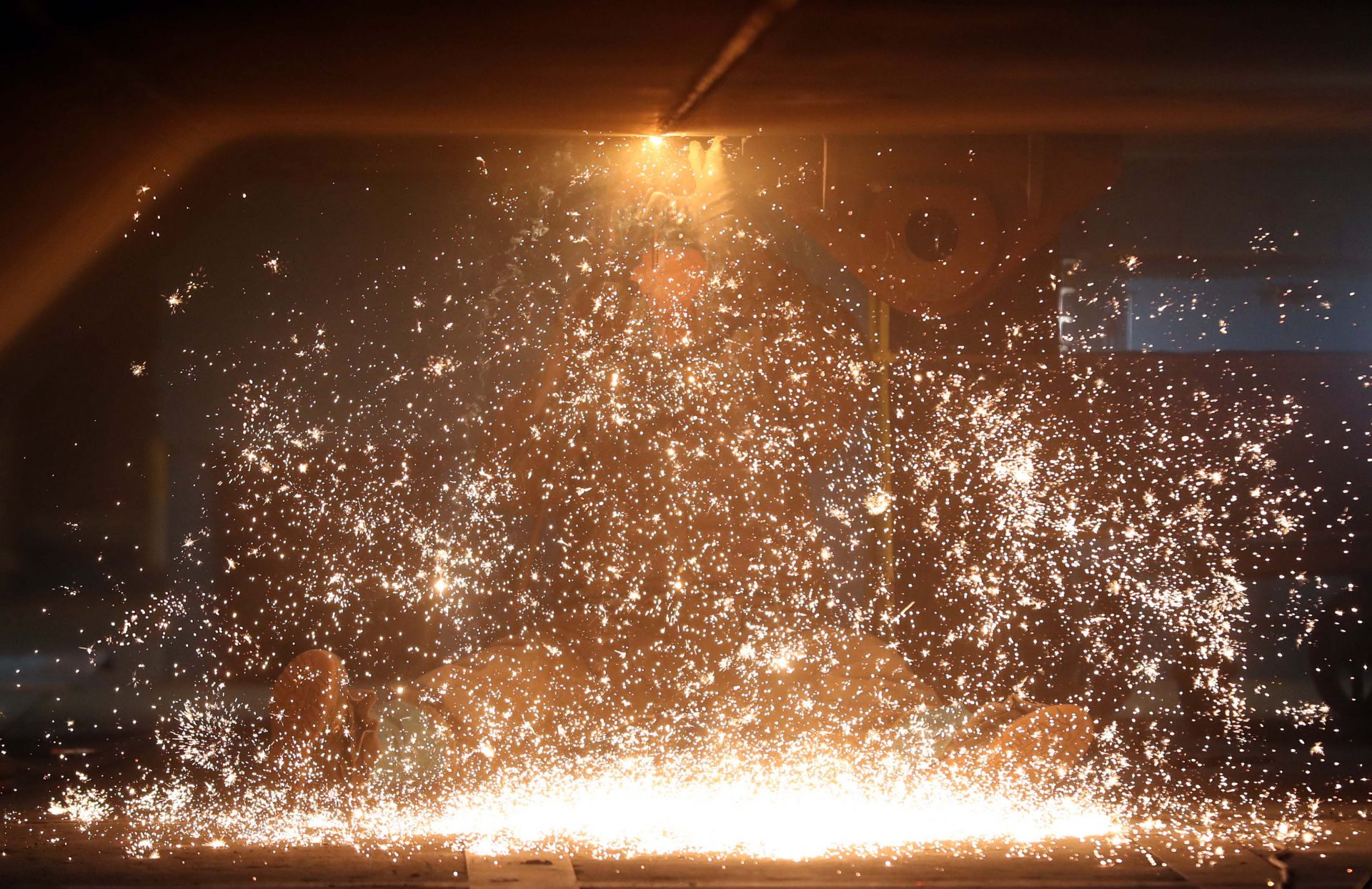
"China approaches shipbuilding as a strategic industry."
"Korea should not only look at order acquisition records but also seriously consider how to sustain the on-site workforce and technology transfer systems."
- Jongseo Yang, Visiting Professor, Department of Naval Architecture and Ocean Engineering, Seoul National University
-

Reporter Seo Miteum faith@asiae.co.kr
-
Edit Oh Hyunyoung hyun05@asiae.co.kr
© The Asia Business Daily. All rights reserved. Unauthorized AI training and use prohibited.







