Aging recognized not as a simple natural phenomenon but as a disease-like condition with the possibility of tissue function recovery
The government has begun to view human aging not merely as a natural phenomenon but as a treatable disease-level condition, and has officially launched the development of core technologies to restore aged cells to a youthful state.
On June 10, the Ministry of Science and ICT announced that it held a kick-off meeting for the "Development Project for Fundamental Technologies in Biologic Aging Reprogramming" and that it would initiate efforts to build a national research ecosystem for aging studies.
This project is a large-scale research and development (R&D) initiative aimed at identifying the causes of aging and developing technologies to reverse the aging process. A total of 47.5 billion won will be invested over five years from this year through 2030, with a budget of 7.5 billion won allocated for this year.

Government to invest 47.5 billion won over 5 years
in aging reprogramming research
Aiming to secure three core technologies including aging measurement and control technology
and anti-aging technology efficacy evaluation
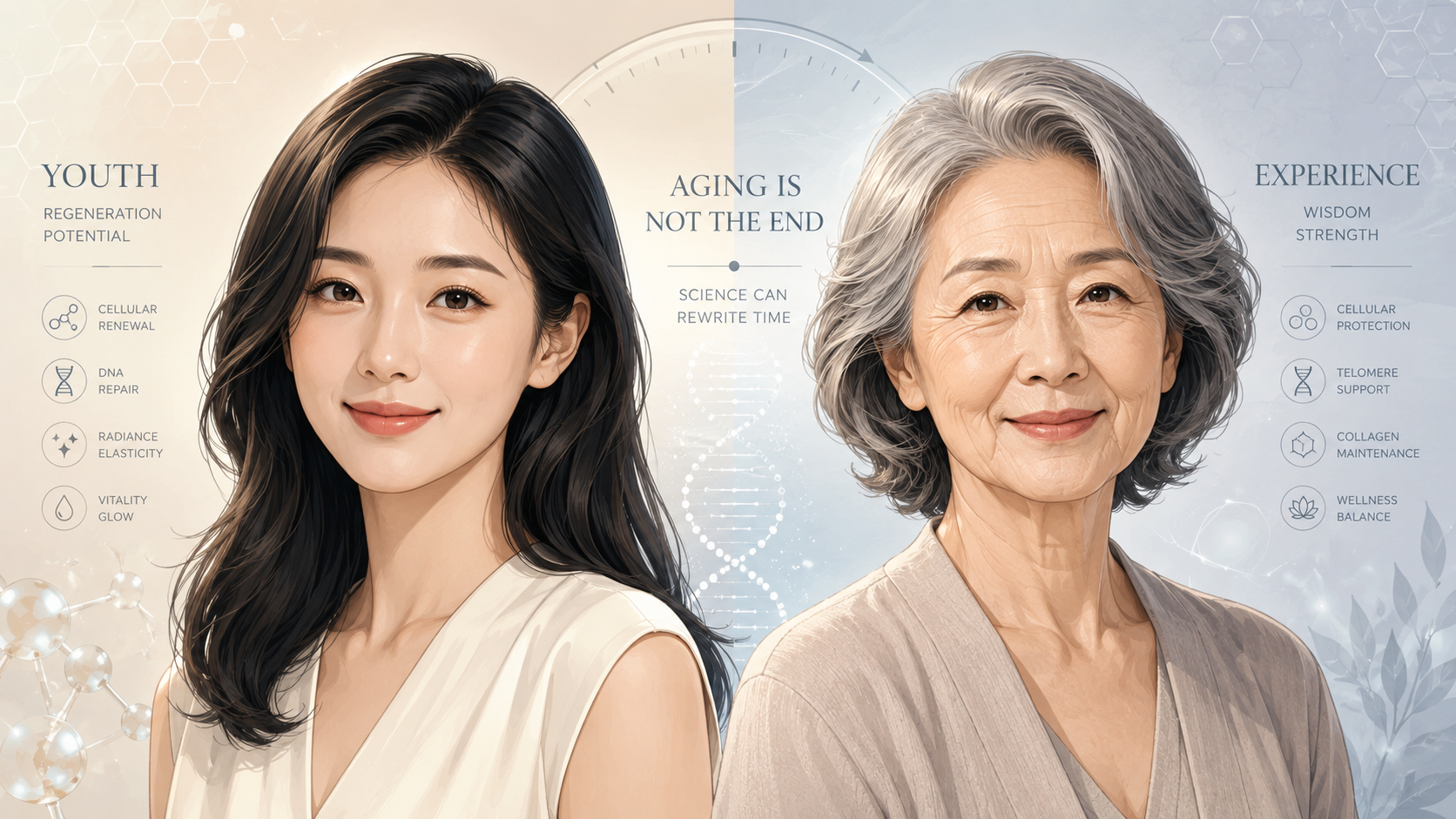
AI generated image
Until now, the scientific community has regarded aging as an unavoidable biological phenomenon and has focused on research aimed at slowing the pace of aging. However, more recently, aging has been recognized as a condition similar to a disease, and the possibility of restoring cell and tissue function to a youthful state has led to a rapid expansion of related research.
In line with this trend, the Ministry of Science and ICT plans to secure core technologies that can quantitatively measure and control aging. The project will proceed in three main areas: ▲ development of aging measurement technology ▲ development of aging control technology ▲ evaluation of anti-aging technology efficacy.
First, the project aims to develop measurement technologies that can objectively assess biological age and the degree of aging, and, based on this, to secure control technologies that restore the function of aged cells and tissues. In addition, the ministry will establish an evaluation system to verify the efficacy and safety of newly developed anti-aging technologies.
About 20 attendees participated in the kick-off meeting, including representatives from the Ministry of Science and ICT, the Next-Generation Bio Division of the National Research Foundation of Korea, the Aging Research Center at the Korea Research Institute of Bioscience and Biotechnology, as well as principal investigators for each project.

The government views human aging not simply as a natural phenomenon but as a treatable disease and has begun full-scale development of core technologies to revert aged cells to a youthful state. Provided by the Ministry of Science and ICT
원본보기 아이콘The participants shared research directions for each specific project and the roles of each institution, and discussed strategies for shared use of research data and building cooperative frameworks. In particular, they reached a consensus that, given the characteristics of aging research, data sharing and ongoing cooperation among research institutions are core elements that will determine the project's success.
The Ministry of Science and ICT plans to establish a national research ecosystem for aging through regular exchanges and collaboration, and to support the securing of core technologies at a global level.
An official from the Ministry of Science and ICT stated, "Clarifying the fundamental principles of aging and developing technologies to restore aged cells to a youthful state are essential R&D tasks in preparation for a super-aged society," adding, "We will provide active support to ensure that our researchers can attain world-class capabilities in aging research."
-

Reporter Kim Jonghwa justin@asiae.co.kr
-
Edit Choi Yujeong yjchoi@asiae.co.kr
© The Asia Business Daily. All rights reserved. Unauthorized AI training and use prohibited.