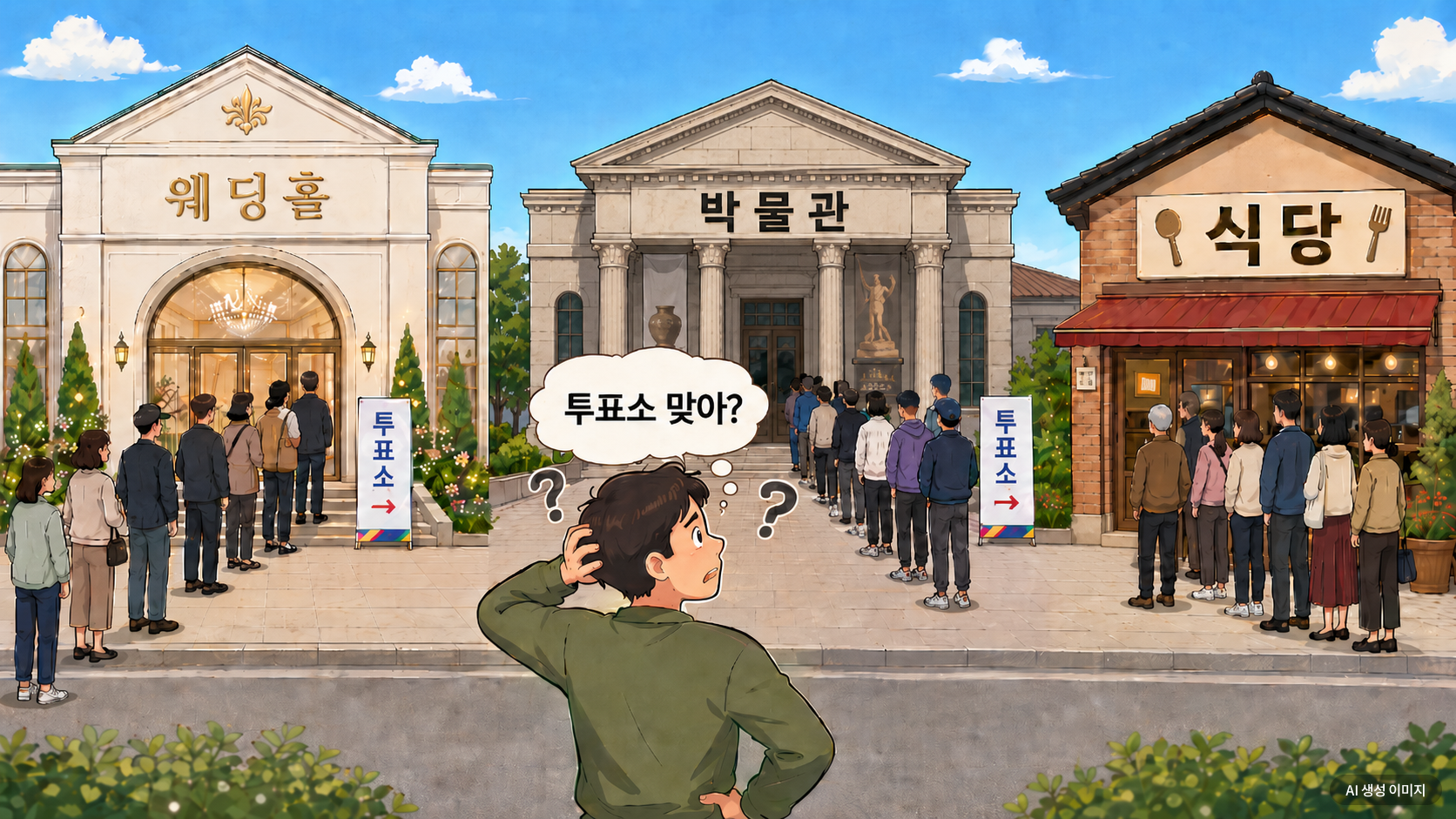
Caution is also needed when taking proof of voting photos.
Unique Polling Stations Across Korea Welcome Voters for the June 3 Local Elections
On the eve of the June 3 local elections,
unique polling stations across the country are preparing to welcome voters.
While schools, community centers, and government offices are familiar polling venues,
depending on local circumstances, places such as barbecue restaurants, wedding halls, martial arts studios, museums, and car dealerships
are transformed into "sites of democracy" for just one day.

On the morning of the 30th, the second day of advance voting for the 9th nationwide local elections, a voter is moving in the advance voting station set up on the 3rd floor of the Usan-dong Administrative Welfare Center in Gwangsan-gu, Gwangju. Photo by Yonhap News
원본보기 아이콘From 6 a.m. to 6 p.m., 14,288 Polling Stations Nationwide for Casting Your Precious Vote
According to the National Election Commission and other sources, the main voting for the 9th Nationwide Local Elections will be held on the 3rd, from 6 a.m. to 6 p.m., at 14,288 polling stations across the country. Unlike early voting, on election day, voters can only vote at their designated polling station. The location of each polling station can be confirmed through the voting guide sent to each household or the polling station search service on the National Election Commission's website.
Unlike Early Voting, Only at Your Designated Polling Station
One of the most notable locations is "Sangsang Chouwol Dwaeji Galbi," a barbecue restaurant designated as the polling station for Soha 2-dong Precinct No. 4 in Gwangmyeong, Gyeonggi Province. This restaurant has served as a polling station for over a decade, making it a familiar site for local residents. The restaurant assists with the election by offering its annex as the polling station while continuing operations in its main hall. For voters, this means they can have a meal after casting their ballots.
Vote and Dine at a Barbecue Restaurant in Gwangmyeong: "Two Birds with One Stone"

A citizen is voting at Guro 5-dong 1st Polling Station, set up in a wedding hall in Guro-gu, Seoul, on the day of the 22nd National Assembly election. Photo by Yonhap News
원본보기 아이콘Wedding Hall in Seosan, Chungnam: Spacious, Accessible, and Convenient
Wedding halls are also frequently used as polling stations. In Seosan, Chungcheongnam-do, a wedding hall has been designated as the polling station for Dongmun 2-dong Precinct No. 1, with voting booths and ballot boxes set up in the banquet hall. With a spacious interior, parking, elevators, and restrooms, the venue is convenient for voters using wheelchairs and elderly voters. Additionally, since weekdays are typically light on wedding bookings, it is less burdensome to provide the space for elections, which is another reason it was chosen as a polling site.
Sports facilities also transform into polling stations on election days. "Munmu Kendo Studio" in Pohang, North Gyeongsang Province, is operating as the polling station for Ocheon-eup Precinct No. 12. With an indoor area exceeding 330 square meters and good accessibility for residents, it has served as a polling station for over a decade. The studio reports that elections have helped locals become more familiar with the facility.
Local Kendo Studios, Kindergartens, Cafes: Community Spaces Transformed into Voting Venues

Sports facilities also transform into polling stations on election days. On the day of the 22nd National Assembly election, election observers are watching the voting at the Jinwol-dong Precinct 5 polling station set up at Baekdu Taekwondo Center in Nam-gu, Gwangju. Photo by Yonhap News
원본보기 아이콘In addition, Polling Station No. 4 in Garak 1-dong, Songpa-gu, Seoul, is set up in a museum; Precinct No. 3 in Idong, Changwon, Gyeongnam, is in a kindergarten; and Precinct No. 2 in Simgokbon 1-dong, Bucheon, Gyeonggi Province, is located in a car dealership. While the election commission primarily considers schools, government offices, and public institutions first, they request cooperation from private facilities if no suitable locations exist within the precinct or if accessibility is poor. Key criteria include a spacious venue, safe entry and exit routes, and convenience for the elderly and persons with disabilities.
Schools and Public Institutions Take Priority... If Unavailable, Spacious and Safe Private Facilities are Used

Voters are casting their precious votes at Neungdong Third Polling Station set up at the Kia Motors Children’s Grand Park dealership in Gwangjin District, Seoul, where the 21st National Assembly election is being held. Photo by Hyunmin Kim
원본보기 아이콘This is not the first time unique polling stations have appeared. In last year's 21st presidential election, a barbecue restaurant in Gwangmyeong (Gyeonggi Province), a wedding hall in Guro-gu (Seoul), and a wrestling gym in Suyeong-gu (Busan) all served as polling stations, drawing public attention. During the 22nd National Assembly election in 2024, a variety of venues were used, including an indoor wrestling arena at Seongnam Sports Complex (Gyeonggi Province), a car dealership in Gwangjin-gu (Seoul), a cafe in Seodaemun-gu (Seoul), an imported car dealership in Incheon, and a table tennis gym at a sports center in Daegu. With each election, familiar neighborhood spaces are transformed into public venues.
Mobile IDs Allowed, But Screenshots Not Accepted... No Certification Photos Inside Polling Stations
In this local election, most voters will receive seven ballots. This is because voters are selecting the superintendent of education, metropolitan/provincial governors, heads of districts/cities/counties, constituency-level metropolitan/provincial council members, proportional representation metropolitan/provincial council members, constituency-level district/city/county council members, and proportional representation district/city/county council members. However, in Sejong and Jeju, where there are no basic local council or basic head elections, the number of ballots is different, and voters in regions holding National Assembly by-elections will receive one additional ballot.
Be Careful with "Two-Part Voting"... After the First, Don't Forget the Second Round

On the 29th, the early voting day for the 9th nationwide local elections, travelers visited the early voting station set up in the Terminal 2 passenger tunnel at Incheon International Airport to cast their votes. Photo by Kang Jinhyung
원본보기 아이콘Voting on election day is conducted in two stages. First, voters receive ballots for the superintendent of education, metropolitan/provincial governor, and head of district/city/county, mark their choices, and place them in the ballot box. Then, they receive the remaining local council ballots and complete the second round. In districts with by-elections, those ballots are distributed together. Since there are multiple ballots, voters should carefully check the type of election, candidate names, and party names before marking their selections.
When heading to the polls, voters must bring identification. This can be a resident registration card, driver's license, passport, or any government-issued ID with a photo and date of birth. Mobile IDs are also accepted, but the actual app must be used for verification—screenshots or saved images are not permitted.
Be Careful with Voting Certification Photos!! Violations May Result in Punishment under the Public Official Election Act
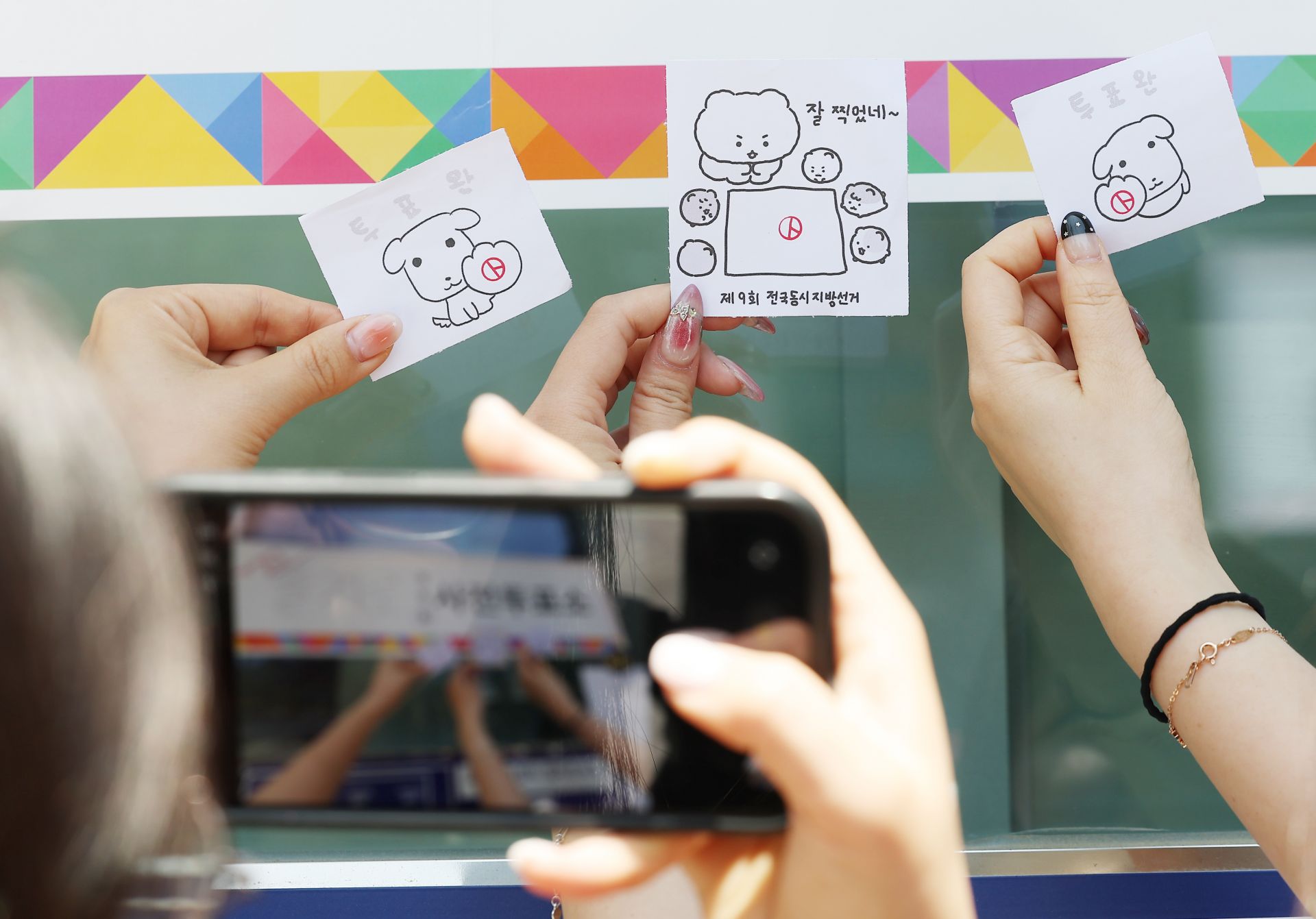
It is allowed to take proof photos outside the polling station building, such as in front of signs or photo zones, but taking photos inside the polling station or voting booth is prohibited.
In particular, photographing the marked ballot or uploading it on social media or messengers can be punished as a violation of the Public Official Election Act.
The minimum voting age is 18 years old as of election day. In this local election, anyone born before June 4, 2008, is eligible to vote. The polls close at 6 p.m.; however, voters who arrive and are waiting in line before closing time will receive a numbered ticket and be allowed to vote. Still, to avoid congestion, it is recommended to visit polling stations with enough time to spare.
-
Reporter Bang Jeil zeilism@asiae.co.kr
-
Edit Kim Yumi ymkim91@asiae.co.kr
© The Asia Business Daily. All rights reserved. Unauthorized AI training and use prohibited.