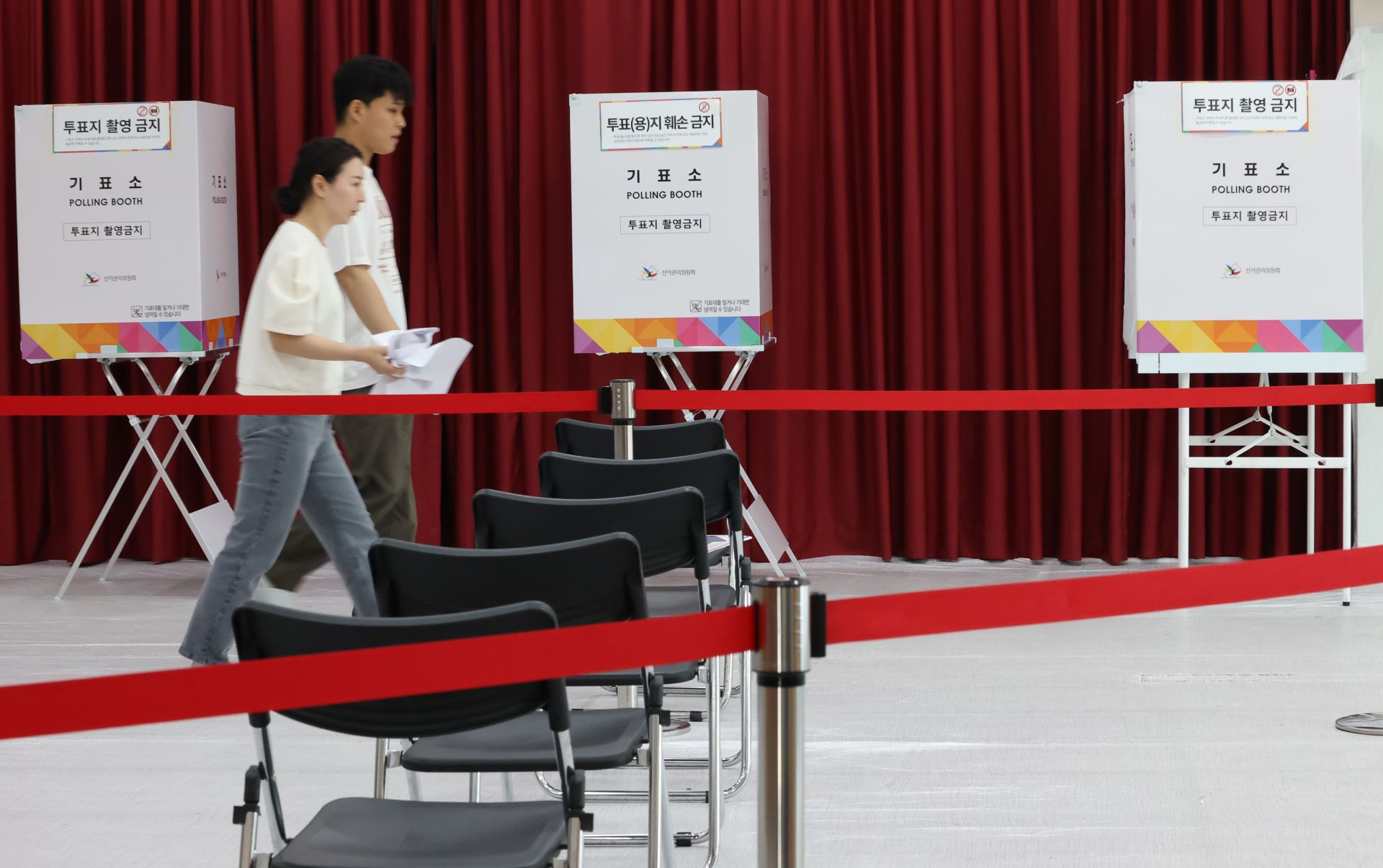

Government and Ruling Party Face Test of Leadership... If Oh Sehoon Wins, He Could Emerge as a Presidential Contender
The reason both the ruling and opposition parties are focusing on the Seoul mayoral race in the 9th Nationwide Local Elections is its major political symbolism. The outcome could shift the balance of power in the government and impact internal party dynamics. Seoul, once considered a Democratic Party stronghold, has seen its political landscape change as its population has moved toward Gyeonggi and Incheon. A younger demographic has left, resulting in a higher proportion of older residents, and the city's heightened sensitivity to real estate issues is also a key factor.
Against this backdrop, if Jung Wonoh of the Democratic Party is elected, the government and ruling party would secure strong momentum and leadership in state affairs. Overcoming the opposition’s drive for a “special counsel to drop charges” and criticism over real estate policy mismanagement, the Lee Jaemyung administration would demonstrate robust support in a more conservative Seoul.

Jeong Wono, the Democratic Party candidate for Seoul mayor, is holding a press conference with Democratic Party district mayor candidates in Seoul at the National Assembly on June 2, 2026. Photo by Hyunmin Kim
원본보기 아이콘Conversely, a defeat could disrupt internal party dynamics. Jung has been characterized as a “Myeong-pick” (a pick by Lee Jaemyung), regardless of President Lee’s intentions. If Jung loses, it would halt efforts to reform the Democratic Party’s structure. A pro-government figure commented, “He failed to achieve results even in the party primary; this shows that the influence of ‘New Lee Jaemyung’ is limited.”
If Oh Sehoon of the People Power Party secures a fifth term, he could quickly rise as a leading presidential candidate. This would be the political impact of defending Seoul against the 60% approval rating of the incumbent president. Even in the case of a narrow defeat, some predict he will still pursue party leadership.

Seoul mayoral candidate Oh Se-Hoon of the People Power Party is greeting citizens on their way to work near Yeouido Station in Seoul on June 2, 2026. Photo by Hyunmin Kim
원본보기 아이콘However, if he loses the Seoul mayoral race, he could come under fire for political responsibility. Oh could also face challenges from the pro-leadership faction within the People Power Party. On this day, Oh appealed for support, stating, “The opposition has been lacking. We failed to represent public sentiment.” A lawmaker from the party's leadership faction said, “Whether things go well or not, it’s Oh’s responsibility.”
Especially as the party leadership’s hold on power and the possibility of Han Donghoon’s political comeback are intertwined, the situation could become even more complex. A People Power Party lawmaker noted, “For a while, leadership will be left hanging in the air.”

Democratic Party candidate for Daegu mayor Kim Bu-gyeom (left) and People Power Party candidate for Daegu mayor Chu Kyung-ho are each greeting voters in the morning on June 2 at Banwoldang Intersection in Jung-gu, Daegu and Bokhyeon Five-way Intersection in Buk-gu, Daegu. Photo by Yonhap News Agency 2026.6.2
원본보기 아이콘The Democratic Party’s Strongest Candidate Ever, Kim Boo-gyeom, Runs… A Defeat for People Power Party Would Be a Major Blow
The political landscape of South Korea could shift dramatically depending on the choice of Daegu’s citizens, the so-called “heart of conservatism.” If the Democratic Party produces its first-ever Daegu mayor, it could usher in a wave of pragmatism in a political field previously defined by ideological binaries. Conversely, if the People Power Party manages to hold its ground, it would reaffirm Daegu’s role as the final bastion of conservatism.
The Daegu mayoral race is unpredictable, drawing intense attention from political circles. Kim Boo-gyeom, the Democratic Party candidate, has used social media to promote his “one action, three benefits” strategy: 1) attracting more central government funds, 2) acting as a check on the Democratic Party’s dominance, and 3) fostering a healthy conservative movement. He argues that reviving Daegu’s struggling economy requires support from the ruling party with a parliamentary majority, internal checks within the Democratic Party, and a wake-up call for conservatives to reinvent themselves.

Democratic Party candidate for Daegu Mayor, Kim Boo-gyeom (left), and People Power Party candidate for Daegu Mayor, Choo Kyung-ho, visited the site of Daegu-Gyeongbuk New Airport in Gunwi County, Daegu, on the 28th and made remarks. 2026.5.28 Yonhap News Photo by Yonhap
원본보기 아이콘If Kim wins, the Democratic Party’s pragmatic centrist wing is expected to gain more influence. Meanwhile, the People Power Party would be forced to undertake radical reforms, as suggested by the expression “shedding their skin.” For Kim, winning the Daegu mayoralty could open up opportunities for even greater ambitions.
Choo Kyung-ho, the People Power Party candidate, campaigned on a platform of “reviving Daegu’s economy and protecting the city’s pride.” Formerly the finance minister under the Yoon Suk-yeol administration, Choo asserted, “Economics is not about slogans or rhetoric,” adding, “As a lifelong economic policymaker and a former finance minister, I am best qualified for the job.”
If Choo wins, the People Power Party could be credited with “avoiding the worst” despite tough circumstances. Although some may view it as a minimal victory, maintaining a regional base in the TK (Daegu-Gyeongbuk) area allows for rebuilding. For Jang Donghyuk and the current party leadership, the Daegu mayoral race is a ‘must-win’ condition for success.

On June 1, 2026, Ha Jungwoo of the Democratic Party, Park Minsik of the People Power Party, and independent candidate Han Donghun, all running in the Busan Bukgap parliamentary by-election, held a press conference at the Busan City Council and election office in Yeonje District, Busan. Photo by Yonhap News Agency
원본보기 아이콘If Han Donghoon Wins, People Power Party’s Leadership Will Inevitably Take a Hit… Democratic Party to Evaluate Expansion in Yeongnam
The Busan Buk-gu Gap by-election, considered the fiercest battleground in the June 3 local elections, is a key test for the future power dynamics of the conservative bloc and the Democratic Party’s potential expansion in the Yeongnam region.
The most impactful scenario would be a victory by independent candidate Han Donghoon. Recent public opinion polls have shown Han’s momentum increasing; if he defeats the major party candidates, it could fundamentally alter the competition for leadership within the conservative camp. Han would emerge as a symbol of opposition to the Democratic Party government and could solidify his status as a leading conservative figure.
In this case, the People Power Party leadership would inevitably suffer. There would likely be calls for accountability regarding candidate nominations, demands for an early transition to an emergency leadership committee, and pressure for leadership renewal. However, Han would also face challenges such as rejoining the party and expanding his support base. A political insider in Busan commented, “Ultimately, Han’s ability to embrace the existing leadership faction and lawmakers from the TK region will be crucial in future party leadership contests.”

Independent candidate Han Donghoon (left), Democratic Party candidate Ha Jungwoo, and People Power Party candidate Park Minsik for the Busan Buk-gu Gap by-election attended the Kongguksu sharing event held at Namsanjeong Comprehensive Social Welfare Center in Buk-gu, Busan on May 21, 2026, where they volunteered in serving food. 2026.5.21 Yonhap News Agency
원본보기 아이콘If Ha Jungwoo of the Democratic Party wins, the party would maintain its only constituency in Busan and preserve its foothold for expansion in Yeongnam. As a former AI Future Planning Chief at the Presidential Office, Ha’s victory would be interpreted as a positive assessment of the Lee Jaemyung administration by Busan voters. This would also bolster the Democratic Party’s PK (Busan-Ulsan-Gyeongnam) strategy, led by Busan mayoral candidate Jeon Jae-soo.
On the other hand, the conservative bloc could face blame for election losses. Both Han Donghoon, who failed to unify the conservative vote, and Park Minshik of the People Power Party, would not be free from responsibility for splitting the conservative vote.
If Park wins, the legitimacy of the People Power Party’s candidate selection and leadership decisions will be reaffirmed, and its leadership strengthened. Han would inevitably suffer politically.
However, some within the People Power Party note that the outcome in Buk-gu Gap alone will not determine the party’s future leadership. A pro-leadership figure stated, “We’ll need to look at the overall results in TK, Gyeongnam, and Chungnam to judge whether the current leadership structure should continue.”

Candidates running in the National Assembly by-election in Pyeongtaek, Gyeonggi Province, greet attendees at the alumni sports day event held at an elementary school in Paengseong-eup, Pyeongtaek City, Gyeonggi Province, on May 31. From left to right: Kim Yongnam, candidate of the Democratic Party of Korea; Yoo Eui-dong, candidate of the People Power Party; Jo Guk, candidate of the National Innovation Party; Kim Jaeyeon, candidate of the Progressive Party; and Hwang Kyoan, candidate of the Liberty and Innovation Party. May 31, 2026, Yonhap News. Photo by Yonhap News
원본보기 아이콘No Single Candidacy: All Sides Compete to the End… Fallout Expected Regardless of the Winner
With no single candidacy achieved among progressive and conservative blocs in the National Assembly by-election for Pyeongtaek-eul, the contest remains fiercely unpredictable until the very end. In particular, the Democratic Party and the People’s Innovation Party, having engaged in negative attacks, are expected to find it difficult to reconcile even after the election.
As of June 2, a day before the main vote, the race in Pyeongtaek-eul is focused on three leading candidates out of five: Kim Yongnam of the Democratic Party, Yoo Uidong of the People Power Party, Jo Guk of the People’s Innovation Party, Kim Jaeyeon of the Progressive Party, and Hwang Kyoan of the Liberty and Innovation Party. The main competition is among Kim Yongnam, Yoo Uidong, and Jo Guk.
In the progressive camp, the Democratic Party and the Innovation Party have called each other “fake candidates,” hurling harsh insults such as “seed of division in the democratic camp” and “filth.” This has significantly dampened the atmosphere for possible merger or unification talks between the two parties.

Candidates running for the National Assembly in Pyeongtaek-eul are taking a commemorative photo at the candidate invitation debate hosted by Jae-hong Park's 한판승부 at CBS Mokdong, Yangcheon-gu, Seoul on the 27th. From the left, Kim Yongnam of the Democratic Party of Korea, Yoo Eui-dong of the People Power Party, Jo Guk of the Innovation Party, Kim Jae-yeon of the Progressive Party, and Hwang Kyo-ahn of the Liberty and Innovation Party. 2026.5.27 Photo by Nocut News
원본보기 아이콘The Innovation Party, in particular, is expected to suffer a heavy blow if it loses. Not only would Jo Guk’s status as a presidential hopeful be in jeopardy, but the party’s very survival could come into question. The Innovation Party has had its leader running directly in the race and concentrated the party’s resources on Pyeongtaek-eul.
Even if the party wins, unification of the progressive bloc will not be easy. Jo has stated that he will lead talks for a merger with the Democratic Party if elected, but it remains to be seen whether the Democratic Party will agree. Democratic Party Supreme Council member Hwang Myungseon drew a line, saying, “As a Supreme Council member, I can say we are not considering a merger with the Innovation Party after the election.” Another Democratic Party lawmaker from Gyeonggi Province said, “Even if Jo is elected, as a minority party, the Innovation Party cannot lead a merger.” Lee Jaemook, a professor of political science and diplomacy at Hankuk University of Foreign Studies, commented, “Regardless of the election outcome, internal conflicts and divisions within the camp could deepen.”
Conservative bloc unification is also unlikely. Hwang Kyoan has said, “The door to a single candidacy is open,” but continues to demand an apology from Yoo Uidong for the impeachment of former President Park Geun-hye. Given that early voting has already ended, even if a dramatic unification occurs, its impact is expected to be limited. Meanwhile, the early voting rate in Pyeongtaek was 18.39%, lower than the national average for by-elections (24.12%).
-
Reporter Yoo Jaehoon kalamal@asiae.co.kr
-
Reporter Na Juseok gonggam@asiae.co.kr
-
Reporter Woo Sooyoun yesim@asiae.co.kr
-
Reporter Ji Hyejin heyjin@asiae.co.kr
-
Edit Sung Kiho kihoyeyo@asiae.co.kr
© The Asia Business Daily. All rights reserved. Unauthorized AI training and use prohibited.