Accommodation costs surge up to 7.5 times ahead of the June Busan concert
As accommodation prices in Busan have soared ahead of BTS's upcoming concert in the city, the so-called "evacuation viewing" phenomenon is spreading, with fans relocating their lodgings to nearby cities such as Ulsan, Yangsan, and Changwon. The controversy over excessive price hikes and reservation cancellations by some accommodation providers has raised concerns that Busan's plans to revitalize the local economy may be undermined.
According to the Korea Fair Trade Commission and Korea Consumer Agency on June 1, accommodation prices in Busan during the BTS World Tour "Arirang" scheduled for June 12-13 have risen by an average of 2.4 times compared to typical weekends. Some properties were found to have increased rates by as much as 7.5 times.
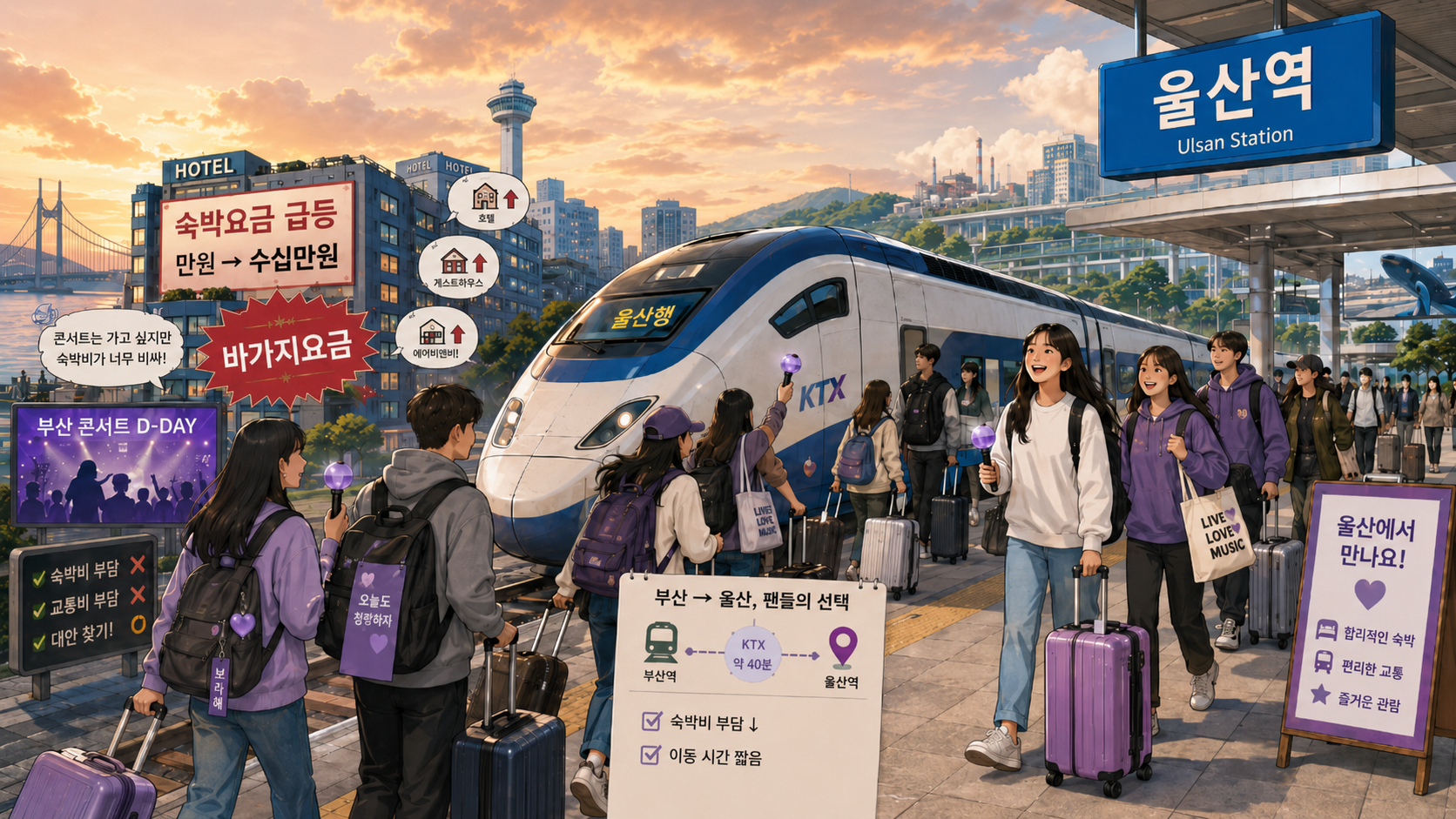
On online communities and social networking services (SNS), information is being actively shared about giving up on staying in Busan and instead booking accommodations in Ulsan, Yangsan, or Changwon, then traveling to the concert by public transportation on the day of the event. The journey from Busan Asiad Main Stadium, the concert venue, to the Samsan-dong area in Nam-gu, Ulsan takes about an hour by car. Using KTX Ulsan Station and Donghae Line Metropolitan Railway to travel to Busan while handling accommodation and meals in nearby cities has emerged as a popular alternative.
Even reservations made months in advance are unilaterally canceled, with high-priced resales leading to a 'boycott'
Fans resort to 'evacuation-style viewing' by staying in nearby accommodations in Ulsan, Yangsan, Changwon, etc.
Active sharing of public transportation information on the day of the concert
Fans resort to 'evacuation-style viewing' by staying in nearby accommodations in Ulsan, Yangsan, Changwon, etc.
Active sharing of public transportation information on the day of the concert
BTS and the President criticize the 'exorbitant accommodation fees'
Government and local authorities secure about 1,300 alternative accommodations
Fair Trade Commission vows strict action against price collusion
Government and local authorities secure about 1,300 alternative accommodations
Fair Trade Commission vows strict action against price collusion
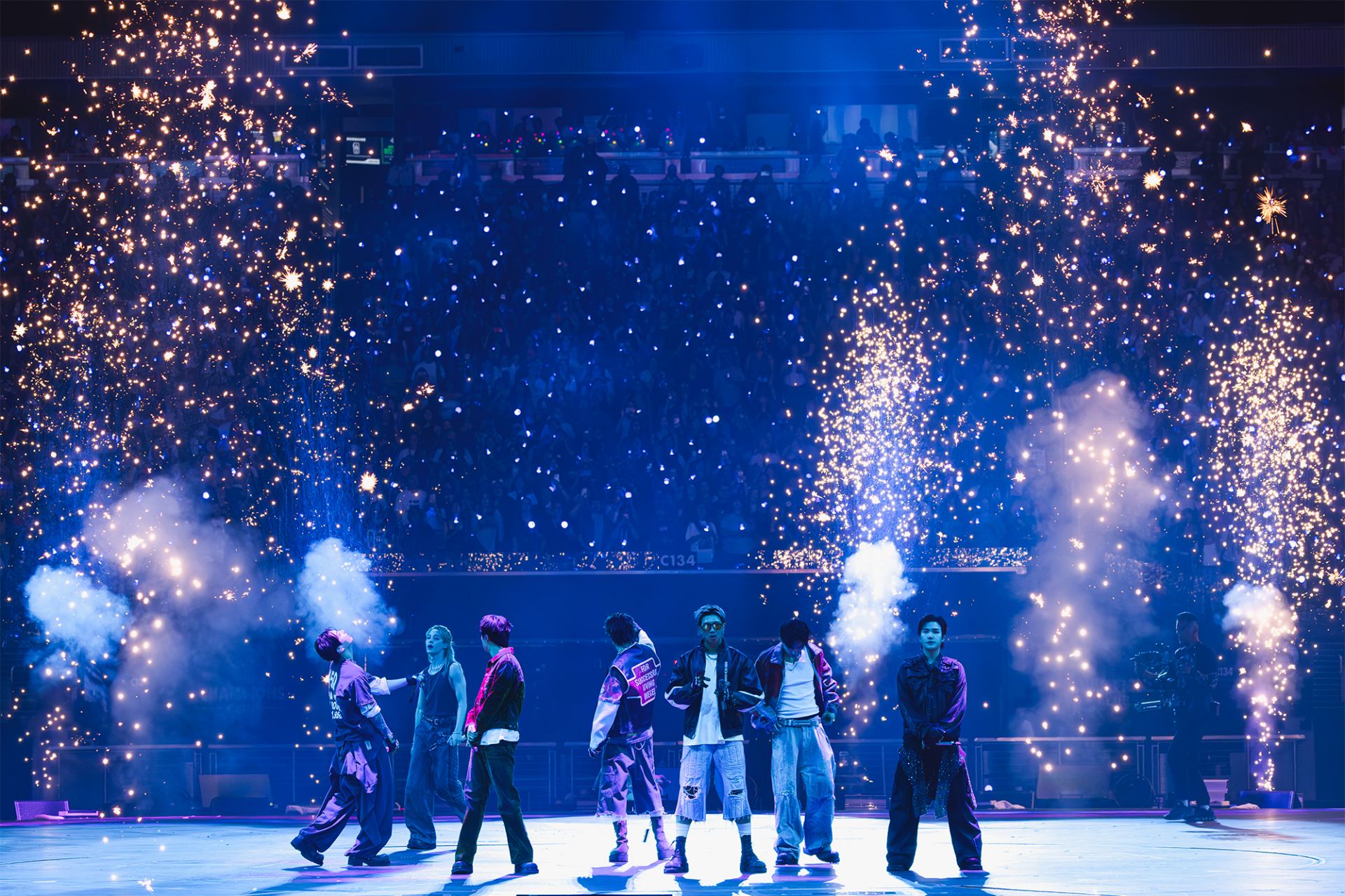
Scene from BTS concert held last month in Las Vegas, USA. Provided by Big Hit Music
This concert marks BTS's first large-scale solo performance in Busan in three years and eight months since the "2030 Busan World Expo Bid Support Concert" in October 2022. The final day of the concert, June 13, is BTS's debut anniversary, and the fact that it takes place in the hometown of group members Jimin and Jungkook has drawn intense interest from fans both in Korea and abroad.
Busan City sought to use the concert as an opportunity to boost urban tourism and consumption. Plans included operating a welcome center at the Eurasia Platform inside Busan Station, a drone lighting show at Gwangalli Beach, a fan experience zone at Song Sanghyeon Square, themed city tour buses, and food and beverage events at Busan Port's Pier 1, all aimed at encouraging visitors to stay longer in Busan.
However, price hikes in the accommodation sector have emerged as a major variable. Survey results show that motel rates have increased by an average of 3.3 times and hotels by 2.9 times. Motel rooms that usually cost around 50,000 won are now priced between 200,000 and 300,000 won, business hotels are charging 400,000 to 500,000 won, and some deluxe hotel rooms are being sold for 2 million to 3 million won. Lodgings within a 5 km radius of the concert venue have risen by an average of 3.5 times, and those near Busan Station by 3.2 times, with the steepest increases concentrated around major transportation hubs.

Fan backlash has focused less on the price hikes themselves and more on the issue of reservation cancellations. There have been a growing number of cases where rooms reserved months in advance at standard prices are being unilaterally canceled by accommodation providers, only to be resold at much higher prices. Among some fans, there is a movement to boycott local businesses, with slogans like "We will only attend the concert in Busan and refrain from spending money there."
As the controversy grew, BTS leader RM commented on a fan community broadcast, "Even if we want to resolve this, there's nothing we can do. I wish people would show some moderation." President Lee Jaemyung also addressed the issue at a UNESCO World Heritage Committee preparation meeting on May 27, saying, "The controversy over rip-off accommodation fees is damaging Busan's image. Canceling a room reserved for 100,000 won and reselling it for 1 million won is an act that causes inconvenience to the entire neighborhood."
Industry insiders are concerned that these practices could have a long-term negative impact on the concert industry and local economy. According to the Korea Arts Management Service, last year the domestic performance market recorded ticket sales of 1.7326 trillion won, with pop music concerts accounting for 981.7 billion won (56.7%). NH Investment & Securities has previously estimated the direct and indirect consumption effect of a BTS world tour at around 8 trillion won.
The central and local governments have also taken action. The Ministry of Economy and Finance and the Ministry of Culture, Sports and Tourism held a task force meeting to eradicate price gouging on May 28, securing more than 1,300 alternative accommodation facilities in the Busan, Yangsan, and Changwon areas, including university dormitories, religious facilities, and training centers of public institutions. The Ministry of the Interior and Safety, the National Tax Service, the Fair Trade Commission, and the National Police Agency plan to intensively inspect compliance with accommodation price display regulations and investigate allegations of collusion among accommodation providers on June 8-9.
A Fair Trade Commission official stated, "Accommodation providers must adhere to posted rates, and consumers have no legal obligation to pay additional fees demanded unilaterally after a reservation is confirmed. Unjustified price hikes through the sharing of price information among businesses may constitute collusion under the Fair Trade Act, and we will respond strictly to unfair trade practices."
-

Reporter Lee Yiseul ssmoly6@asiae.co.kr
-
Edit Choi Yujeong yjchoi@asiae.co.kr
© The Asia Business Daily(www.asiae.co.kr). All rights reserved.
!["Don't Get Excited, Crushes Are Exhausting Too: Even Unrequited Love Faces a Recession [World is Z Gold]"](https://cwcontent.asiae.co.kr/asiaresize/323/2026060508335888548_1780616038.png)


![Dongtan Tops Nationwide in Apartment Price Growth as Gap Investment Hotspot... Semiconductor Belt Also Faces Land Transaction Regulations [Real Estate AtoZ]](https://cwcontent.asiae.co.kr/asiaresize/304/2026060512260289179_1780629962.jpg)