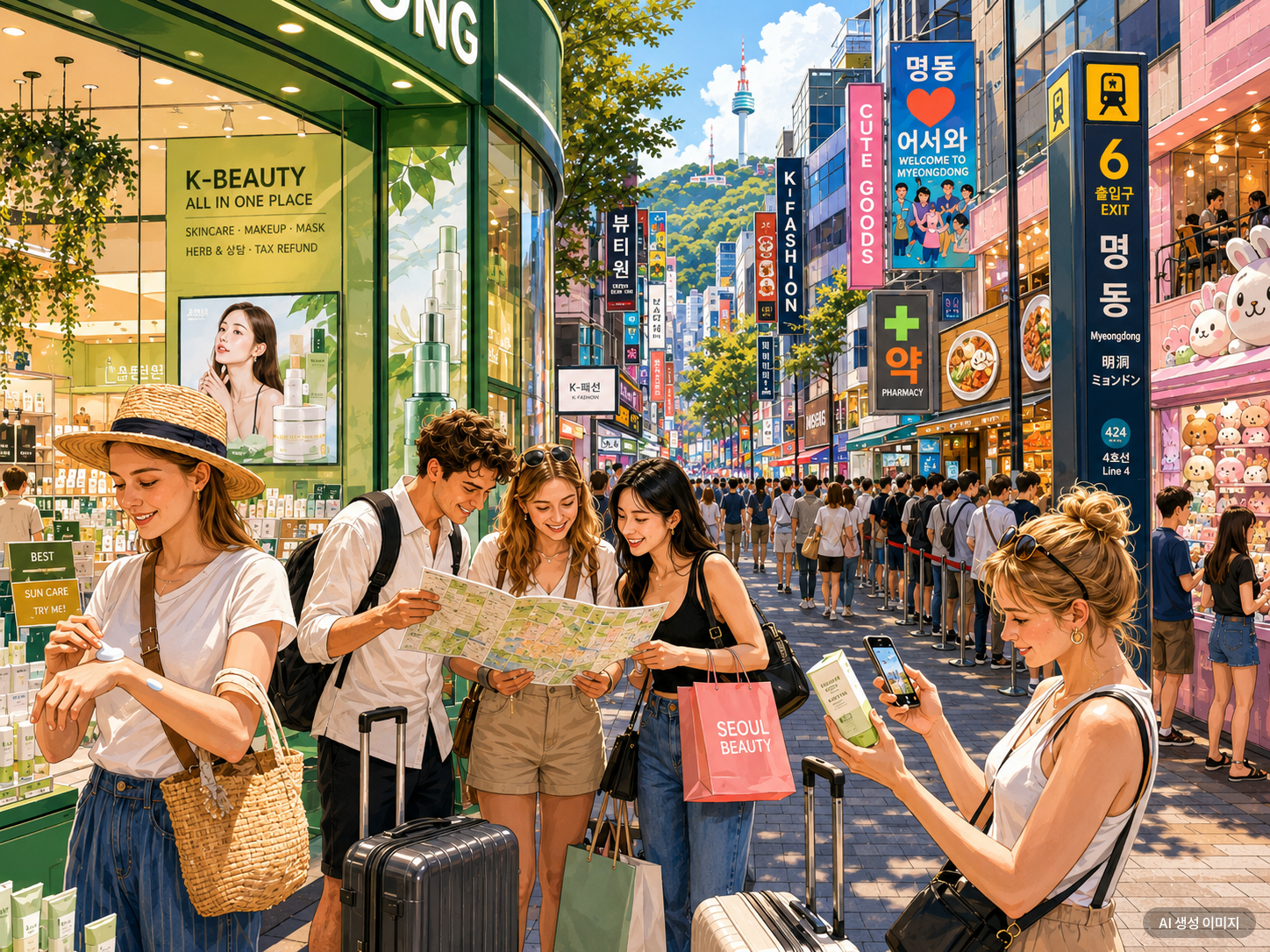

Line of travelers with suitcases in front of Olive Young… Myeongdong, once again the number one spot for K-Beauty
Myeongdong Welcomes Back Foreign Tourists, Expanding Beyond K-Beauty to Pharmacies, Fashion, and Goods
Transformed into an Experience-Oriented Shopping Destination: From Sheet Masks to Sun Care and Derma Cosmetics
On May 26, the area in front of Exit 6 of Myeongdong Station in Jung-gu, Seoul, was bustling with foreign tourists towing suitcases. Their first stop was Olive Young. Tourists carrying large shopping bags unfolded store maps at the entrance to plan their routes. Among them were groups of Japanese tourists applying sun care products to their hands for comparison, and American tourists checking derma cosmetic ingredient lists using mobile translation apps. Yuki, a Japanese tourist in her 20s, said, "I came to Myeongdong because I wanted to test the products I saw on Japanese social media. In the past, I mostly bought sheet masks, but this time, I plan to purchase more sun care and soothing products."
The Myeongdong commercial district has revived along with the return of foreign tourists. Whereas Myeongdong used to be a hub for bulk purchases of cosmetics by Chinese group tourists before COVID-19, it has recently been restructured into an "experience-oriented tourism district" where visitors not only shop for K-beauty and fashion but also enjoy lifestyle items and popular restaurants.
"I Saw It on SNS"... Foreign Tourists Flocking to Olive Young
According to the industry on May 29, "Olive Young Central Myeongdong Town," which CJ Olive Young opened in Myeongdong, Seoul, on March 26, achieved top-tier sales among all Olive Young flagship stores just one month after opening. Both total sales and sales to foreign customers ranked second only to "Olive Young Myeongdong Town."

New shopping trend: seeing on SNS, trying it in person, and even visiting pharmacies
Three out of the top five Olive Young stores by sales are located in Myeongdong. Myeongdong locations surpassed those in trendy districts like Seongsu and Hongdae, which have high foot traffic among young people. The industry sees this as a sign that foreign tourist spending is once again concentrating in Myeongdong.
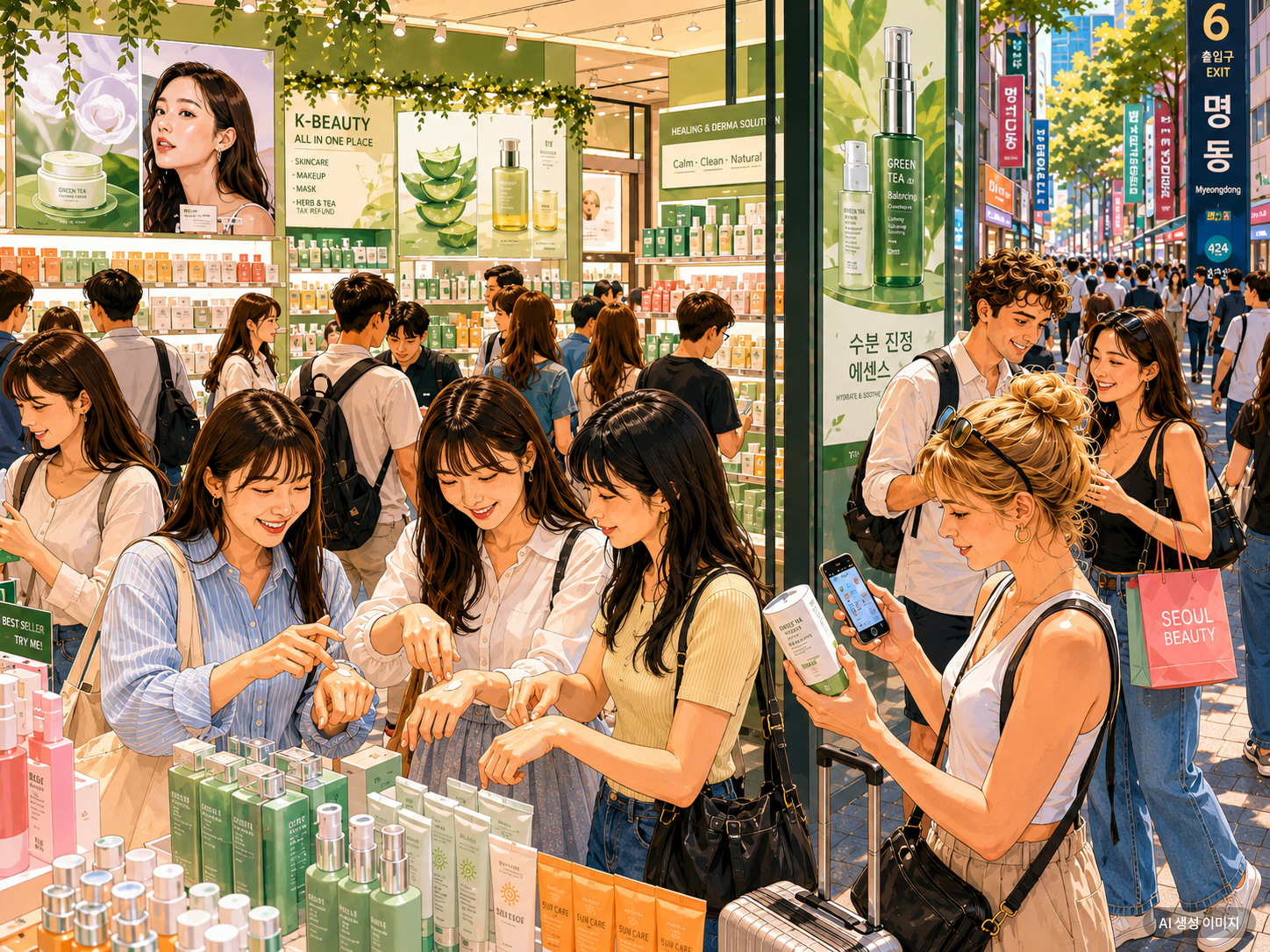
Myeongdong, Once a Cosmetics Street, Transforms into a Global Brand Testbed
From Sunscreens and Ointments to Vitamins... Pharmacies Become a Must-Visit Tourist Spot
The success of Central Myeongdong Town is not just due to the effect of a new store. According to Olive Young, after the opening of Central Myeongdong Town, foreign sales at other Olive Young stores within the Myeongdong district (excluding the new store) increased by 11.5% compared to the previous month. The new location attracted more foreign customers, which led to a boost in sales at nearby Myeongdong stores as well.

"Pharmacies Are Now Shopping Stops"... The Changing Way People Consume K-Beauty
The revival of the Myeongdong commercial district is driven by a shift in how K-beauty is consumed. In the past, foreign tourists bought cost-effective products like sheet masks and color cosmetics from road shops. Recently, however, demand has expanded to include dermocosmetics (a compound word combining skin science and cosmetics), sun care, small-sized color cosmetics, and premium brands.

Tourists passing by in front of a pharmacy located in Myeongdong, Seoul on the morning of the 26th. Photo by Han Yeju
원본보기 아이콘Recently, even pharmacies have become part of the shopping routes for foreign tourists. Japanese and Chinese visitors compare and purchase skin ointments, sun care, and vitamins, and some pharmacies have installed Chinese and Japanese signage. Lin, a tourist in her 30s from Taiwan, said, "I've heard a lot about the effectiveness of Korean pharmacy products. I buy cosmetics at Olive Young and also pick up functional products at pharmacies."
In fact, according to Olive Young, K-derma products accounted for about 90% of basic skincare sales at Central Myeongdong Town. Derma category sales at other Olive Young stores in Myeongdong (excluding Central Myeongdong Town) also rose by 24.3% compared to the previous month.
'K-Fashion Showroom' in Myeongdong
Fashion brands are also actively moving in. On Myeongdong's main street, major K-fashion brands popular among young people, such as Eemiss, Marithe Francois Girbaud, and Matin Kim, have opened large stores one after another. Designer brands that were previously concentrated in Seongsu-dong are flocking to Myeongdong to reach more foreign tourists. In fact, it was easy to spot foreign tourists carrying Matin Kim and Eemiss shopping bags on the main street of Myeongdong.

LF's Hazzys is also strengthening content targeting foreign tourists at its flagship store "Space H Seoul" in Myeongdong, while Kolon Sports opened its flagship store "Kolon Sports Seoul" in Myeongdong in January 2026. New Balance Myeongdong, operated by E-Land World, saw sales increase for two consecutive years thanks to demand from foreign tourists. The store's sales in 2024 increased by 17% from the previous year, and in 2025, they grew by 46% compared to 2024, continuing its upward trend.
The "Musinsa Store Myeongdong," which opened in January, has also become a must-visit shopping destination for tourists visiting Korea. Musinsa plans to open "Musinsa Standard Myeongdong Central," a new store selling its private label products, in September. Including the Musinsa Myeongdong store that opened in 2024, there will be a total of three Musinsa stores in Myeongdong. Japanese SPA brand Uniqlo also opened its largest domestic store in Myeongdong about five years after withdrawing during COVID-19 and the "No Japan" movement.

On the morning of the 26th, the 'Musinsa Store Myeongdong Branch' located in Myeongdong, Seoul. Photo by Hanyeju
원본보기 아이콘Making Keycaps and Buying Goods... Myeongdong Transforms Into an Experience-Oriented Tourist Destination
Recently, Myeongdong has been transforming into an experience-oriented tourist destination, targeting foreign tourists with character goods, lifestyle items, household products, and sports brands.

K-Fashion Flagship Stores Continue to Open... Seongsu Brands Also Moving to Myeongdong
Making Keycaps and Buying Goods... Consumption in Myeongdong Now 'Experience-Oriented'
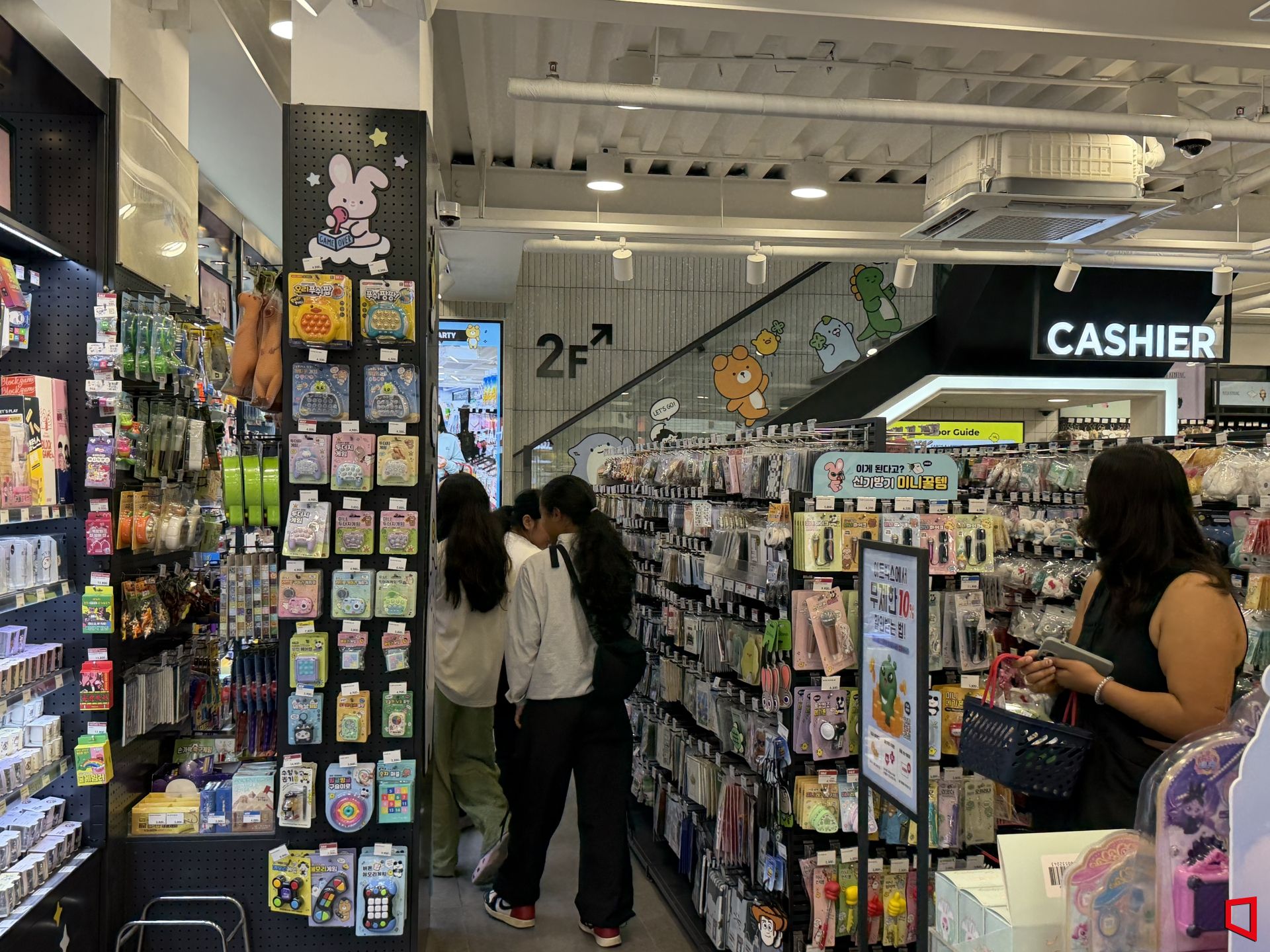
At "Mimi Line," a lifestyle store near Myeongdong Station, foreign tourists were seen assembling their own keycaps and keyrings to create personalized goods. Many were also taking photos of their finished keycaps and posting them on social media. Emily, a tourist from Australia, said, "Korean character designs are unique, so I’m making gifts for friends. Experiences like this are hard to find in Japan or Europe."

On the morning of the 26th, foreign tourists are making keycaps at Mimi Line located in Myeongdong, Seoul. Photo by Yaeju Han
원본보기 아이콘Artbox has also become a must-visit stop for foreign tourists, with many buying multiple character goods, cute stationery, and lifestyle items. This indicates that K-consumption, once focused on cosmetics, has expanded into lifestyle and accessory categories. The Daiso Myeongdong store also continued to attract foreign tourists, who cited the ability to buy travel-size cosmetic containers, snacks, and everyday goods all in one place as a key draw.
Food has also become part of the tourist route. Even after lunchtime, long lines formed in front of Myeongdong Kyoja, a Michelin Guide-listed restaurant. Cafes and dessert shops near Myeongdong Cathedral were also packed with foreign visitors.
Changing Brand Strategies... "A Global Testbed"
Industry insiders note that Myeongdong is being restructured into a new form of tourism shopping district. Whereas the core customers before COVID-19 were Chinese group tourists, recent visitors are increasingly individual tourists from Japan, China, Southeast Asia, and the Americas. These travelers check product information on social media and online content before their trip and compare products in person at the stores before purchasing.
Transformation from Group Tourists to Individual Travelers as the Main Commercial Area in China
Myeongdong, Hosting K-Beauty, K-Fashion, and K-Life, Revives as a Global Showroom
As a result, the strategies of brands entering Myeongdong are also changing. Instead of simply selling products, more and more brands are using their stores in Myeongdong as experience-oriented hubs to promote their brand to foreign tourists.
An industry official said, "The transformation of Myeongdong is significant in that offline retailers now have a space to raise brand awareness among foreign customers and also test the potential for overseas expansion. In the future, Myeongdong’s key stores with high proportions of foreign sales will function more as global marketing hubs than just simple retail outlets."
-

Reporter Han Yeju dpwngks@asiae.co.kr
-
Edit Kang Dongwon kangdw76@asiae.co.kr
© The Asia Business Daily. All rights reserved. Unauthorized AI training and use prohibited.