Busan, which served as the provisional capital for 1,023 days during the Korean War, is now seeking listing as a UNESCO World Heritage Site for its wartime heritage. The goal is to have the city's memories—having sheltered one million refugees—recognized as a shared legacy of humanity.
According to Busan Metropolitan City and the Cultural Heritage Administration, Busan plans to submit a preliminary evaluation application for the "Sites of the Wartime Capital in Busan during the Korean War" to the UNESCO World Heritage Centre in September. This heritage was included on the World Heritage Tentative List in 2023 and was also selected last year for the Cultural Heritage Administration's priority list for World Heritage nomination.
The preliminary evaluation will be conducted in writing by the International Council on Monuments and Sites (ICOMOS), an advisory body to UNESCO. This process is designed to review the feasibility of inscription and identify supplementary requirements in advance, and it typically takes about one year for the results to be announced.
Busan is accelerating efforts to lay the groundwork for inscription by restructuring its organizational system and expanding additional research and studies. The city also plans to actively promote the necessity of inscription to international experts during the World Heritage Committee meeting to be held in Busan in July.
Youngshin Ahn, Director of Cultural Heritage Division at Busan City, explained, "The provisional capital of Busan is not just a wartime heritage site; it is a case that demonstrates how a city and its community were sustained amid war and crisis. This aligns with the trend of the World Heritage concept expanding from a focus on old architectural structures to include the experiences and memories of humanity."


The nomination covers eleven heritage sites that represent three pillars: maintaining government functions, refugee life, and international cooperation. Gyeongmudae (currently the Temporary Capital Memorial Hall) and the Temporary Central Government Building (now the Seokdang Museum at Dong-A University) were spaces where state functions continued during wartime. The National Central Observatory (now the Busan Meteorological Observation Station) continued to monitor weather conditions even during the war, supporting military operations and relief activities. The U.S. Embassy and U.S. Information Service (now an annex of the Busan Modern and Contemporary History Museum) served as a hub for diplomacy and international cooperation.
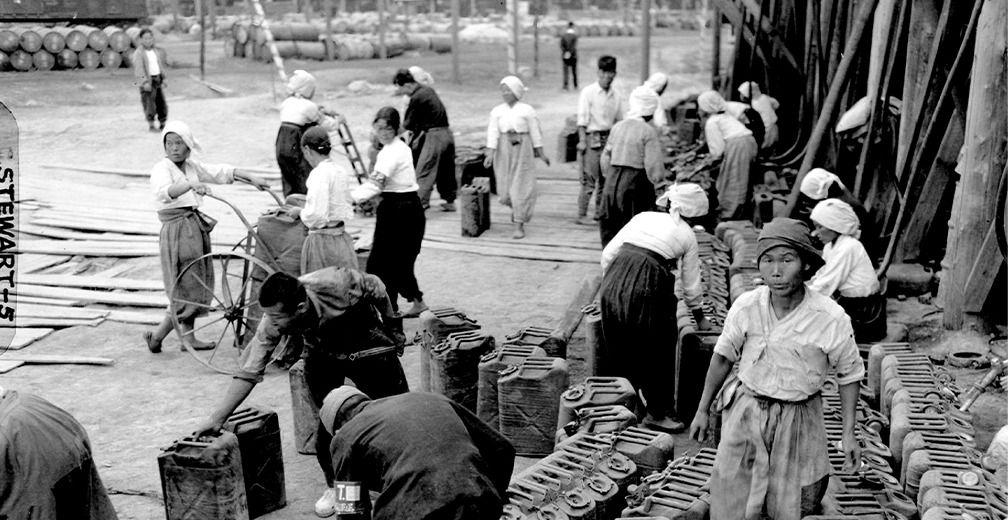
Busan Port Pier 1 was a strategic center where United Nations military supplies and refugees converged. Hayaria Base (now Busan Citizens Park) hosted the United Nations Korean Committee and the United Nations Korean Reconstruction Corps, which carried out projects in education, health, and relief. The UN Memorial Cemetery in Busan, the only United Nations military cemetery in the world, is regarded as a symbol of international solidarity.

Amidong Monument Village, a refugee village formed on top of a cemetery. Tombstones bear traces of having been used as retaining walls and stairs. Provided by Busan City
원본보기 아이콘Spaces that reflect the lives of refugees are also included. Amidong Biseok Village, a refugee community built atop a cemetery, bears traces of tombstones being used as retaining walls and stairs. Uamdong Somak Village is an example of a quarantine facility from the Japanese colonial period that was converted into a residential area for refugees. Yeongdo Bridge is remembered as a symbolic place for separated families during the war. Bokbyeongsan Reservoir played a key role in the city's wartime infrastructure by supplying drinking water to refugees beyond its capacity.
The Cultural Heritage Committee evaluated these sites as "embodying the values of human peace pursued by the international community." Of the fourteen items on Korea's current World Heritage Tentative List, only two—including these Sites of the Wartime Capital in Busan and the Hoeamsa Temple Site in Yangju—are on the priority nomination list.
UNESCO World Heritage | Visual News
Remaining Challenges for Busan as the 'Wartime Capital'
Key Issues Identified During the World Heritage Listing Review Process
During the UNESCO World Heritage review process, two core challenges were raised concerning Busan as the 'wartime capital': the need for protection measures against urban development pressure and ensuring the sustainability of certain heritage sites, such as the Uamdong Somak residential area.
□ Main Challenges

□ Adjustment of the Inscription Target Date
However, challenges remain. During the review process, it was pointed out that protection measures are needed against urban development pressure, as well as strategies to ensure the sustainability of certain heritage sites, such as the Uamdong Somak residential area. Accordingly, the initial target year for inscription, which was 2028, has been adjusted to 2030. Busan, a city that endured the scars of war, is now entering the stage of proving the World Heritage value of its memories.