

A generational shift is underway in New York City's pizza market, with 'Ceres,' which launched last year, at its center. Ceres was opened by chefs from 'Eleven Madison Park,' a symbol of New York fine dining. Eleven Madison Park ranked first in the 'World's 50 Best Restaurants' in 2017, and it has also been awarded the Michelin 3-star rating, the highest distinction.

New York pizza was originally straightforward. Quick turnover, simple toppings, and value for money were key. Joe's Pizza and Lombardi's Pizza, both familiar even to many Koreans, are typical examples. These establishments reheated already-baked pizzas and sold them in large, thin slices. The image was strongly associated with New Yorkers' soul food and food for workers.

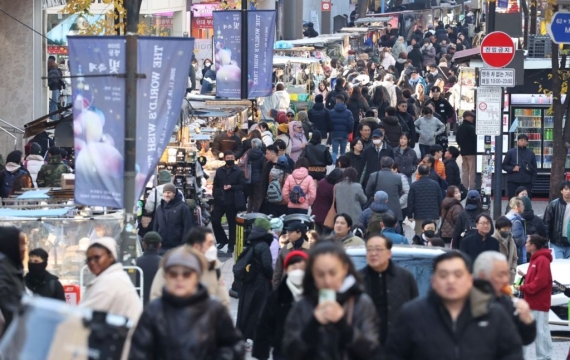
The L'Industrie store in New York's West Village is always bustling with people. New York (USA) — Photo by Yoonjoo Hwang
원본보기 아이콘The evolution of New York pizza began around 2017. Shops known as second-generation pizzerias, such as L'industrie Pizzeria and MAMA's TOO!, began to attract attention. They differentiated themselves with 'premium ingredients.' L'industrie's burrata pizza and fig pizza, featuring toppings not previously seen, quickly established the shop as a 'must-try spot' in New York. I remember being surprised by the long line when I first visited L'industrie. I was skeptical, but the flavor was distinctly different from the traditional pizzas.
The signature burrata pizza felt fresher than other pizzas. The umami-rich tomato sauce and burrata cheese blended in harmony. The olive oil drizzled on top was not excessive; instead, it enhanced the flavor of the thin crust. The fig pizza, offering the classic sweet-and-salty ('danjjan') taste favored by many Koreans, was especially impressive.

Dough makes thick 'MamasTwo' pizza like focaccia bread. New York, USA – Special Correspondent Yoonju Hwang.
원본보기 아이콘MAMA's TOO! reinterpreted Sicilian-style pizza, featuring thick, focaccia-like dough, and became popular on social media platforms such as Instagram. Their bold use of hearty vodka cream sauce, basil pesto, cheese, and spicy honey (hot honey) set them apart. The signature vodka pizza is generously topped with tomato and cream sauce, which might be a bit heavy for Korean palates. On the other hand, the funghi (mushroom) pizza or the Norma (hot honey) pizza had flavors anyone could enjoy.

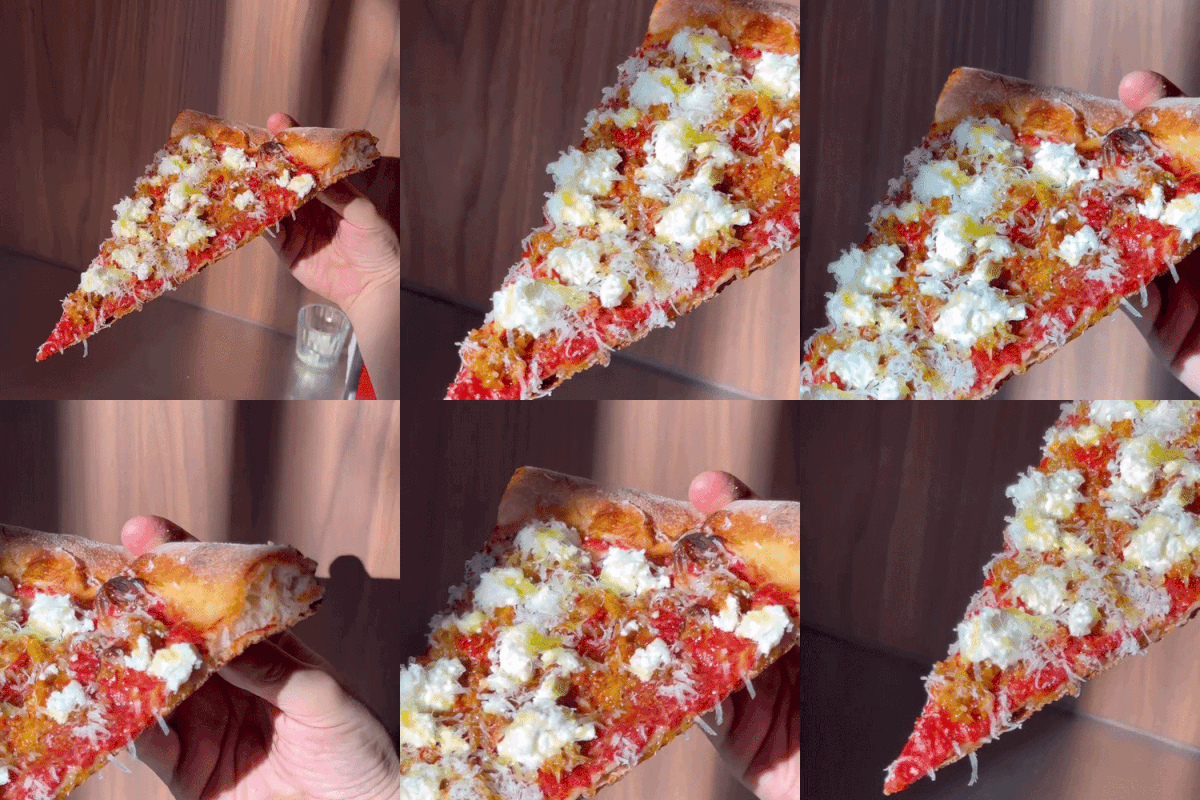
The 'Seris' pizza, recently gaining attention in New York. New York, USA – Special Correspondent Yoonju Hwang.
원본보기 아이콘Ceres pizza has taken things a step further, now being called a third-generation pizza. Everything from flour blends and topping design to the policy of whole-pie orders is different from typical pizzerias, following the conventions of a restaurant. For this reason, some say pizza has been elevated to the level of gastronomy.

For example, when making dough, Ceres pizza records the weight of each type of flour. Not only that, but every single factor—indoor temperature, the weight of the sourdough starter, and the temperature of the water used—is meticulously filed.

Co-founder Jacob Serebnik explained in an interview with 'Bon Appétit' that this quantitative and record-keeping approach to dough making is a "fine dining management method." In other words, Ceres applies the precision management system of fine dining to pizza.
Co-founder Jacob Serebnik also stated in the same interview, "We try to control every variable." The system of recording flour weight, indoor temperature, and water temperature is very much in line with high-precision fine dining operations.


The ordering method is also different. Ceres pizza does not sell by the slice and only accepts whole-pie orders. This significantly increases the economic burden on the customer. What was once "food for the worker" has now become a delicacy for capitalists.

However, $1.99 pizza shops tucked away in New York's back alleys are still bustling. It's easy to find workers grabbing a quick bite there. For those unable to understand spending dozens of times more for a pizza, this trend may seem baffling. In this sense, the evolution of New York pizza might be one of the clearest examples of income polarization.
-

Reporter Hwang Yoonju hyj@asiae.co.kr
-
Edit Lee Seonju sjlee109@asiae.co.kr
© The Asia Business Daily. All rights reserved. Unauthorized AI training and use prohibited.