
Mr. Choi said, "At the beginning of the free delivery introduction, the order volume skyrocketed, and it seemed that the store benefited," adding, "However, only sales increased, but what actually remained in hand decreased. The more you sell, the more you lose."
Total Commission Increased by Up to 30% After Free Delivery
Food Prices Paid by Consumers Rose by 2,190 Won
Choi Jungho, who operates a Japanese rice bowl restaurant in Gangseo-gu, Seoul, recently canceled the free delivery-linked subscription plan offered by a delivery application. This was because the intermediary commission and delivery fees payable to the delivery app had ballooned after signing up for the plan. The intermediary commission for this plan (including VAT) is 10.8%, and the delivery fee borne by the store owner (in Seoul) is 3,400 won. If you sell one rice bowl set priced at 12,000 won, you end up paying 4,700 won—about 40% of the sales—as commission and delivery fee.
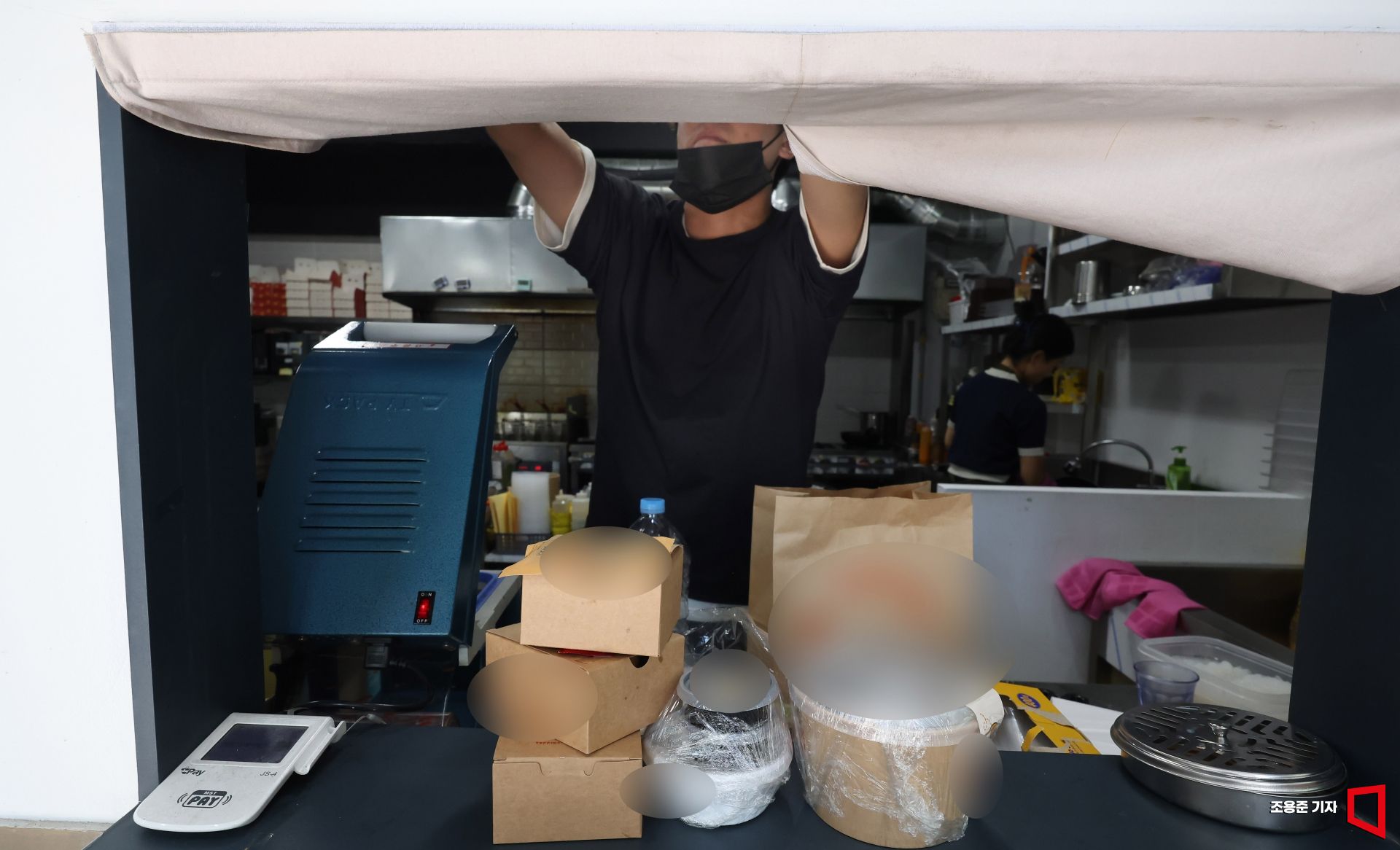
As of May 26, according to industry sources, Coupang Eats, the second-largest player in the domestic delivery app market, has expanded its free delivery service—previously available only to paid members—to regular members as well, with the market leader Baemin following suit. This is fueling concerns among self-employed business owners and small merchants. They argue that expanding free delivery allows delivery apps to sharply raise intermediary commissions and various marketing fees, thereby shifting the financial burden directly onto business owners and consumers.
Coupang Eats stated in an official announcement, "We have prepared a win-win promotion to reduce delivery cost burden for consumers and support increased orders for partner stores during this period of high inflation and high oil prices." The company added, "A review of partner stores' sales trends for one year before and after the introduction of free delivery showed that average sales per store increased by 98% after the promotion."
However, among small merchants, there is growing concern that Coupang Eats' recent move could spark a free delivery competition among delivery apps and ultimately increase the burden on store owners. In March 2024, Coupang Eats became the first in the industry to launch free delivery for paid WOW members, and since then, competitors such as Baemin and Yogiyo have also revamped their commission policies to facilitate free delivery, causing the costs borne by partner stores to soar.


According to the "Baemin Commission Burden Status Report" released last year by the civic group People's Solidarity for Participatory Democracy, the total cost (including intermediary commission, payment processing fees, and delivery fees) that partner stores had to bear over the three years from 2023 to 2025 increased by more than 3 percentage points and the average total commission reached 26%.
In particular, for low-priced categories with menu items under 20,000 won—which account for the majority of partner stores—the total commission burden rose to as high as 30%.
During the same period, food prices paid by consumers increased by 2,190 won.
There is also growing speculation that as the German parent company Delivery Hero puts Baemin's operating company, Woowa Brothers, up for sale, any aggressive response by Baemin to boost its market value could end up increasing the burden on small businesses even further.
An industry insider explained, "From Coupang Eats' perspective, Baemin being up for sale could be seen as a turning point to reshape the future market structure. Near-loss promotions are likely to intensify, and if this happens, the trend of shifting costs onto small merchants will likely become even more pronounced."

-

Reporter Lee Seohee dawn@asiae.co.kr
-
Edit Kim Hyunhee faith100@asiae.co.kr
© The Asia Business Daily. All rights reserved. Unauthorized AI training and use prohibited.







