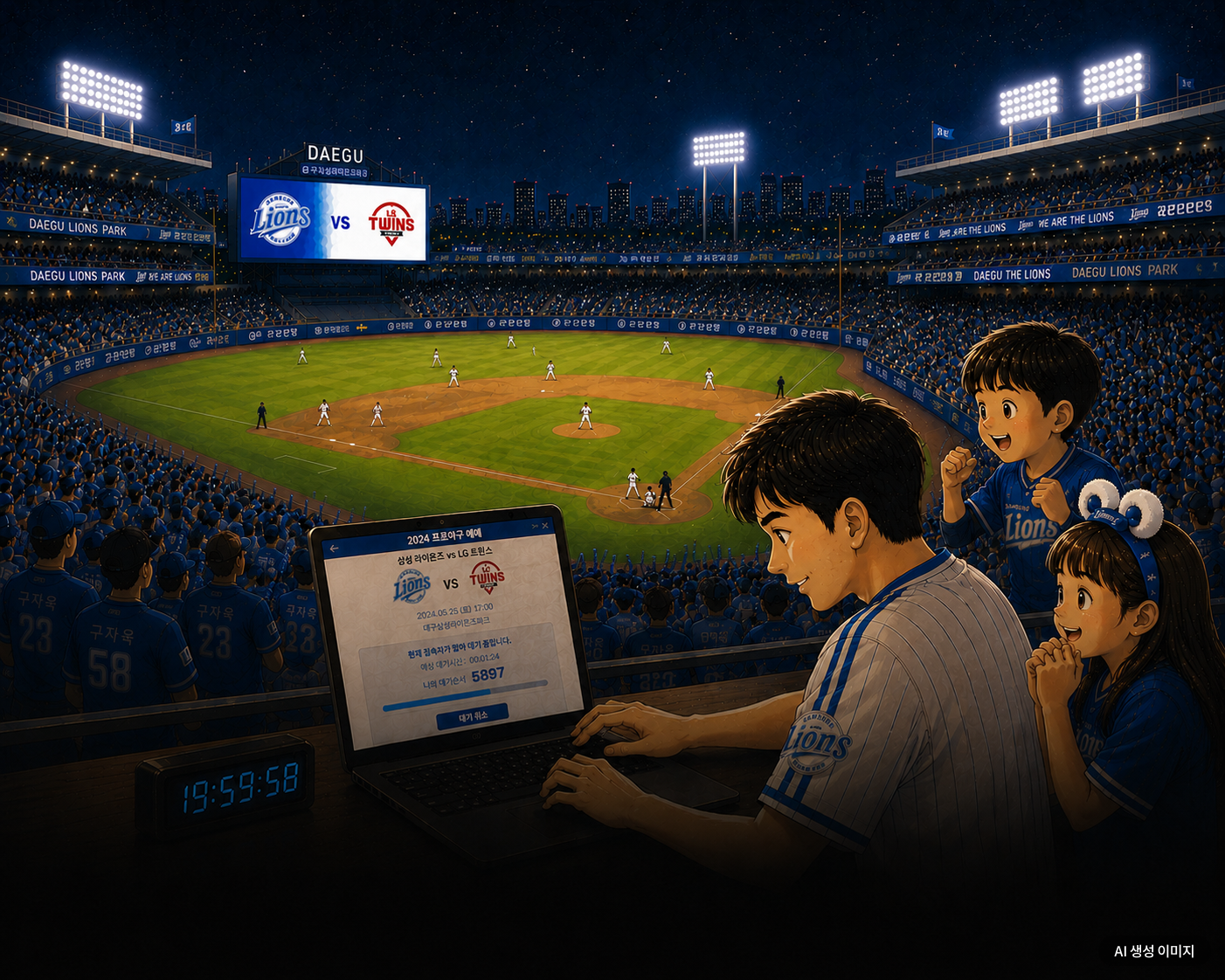
Last year, Korean professional baseball set a new record for attendance with 12,019,267 spectators. On average, 17,101 spectators attended each game. There are cautious projections that the figure could reach 14 million this year. Not only weekends but also weekdays are packed with baseball fans. So what is the secret behind baseball’s rise as Korea’s national sport?


Ham Tae-Soo, head of PR at Doosan, said, "Baseball has established itself as a culture enjoyed by families," adding, "People don't get overly invested in wins and losses." The ballpark has transformed into a place where everyone, from children to parents, can have a good time. With just 30,000 to 50,000 won per person, you can enjoy about five hours at the ballpark. The value for money is excellent. Fans can enjoy delicious food, cheer loudly, relieve stress, and build camaraderie.
Baseball stadiums used to be mostly frequented by men, but that has changed. Women now lead the way. A significant influx of women as a new fan base is driving the growth of the baseball industry. Each team is providing a wide range of amenities, services, and merchandise targeting women. According to Tving, the OTT service broadcasting professional baseball, the total number of viewers for baseball broadcasts this year has increased by about 30 percent compared to last year. Of these, 43 percent are women.
The Korea Baseball Organization (KBO) has introduced the Automated Ball-Strike System (ABS) and pitch clock to shorten game times, and extra innings have been reduced from 12 to 11. Among women, there is even some dissatisfaction about this change. Some fans feel that shorter games mean less time to enjoy the experience. Ham explained, "It's hard to give an exact gender ratio because of the number of season tickets and advance bookings, but it's roughly 60 percent women and 40 percent men."
There are plenty of things to enjoy at baseball stadiums. They have evolved into multipurpose spaces that blend picnics and concerts. The unique cheering culture and cost-effectiveness make it a great outdoor activity. It's the kind of sport that matches the tastes of Millennials & Gen Z. Baseball fans are highly loyal—once they support a team, they stick with it, regardless of performance. Since the league's launch in 1982, a regional franchise system has been in place. Many fans are influenced by their parents to visit the stadium and, ultimately, to support their local teams, and this system has taken deep root.

Facilities at baseball stadiums have also improved. Since 2010, five new stadiums have been built. Gwangju Kia Champions Field, Daegu Samsung Lions Park, and Daejeon Hanwha Life Eagles Park have become regional landmarks. The Gocheok Dome, which is unaffected by weather, has opened, and a new dome-style multipurpose cultural complex to replace Jamsil Baseball Stadium is planned. Completion is scheduled for 2032.

Domestic professional baseball has established itself as a culture enjoyed together with family. Photo by Yonhap News Agency
원본보기 아이콘Professional baseball is not affected by results in international competitions. In March 2026, Korea reached the quarterfinals of the World Baseball Classic (WBC) for the first time in 17 years but lost its first tournament game to the Dominican Republic 0-10 in a mercy rule game in the seventh inning. In the past, such results could have raised concerns about the league's popularity, but that is no longer the case. Now, domestic and international games are seen as distinct, each with its own significance.
Every professional baseball game is broadcast live. All 10 teams' games held at five stadiums are covered. Baseball has become perfectly established as a major media content. In other sports, even during postseason games, there are times when broadcasts are not aired. This is because baseball’s popularity and ratings far surpass those of other sports. Even on weekdays, terrestrial broadcasters schedule and air professional baseball games.

Aerial View of Jamsil Sports and MICE Complex. Provided by the Seoul Metropolitan Government
원본보기 아이콘In 2024, Korean professional baseball underwent a major change with the arrival of CJ ENM. CJ ENM, which operates the OTT service Tving, paid 45 billion won to become the new media rights holder for professional baseball. With KBO League's broadcast rights fees from TV stations at 54 billion won, the total rights fees rose to 99 billion won. Each team now receives about 9 billion won in revenue, allowing for more investment in various ways to benefit fans.
-
Reporter Roh Woolae golfman@asiae.co.kr
-

Edit Eo Kangbi uhkb86@asiae.co.kr
© The Asia Business Daily. All rights reserved. Unauthorized AI training and use prohibited.