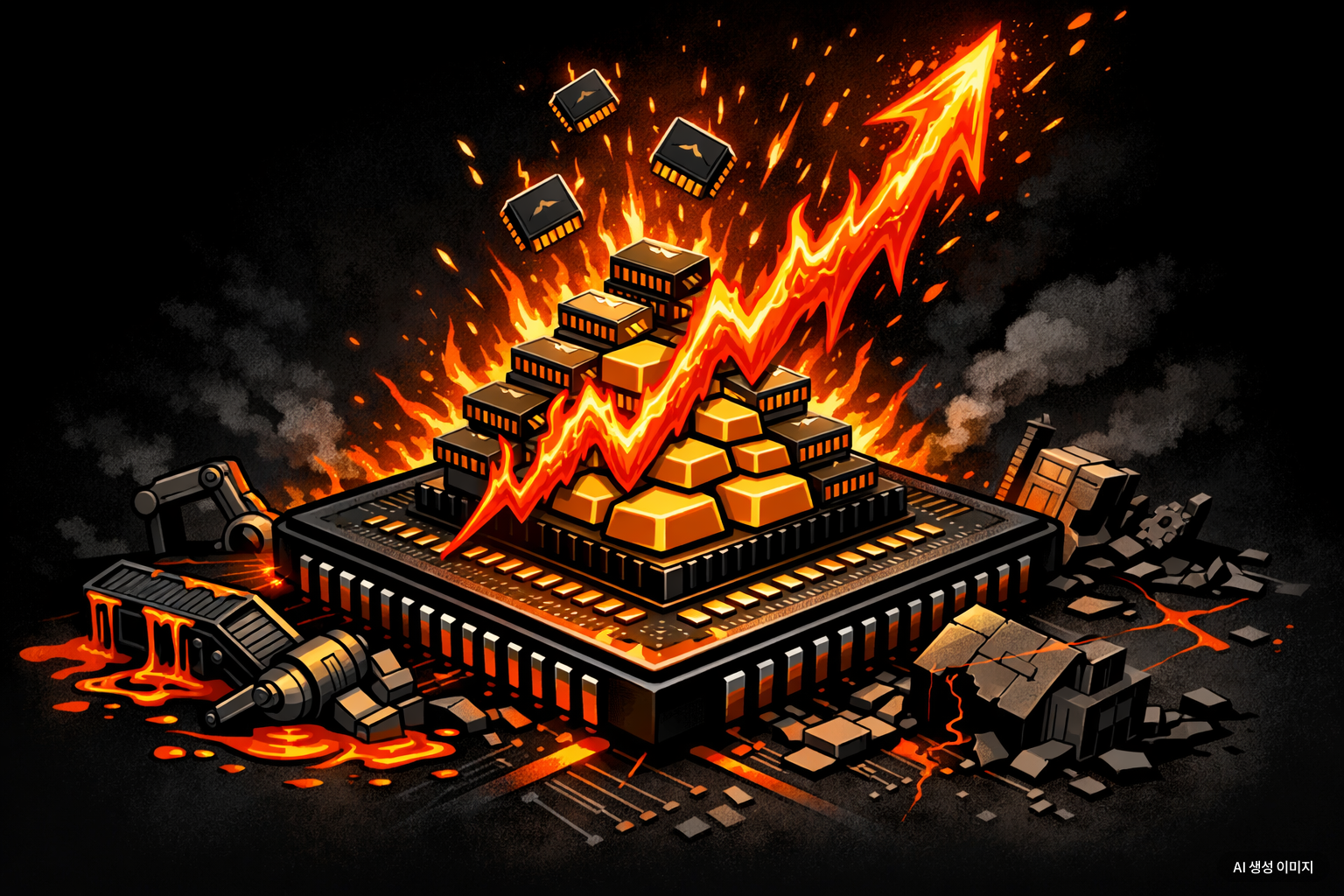
As global semiconductor prices are rising rapidly, there are projections that DRAM prices could see another significant increase in the second quarter. Despite having soared in the first quarter, analysis suggests that the upward trend is not yet over.

Market research firms have recently reported that DRAM prices have jumped sharply over the past several months. In fact, the price increase in the first quarter is estimated to have reached as much as 80%. While the rate of increase may slow in the second quarter, there is still a possibility of an additional rise of up to 50%. This means the upward momentum itself remains unbroken.

The most significant reason for the price increase is a reduction in supply. Major memory manufacturers have scaled back or halted production of older products such as DDR4, leading to a decrease in the volume available in the market. Additionally, Taiwanese companies have not been able to ramp up production quickly, further exacerbating the supply shortage.

Surprisingly, it is the low-capacity products that are currently leading the price increase. In particular, the price of DDR4 4GB products has risen by more than 20% in just one month, outpacing higher-capacity products. As consumer demand has concentrated on these items, lower-priced products have seen a sharp surge first.

Demand is now spreading beyond DDR4 to even older products like DDR3 and DDR2. As the supply shortage persists, the prices of these products have also jumped by 20% to 40% in just a month. As a result, some manufacturers have already raised prices and are taking aggressive action.

Domestic companies such as Samsung Electronics and SK hynix are maintaining a relatively high 평균판매단가ASP. Therefore, it is analyzed that the pace of price increases for these companies may be more moderate in the short term.
-

Reporter Park Joonyi giver@asiae.co.kr
-
Edit Hur Eunmi eungmimon@asiae.co.kr
© The Asia Business Daily. All rights reserved. Unauthorized AI training and use prohibited.