Editor's Note'Zero Overseas Adoptions' is not about reducing numbers, but about building families and protective systems so that children can grow up safely in Korea. In this process, domestic adoption remains a crucial and realistic alternative, but society still has not fully caught up in its attitudes. Adoptive families say that, rather than being told they are "admirable," they would prefer to be congratulated for gaining a family. This is because there is a moment when both a child and a family experience a profound change in their lives. On March 17, in Gangbuk-gu, Seoul, we met Siwoo's family, who adopted domestically. We asked them what 'family' means.
Two miscarriages, and then... Meeting Siwoo at 50 days old
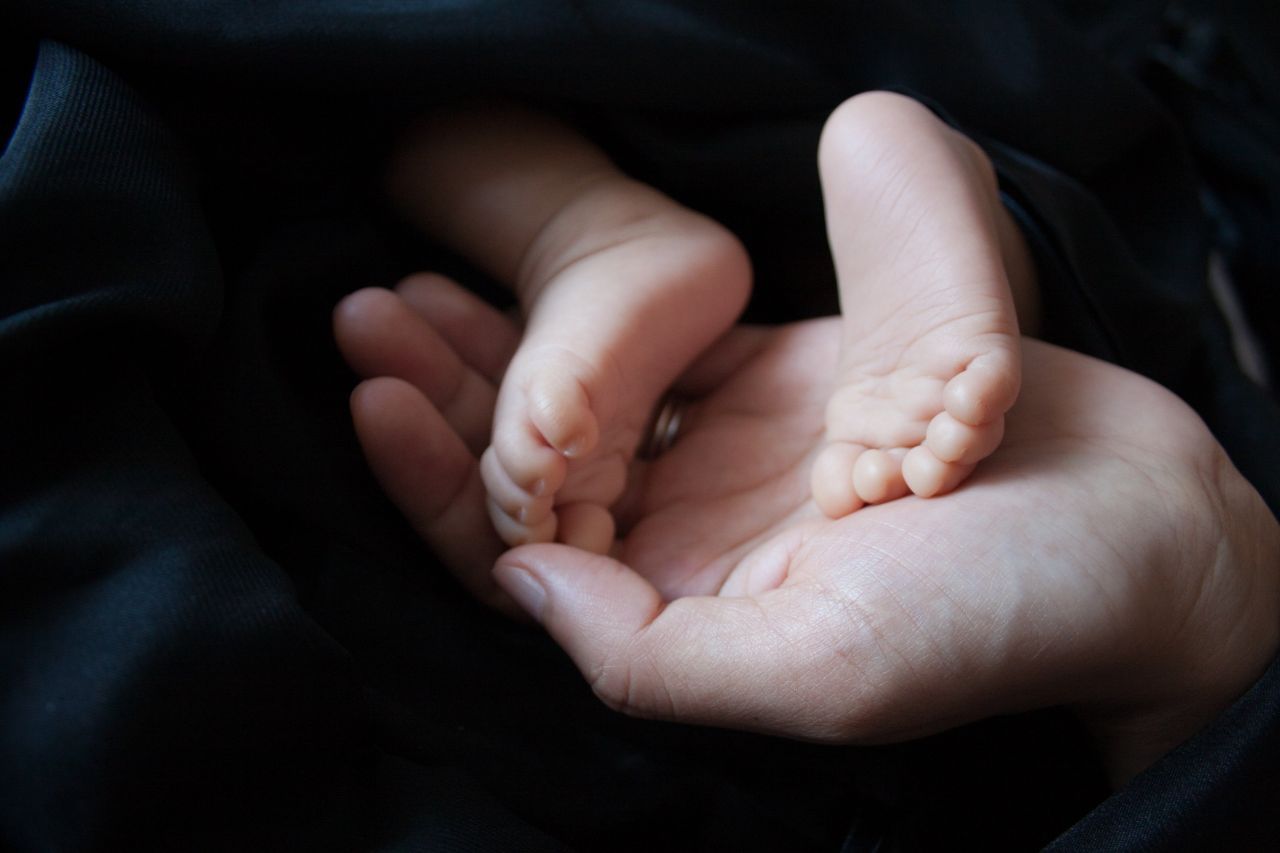
In May 2017, a newborn who could barely open his eyes struggled to lift his eyelids and meet the gaze of the couple. Siwoo (an alias, age 10), just past 50 days old, was embraced by the arms of the Kim Jeongsuk and Lee Seokhwan (both aliases) couple.
Before meeting Siwoo, the couple lost two children to premature birth. Though they desperately wanted a child and resolved to adopt, it took three years before they actually visited an adoption agency. Their fear of "Can we really be good parents?" outweighed comments from those around them such as "Raising someone else's child is pointless" or "Blood ties matter most."
This was before the overhaul of the public adoption system, when the National Center for the Rights of the Child began overseeing adoption procedures. The couple met Siwoo through a private adoption agency. The process was rigorous. In addition to a health checkup that included an alcohol test, they had to submit documentation on their mental health history, proof of movable and immovable assets, employment certificates, diplomas, and academic transcripts.
The parenting plan required them to detail not only their strengths and weaknesses as a couple but also how and where they met and decided to get married. Kim joked, "Even biological parents probably aren't this prepared." Still, she added, "Given the unfortunate cases in the past, I do think this level of scrutiny is necessary."
Congenital hemivertebra and increasing diagnoses... The couple was devastated
Siwoo seemed to be developing quickly. Even though he was only 50 days old, he could already hold up his head. They later learned that this was because, at the institution, Siwoo had been bottle-fed on his own (so-called "self-feeding"), which unintentionally strengthened only his neck muscles. When he was full from formula, he would have to turn his head away by himself. Siwoo was also afraid of sleeping in the dark. At the institution, children were cared for in three shifts and always lived under fluorescent lights, so he had never experienced a "dark night." When bottle-fed and patted on the back, Siwoo would even fake a burp. The staff, trying to make him burp quickly, would pat his back strongly; apparently disliking this, Siwoo learned to produce a shallow burp to end the situation. Then, one day, as Kim gently stroked his back and patiently waited, Siwoo finally let out a long burp. In that moment, some of the sadness Kim had carried in her heart began to ease.
But after that, all of his development began to slow. Around his first birthday, when a doctor noticed his legs were of different lengths, he underwent tests and was diagnosed with hemivertebra, a congenital spinal deformity where the spine fails to fully develop. From then on, Siwoo’s body began to curve to one side. The couple frantically searched medical literature and hospitals nationwide. Told that the sooner the surgery, the better the recovery, Siwoo had surgery at age three. But the outcome was not good. The spine bent again, and metal rods were inserted into his fragile body. Still, the couple comforted each other, seeing even sicker children at the hospital, saying, "This much is bearable."
Even so, with every checkup, a new diagnosis appeared: dyslexia, attention-deficit/hyperactivity disorder (ADHD), and developmental disorders. Each time, the couple said, "We poured everything into treatment." But when a chromosomal abnormality was finally diagnosed, it felt as if the dam they had built to hold back their emotions had at last collapsed. Kim left the doctor’s office and collapsed without realizing it. She could not even cry; her tears had dried up. At that moment, Siwoo came over, took her hand, and said,
Riding to hospitals, not Daechi-dong academies, but still... "Aren't we lucky to have met?"
The Kim couple still goes to the hospital five days a week. They visit Seoul National University Hospital, Korea University Hospital, and Kangbuk Samsung Hospital for spine treatment, ophthalmology, dyslexia therapy, speech, play and cognitive therapy for developmental disorders, and physical therapy, spending more than 2 million won a month in medical expenses. The couple said, "Still, we’re lucky. It’s not a fatal disease." They often wonder what would have happened if Siwoo had not been adopted and had not received proper treatment. Each time, they tell themselves, "We’re lucky to have met."
By third grade, most parents start thinking about education and sending their children to after-school academies. Kim said, "Other parents talk about taking their kids to academies in Daechi-dong, but I live my life riding to hospitals. When I see myself determined to do whatever it takes to help him get better, I realize, 'He really is my child.'"
Thanks to their efforts, Siwoo has become so healthy that it’s hard to believe he used to have trouble moving. He is bright and kind. When meeting a stranger for an interview, he was the first to ask, "Should I carry your bag?" His warmth comes from his father, Lee. Lee used to work at a company where he would get home at 2 or 3 a.m. and even worked weekends. As Siwoo grew up, Lee wanted to spend more time with him, so he changed jobs to a company with a four-day workweek. In the neighborhood, he is known as the dad who holds the jump rope for the kids. Siwoo looks for his dad as soon as he wakes up in the morning. When playing, he runs at full speed and throws himself into his father’s arms. Lee said, "That just means he really trusts and relies on me."
When we told people about the adoption... "No way! You look so much alike."
Still, shouldn’t Siwoo be told that he has biological parents elsewhere?
The couple naturally talked to Siwoo about his adoption from a young age. They did not want to hide the story of how their family began. At gatherings of adoptive families, the advice is always to "tell them continuously, when the mood is good." Among adoptive parents, it’s said, "Adopted children are bound to face some aftereffects, but it’s better for the impact to come in small waves than all at once."
When Siwoo was five, he was reading a fairy tale and suddenly asked, "Then why couldn’t the person who gave birth to me raise me?" Kim answered, "The circumstances didn’t allow it. She was very upset and cried a lot. But she asked for 'the very best mom' for you. Mom and dad tried their best and passed the test. We were very lucky."
Recently, they have started slowly telling close friends about Siwoo’s adoption. One friend’s mother, after hearing Kim’s story, responded, "Don’t lie, you look so much alike!"
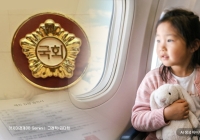
Siwoo's family, who adopted him domestically, enjoys traveling. Being in unfamiliar places makes them appreciate the value of family even more. The Kim couple said, "We hope Siwoo grows up to be a child who understands the seasons," adding, "We plan to take a family trip again this summer." The photo was taken during a previous trip. (Faces are blurred as they prefer not to disclose them)
Even with different blood types... We resemble each other, even in our smiles
In truth, Siwoo and his parents shared no physical resemblance. While adoptive parents and children are often matched by appearance, this was not the case for Siwoo and his parents. The couple hoped at least their blood types would match, but all three of them have different blood types. Nevertheless, over ten years, they began to resemble each other. All three now share the same gentle smile and crescent-shaped eyes when they laugh.
Still, sometimes they are anxious. "What if Siwoo leaves us one day?" "What if he likes his biological parents more?" These are common worries among adoptive parents. Another adoptive family comforted them, saying, "Wanting to know your birth parents doesn’t mean wanting to live with them."
We asked Siwoo what 'family' means to him.
Without hesitation, he looked at his parents and answered.
"The people I live with."
The time spent together, and the daily care they give, not blood, is what made them a family.