
This change is intertwined with the reshaping of social and leisure culture on university campuses, going beyond just variations in how people meet romantic partners. With the increase in exchange students and those with overseas experience, there is a growing trend to recreate the party cultures encountered abroad within Korea. University student communities and meeting applications frequently feature events such as barbecue gatherings, formal prom parties during graduation season, and pool parties.
Spread of 'Rotation Blind Date' Culture on University Campuses
Organized by online communities or student councils
Participation is limited to students from the same university or universities in specific regions
"Okay, let's move to the next partner!"
As soon as the timer placed on the table goes off, chairs are pushed back all at once from every direction. After exchanging a brief farewell with the person they were just chatting and laughing with, participants immediately switch seats. There's barely even time for a sip of water before a new person sits down across from them. "Hello, which university are you from?"—the questions repeat, but the atmosphere remains light and fast-paced. If someone is attracted to a participant at first sight, they jot down their name or number. This is the scene at the 'rotation blind date' events that are spreading rapidly across university campuses these days.

On the evening of the 25th, participants at a "rotation blind date" style solo party event held near a university in Seodaemun-gu, Seoul, moved seats every set time to engage in conversations. When the timer sounded at each table, participants faced the next person to continue their encounters. Photo provided by the reader
원본보기 아이콘Recently, rotation blind dates and similar gatherings based on "identity verification" have taken hold as a new culture among university students. Some interpret this as a revival of group social activities, which had diminished during the COVID-19 pandemic, albeit in a different form.
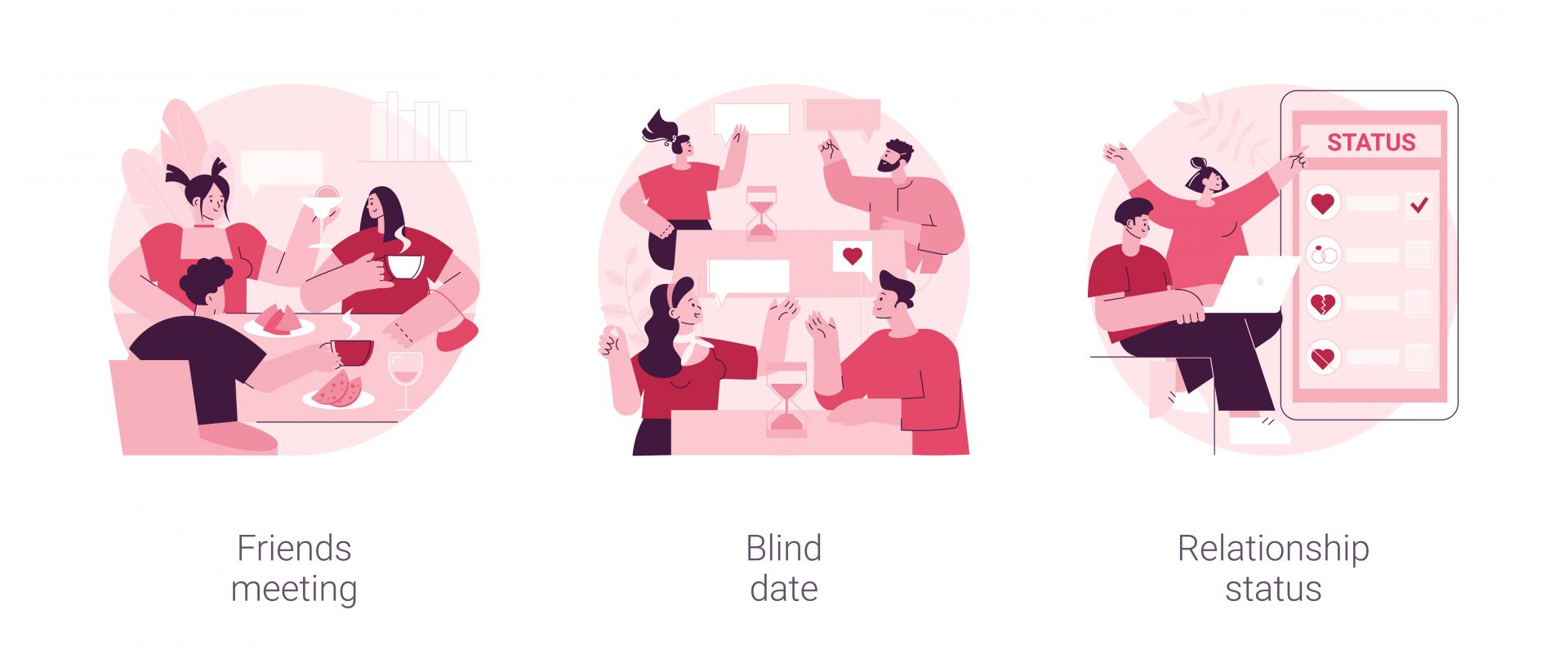
According to university communities on March 27, these gatherings are mostly organized by online communities or student councils. Participation is generally limited to students from the same university or from specific regions. A large group gathers and changes conversation partners at set intervals. Rather than spending extended time with one individual as in the past, the trend is shifting toward short, impactful encounters with multiple people—a "rotation meeting" style that is becoming increasingly popular.
The process is simple but rhythmic.
Participants sit across from each other one-on-one and talk for about 10 to 20 minutes, then move seats according to a predetermined order. Each gathering typically involves 10 to more than 20 people, ensuring that everyone meets each potential partner at least once.
Prepared question cards or simple games provided by the organizers help facilitate conversation. These range from light questions such as "What was the most interesting content you've seen recently?" or "What's your current favorite hobby?" to deeper topics like "Which values are most important to you?"—all designed to help participants quickly get a sense of each other within a short period.
Participants commonly cite "speed and density" as the main attractions. Park, a 24-year-old student from a university in the Seoul metropolitan area, said, "I met 12 people, each for 10 minutes. It was overwhelming at first, but I quickly got used to it. The experience of meeting so many different people is fascinating and fun." Lee, a 22-year-old student at Sookmyung Women's University, commented, "The biggest advantage is being able to compare several people in one place. Normally, you have to spend at least a few hours with a small group in a blind date or group meeting, which can be burdensome—but here, you quickly get a sense of whether you click or not."
Yoon, a 23-year-old graduate who spent six months as an exchange student in Denmark, said, "I was impressed by the home party culture where you naturally get introduced to friends of friends and mingle. You could expand your relationships without having to arrange special get-togethers," and added, "I'm looking for gatherings in Korea that offer a similar vibe."
Some interpret this as group culture—diminished by the COVID-19 pandemic—being revived in a new way. Instead of long, club-based or membership training (MT) sessions as in the past, the trend is shifting toward short but intensive interactions. Analysts point out that this is the result of lowered psychological barriers to meeting strangers, combined with a growing emphasis on time and efficiency.
Experts believe this trend aligns with the practical mindset of the younger generation. Lim Myeongho, professor of psychotherapy at Dankook University, explained, "Because the outcome of the meeting is immediate, it matches the practical orientation of today's university students." However, Professor Lim also cautioned, "Human relationships require time, not just convenience, so people should be careful not to fall into the 'fallacy of generalization' based on limited experiences."
-
Reporter Oh Jieun joy@asiae.co.kr
-
Reporter Park Jaehyun now@asiae.co.kr
-
Edit Kim Hyunhee faith100@asiae.co.kr
© The Asia Business Daily. All rights reserved. Unauthorized AI training and use prohibited.