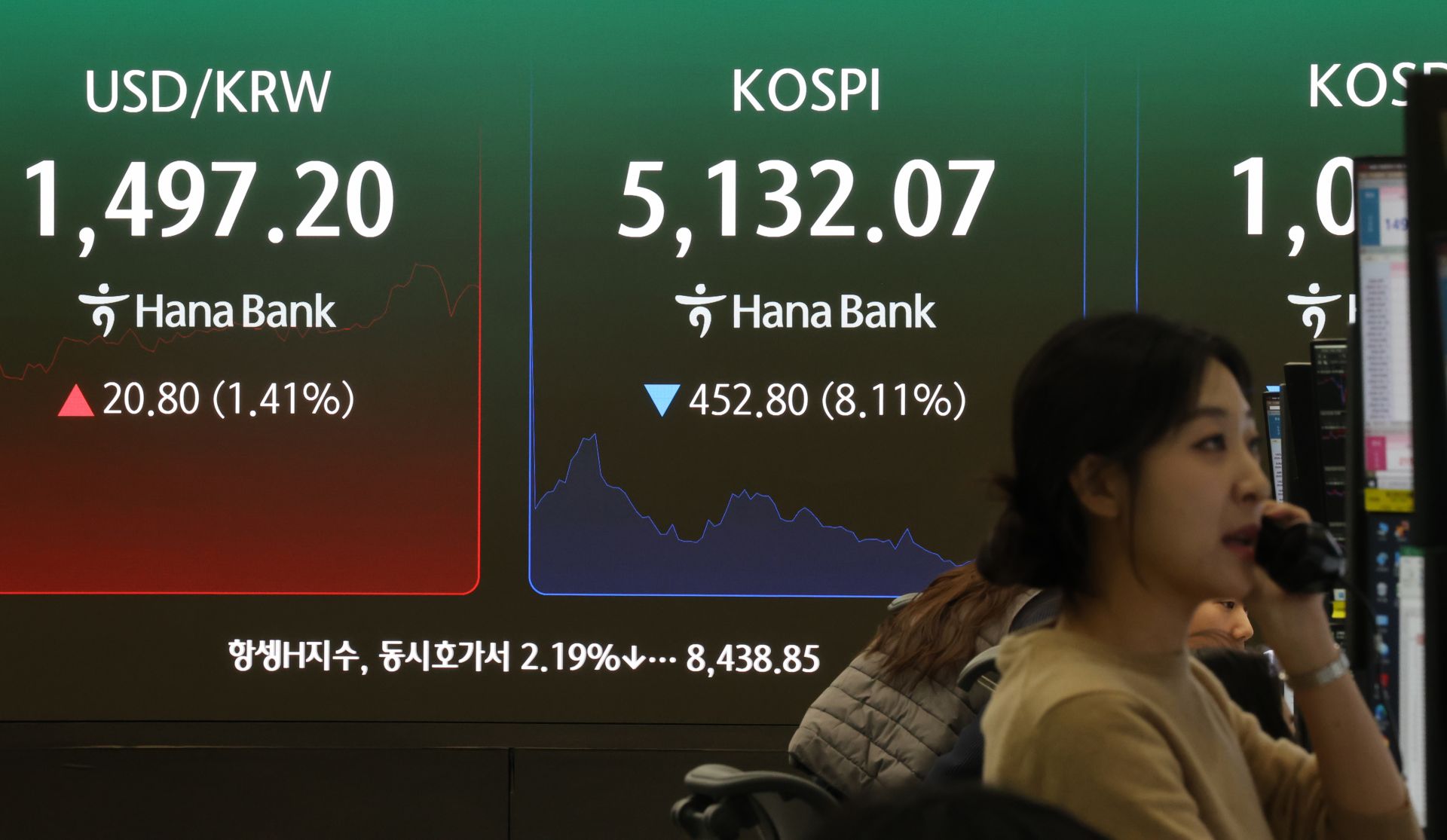


The theme to watch in this year's ETF market is expected to be artificial intelligence (AI).
Interview with Yook Donghwi, Head of ETF Product Marketing at KB Asset Management
"As long as the semiconductor sector does not lose momentum, the domestic stock market will remain strong.
It is even possible for the KOSPI to reach the 7,000 level in the first half of the year."
Semiconductor supercycle, record-breaking performance..."Stock market likely to perform well until the first half"
In a recent interview with The Asia Business Daily, Yook Donghwi, Head of ETF Product Marketing at KB Asset Management, shared his outlook for the domestic stock market this year. He said, "The Korean stock market is expected to perform well until the first half of the year. It is natural that when companies make a lot of money, the economy improves and stock prices rise. Currently, Korea is earning overwhelmingly high profits in the semiconductor market. Samsung Electronics and SK Hynix together account for more than 40% of the total market capitalization, and the operating profit forecasts for these two companies continue to be revised upward on the KOSPI," he explained. He went on to say, "Semiconductors are fundamentally a cyclical industry, but right now, we have broken out of that cycle. After high-bandwidth memory (HBM), it is clear that profits are increasing in DRAM, NAND, and even materials, components, and equipment. As long as semiconductors do not lose steam, the market will continue to rise for some time."
Samsung Electronics and SK Hynix account for 40% of the KOSPI...Operating profit forecasts continue to rise
"Considering PER, the KOSPI at the 7,000 level is feasible"
There are also forecasts that the KOSPI could break through the 7,000 level in the first half. Yook said, "There is a clear rationale behind domestic and foreign securities firms projecting the KOSPI in the 7,000 range. When considering the price-earnings ratio (PER), this figure is attainable," adding, "If semiconductor market demand remains steady and operating profit forecasts are not undermined, this upward trend can continue." He also analyzed that the recent sharp decline in the market, triggered by US and Israeli airstrikes on Iran, could help sustain the market's bullish momentum. "A healthy correction usually means a drop of around 11% on average. For the S&P 500, after a significant rally, any crisis typically results in a decline of about 11%. This time, the Korean market also dropped sharply and then rebounded significantly. Unlike past corrections that unfolded over 15 days or a month, this was a rapid correction, similar to what happened during the COVID-19 period. Because a correction has already occurred, I believe reaching the 7,000 level in the first half is possible," he forecasted.
US-Iran conflict also supports stock market strength...Experience of a rapid correction similar to COVID-19
Risk management needed in the second half...Watch out for volatility as momentum slows
However, there is a view that risk management will be necessary in the second half. Yook said, "Everyone knows that semiconductors are strong, so expectations have already been priced in and there has been a rapid rise in the short term. In the second half, once these expectations are met, the momentum could fade. I believe much closer attention will be needed for volatility and risk management in the second half," he said.
Alongside the steep rise of the stock market, the ETF market is also showing rapid growth, with its size nearing 400 trillion won in a short period. This growth trend is expected to continue. "The ETF market has gone through several stages of leveling up," Yook explained. "When ETFs were first listed in 2002, no one paid attention. The first stage of growth came around 2010 with the rise of leveraged ETFs, as people gradually became aware of ETFs. The second stage was triggered by the emergence of 'Seohak Ants' (Korean investors investing in overseas stocks) during the COVID-19 crisis. The third stage came as ETFs gained popularity in retirement accounts around the end of the pandemic. The time it takes for ETF net assets to grow from 200 trillion won to 300 trillion won, and then to 400 trillion won, is getting shorter. This shows that ETFs are now fully recognized as vehicles for financial investment. Therefore, I expect the market to surpass 400 trillion won and reach 500 trillion won in a short period," he said.
ETFs are also growing rapidly, expected to surpass 500 trillion won...AI theme leads the growth
Director Yuk said, "Talks revolve around AI and semiconductors, but the main framework is the AI paradigm shift, and AI infrastructure development will continue until 2028-2030," adding, "Products that can ride the wave of AI innovation will continue to emerge this year."
He also predicted that actively managed ETFs will lead market trends. "Active ETFs will become much more prevalent as regulations and market trends change," he said. "The market environment is moving so fast that you may need to sell one day and buy the next. With the introduction of active ETFs, investors can continuously adjust their holdings, so I expect a series of active products to be launched," he explained.
Retirement pension ETFs: Focus on balanced allocation of stocks and bonds
When investing in ETFs through retirement pensions, asset allocation is key. Yook stated, "If you are 100% exposed to equities, you will inevitably become anxious whenever the stock market swings. To prevent this from the outset, asset allocation products are preferable." For example, he cited the recently listed 'RISE Samsung Electronics SK Hynix Bond Hybrid 50' ETF, which allocates 50% to Samsung Electronics and SK Hynix stocks and 50% to bonds. "Even when Samsung Electronics and SK Hynix experienced double-digit declines recently, this ETF was able to offer some protection," he explained.
-
Reporter Song Hwajung pancake@asiae.co.kr
-
Reporter Kim Youngwon forever@asiae.co.kr
-
Edit Kim Yumi ymkim91@asiae.co.kr
© The Asia Business Daily. All rights reserved. Unauthorized AI training and use prohibited.







