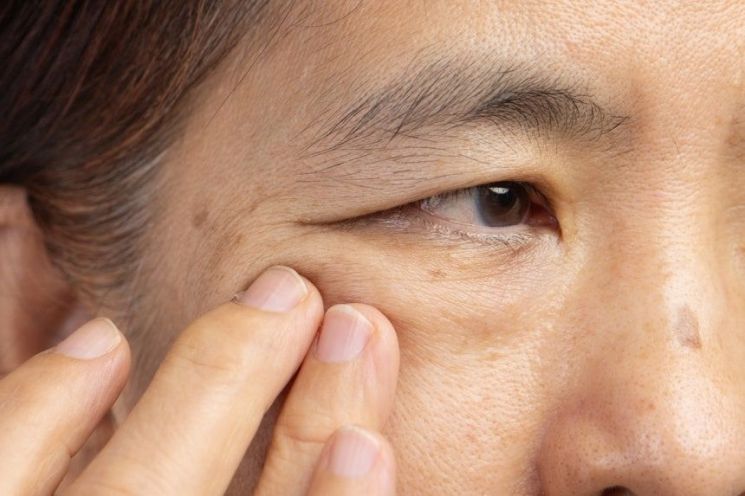

The research team also found that certain patterns appearing in the retina could potentially be used to diagnose Alzheimer’s disease. Analysis revealed clues that bacteria and traces of inflammation within the retina can help predict disease risk.
'Eye Bacteria' That Can Cause Dementia Identified
A study has found that a common bacterium, which infects up to 80% of adults at least once in their lifetime, may worsen Alzheimer's dementia. In particular, the possibility has been raised that this bacterium may remain in the retinal tissue inside the eye and promote brain inflammation and neurodegeneration, drawing attention to whether it could provide new clues for early diagnosis and prevention of dementia.
According to the Daily Mail on February 3 (local time), a research team at Cedars-Sinai Medical Center in Los Angeles, United States, analyzed postmortem eye tissue donated by patients with Alzheimer's, patients with mild cognitive impairment, and cognitively normal individuals, and reported these findings.
Specific bacterium detected up to 4 times more often in Alzheimer's patients
When the researchers analyzed tissue from 95 deceased donors, they found that a specific bacterium was detected 2.9 to 4.1 times more frequently in the retinas and brains of Alzheimer's patients than in those of cognitively normal individuals.
The bacterium in question is Chlamydia pneumoniae, a common microorganism that typically causes mild respiratory symptoms similar to a cold.
It is so common that around 80% of adults have been infected at least once, but in most cases it is known to resolve without serious aftereffects.
However, the study found that the higher the bacterial load, the more severe the brain damage and cognitive decline. Previous research had also detected this bacterium in the brain tissue of Alzheimer's patients, and it has been frequently observed around amyloid plaques, which are associated with memory loss and confusion.
Unlike many other bacteria, Chlamydia pneumoniae can survive inside human cells. It is known to be capable of evading the immune system, remaining in the body for extended periods, and potentially causing chronic inflammation.
When the research team infected human nerve cells with this bacterium in the laboratory, they confirmed that inflammatory pathways associated with Alzheimer's were activated and that levels of disease-related proteins increased.

The researchers stated, "We consistently identified Chlamydia pneumoniae in human tissue, cell cultures, and animal models," adding, "We have newly discovered the link by which bacterial infection leads to inflammation and neurodegeneration."
Potential for early detection of dementia risk signals
This suggests the possibility that simple eye examinations could be used in the future to detect early warning signs of dementia. Given that current dementia diagnosis mainly relies on brain imaging and cognitive assessments, there is an outlook that this could serve as a relatively simple diagnostic method.
Professor Maya Koronyo-Hamaoui, who led the study, explained, "The eye is like a window into the state of the brain," adding, "By assessing infection and inflammation in the retina, we can predict how far brain disease has progressed." Co-researcher Professor Timothy Crougher said, "There is potential to develop new therapeutic strategies that block infection and inflammation."
-

Reporter Seo Jiyeong zo2zo2zo2@asiae.co.kr
-
Edit Kim Hyunhee faith100@asiae.co.kr
© The Asia Business Daily. All rights reserved. Unauthorized AI training and use prohibited.