
As food companies and their former and current executives, who allegedly gained unfair profits amounting to 10 trillion won through collusion on flour and sugar prices, have been indicted en masse, it has emerged that these companies significantly boosted their profitability through price hikes. In recent years, the prices of raw materials have surged so much that new terms like "breadflation" and "sugarflation" have been coined, and these higher raw material costs have been passed on to food prices, increasing the burden on consumers. Meanwhile, food companies have been fattening their profits through collusion, drawing growing public criticism.
According to the food industry on the 5th, the flour price-fixing case recently prosecuted by the prosecution involved all seven member companies of the Korea Flour Mills Industrial Association. Based on each company’s disclosure data, the domestic flour market was estimated at 1.3 trillion won as of 2024, and three companies — Daehan Flour Mills, Sajo DongA One, and CJ CheilJedang — form an oligopoly with a combined market share of over 70%. Samyang (10%), Daesun Flour Mills, Samhwa Flour Mills, and Hantop each hold only a single-digit market share.
Flour companies see profitability surge... Daehan Flour Mills’ operating profit triples

According to the prosecution’s investigation, these milling companies colluded on flour prices totaling around 5.9 trillion won for 5 years and 9 months, from January 2020 to October last year. They used the sharp rise in the price of wheat, the raw material for flour, as a pretext to raise prices steeply through collusion, after the global supply chain crisis triggered by the COVID-19 pandemic and the impact of the war that began when Russia invaded Ukraine, the world’s largest agricultural exporter, in 2022.
However, even after supply instability eased and wheat prices began to decline due to weakening demand for flour, these milling companies only slightly lowered their supply prices. As a result, their business performance improved sharply. For example, Daehan Flour Mills, the No. 1 flour manufacturer in Korea, saw its flour sales hover just above 300 billion won up to 2020, but they jumped to 346 billion won in 2021, 460 billion won in 2022, and 490 billion won in 2023. Although sales have since declined slightly, its cumulative sales reached 346.4 billion won by the third quarter of last year, exceeding its annual sales before the flour price collusion.

The growth rate of this company’s operating profit is even steeper. Daehan Flour Mills’ operating profit rose from 7.4 billion won in 2019 to the 15 billion won range in 2020, the first year of the flour price collusion. It then surpassed 20 billion won in 2022, before swelling to 37.9 billion won in 2023 and 47.9 billion won in 2024. Its cumulative operating profit reached 28.9 billion won by the third quarter of last year.
Sajo DongA One shows a similar pattern. Its sales jumped from 280 billion won in 2020 to around 440 billion won in 2024. Sajo DongA One does not disclose the operating profit and loss of its milling division separately, but its overall operating profit during this period surged from 16 billion won to 50 billion won. Given that the feed division’s net profit frequently ran into the red, it appears that its profitability improved significantly due to the flour price collusion. CJ CheilJedang and Samyang do not disclose their milling results separately. In addition, Hantop, which had been operating at an operating loss, turned profitable, and Daesun Flour Mills and Samhwa Flour Mills also saw their performance soar.

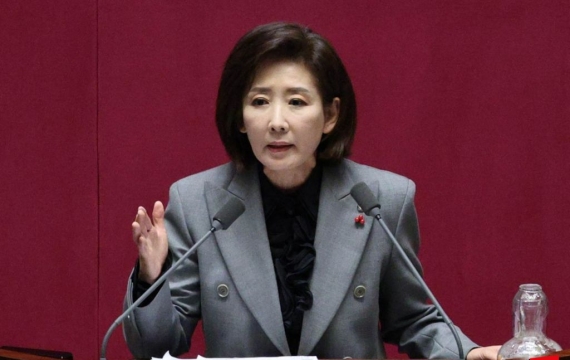
On the 2nd, at the Seoul High Prosecutors' Office in Seocho-gu, Seoul, Na Heeseok, chief prosecutor of the Fair Trade Investigation Division at the Seoul Central District Prosecutors' Office, announced the results of a focused probe into crimes disrupting the livelihoods of ordinary citizens. Yonhap News
원본보기 아이콘This is not the first time the milling industry has faced suspicions of flour price collusion. Domestic flour companies were first caught fixing prices in 1963, and in 2006, collusion was again uncovered, leading the Korea Fair Trade Commission to impose a total of 43.417 billion won in fines on all seven milling companies. The Fair Trade Commission calculates fines based on sales directly or indirectly related to the collusion and imposes between 0.5% and 20%, depending on the seriousness of the violation. Since the profits earned through collusion are far greater than the fines, this has effectively encouraged habitual collusion.
Sugar price collusion also continues... prices up by as much as 66%
Sugar price collusion surfaced in the 1990s. Three domestic sugar refiners — CJ CheilJedang, Samyang, and Daehan Sugar — were caught colluding on shipment volumes and prices from 1991 to 2005, and in 2007 the Fair Trade Commission imposed a total fine of 51.1 billion won. In 2011, suspicions of collusion arose again when the three sugar companies raised prices in a similar fashion, and last year, prosecutors uncovered signs of organized collusion, leading to the arrest of former executives of CJ CheilJedang and others.
It was revealed that these three sugar refiners engaged in price collusion worth 3.27 trillion won from March 2021 to April last year. Prosecutors stated that while the price of raw sugar, the raw material for refined sugar, rose from 386 won in January 2021 to 801 won in October 2023, these companies quickly raised sugar prices from 720 won to 1,200 won. However, even after the raw sugar price had fallen to 578 won as of April last year, they only slightly lowered sugar prices from 1,200 won to 1,120 won, preventing consumers from benefiting and allowing the three sugar refiners to pocket the gains.


In fact, during the period when these companies were colluding, flour prices rose by up to 42.4%, and sugar prices increased by up to 66.7%. As raw material prices climbed, the prices of finished products rose in tandem.
Food companies take a direct hit... average prices of ramen and bread rise 7% to 8% over five years
From January 2020, when the flour and sugar price collusion was underway, food manufacturers that were directly hit by the higher input costs raised their product prices one after another. Ottogi increased prices by 11.9% in August 2021, 11% in September 2022, and 7.5% in April last year. Samyang Foods raised prices by about 6.9% in September 2021 and about 9.7% in November 2022. Nongshim raised prices by 6.8% in August 2021, 11.3% in September 2022, and 7.2% last year.

Paris Baguette also raised its bread prices by 5.6% in February 2021, 6.7% in February 2022, 6.6% in February 2023, and 5.9% in February last year. During the period when the sugar price collusion was taking place, Lotte Chilsung Beverage increased prices on six products by 6.9% in June last year, and hy raised prices on its fermented milk products by an average of 16.3%.

Foreign tourists are choosing Korean ramen at a large supermarket in downtown Seoul. Yonhap News Agency
원본보기 아이콘
In legal circles, some analysts say it is theoretically possible for food companies to file damages suits and other claims over losses incurred from raw material price collusion. However, the prevailing view is that it would be very difficult in practice for food manufacturers, which must continue to procure raw materials, to bring lawsuits against flour mills and sugar refiners. In the end, it appears that only the recovery of unjust gains through measures such as fines imposed by the Fair Trade Commission will be feasible.
A food industry official said, "When flour and sugar prices rise, food prices are structurally bound to go up, but even if raw material suppliers colluded on prices, it is impossible for food manufacturers to file lawsuits," adding, "It is unlikely that any food company is preparing or planning to sue."
IndexWhy&Next
- "Pay This, Pay That": The Ultimate Commission Burden... Franchisees Owe Up to 35 Million KRW
- Profits Far Outweigh the Fines... No Wonder the Collusion Continues
-

Reporter Heo Kyungjun kjune@asiae.co.kr
-
Edit Kim Yumi ymkim91@asiae.co.kr
© The Asia Business Daily(www.asiae.co.kr). All rights reserved.




![[No Filter Robot] "150,000 Won Instead of Tens of Millions"... Experiencing a 3D-Printed Robotic Hand](https://cwcontent.asiae.co.kr/asiaresize/304/2026061216155198153_1781248551.jpg)