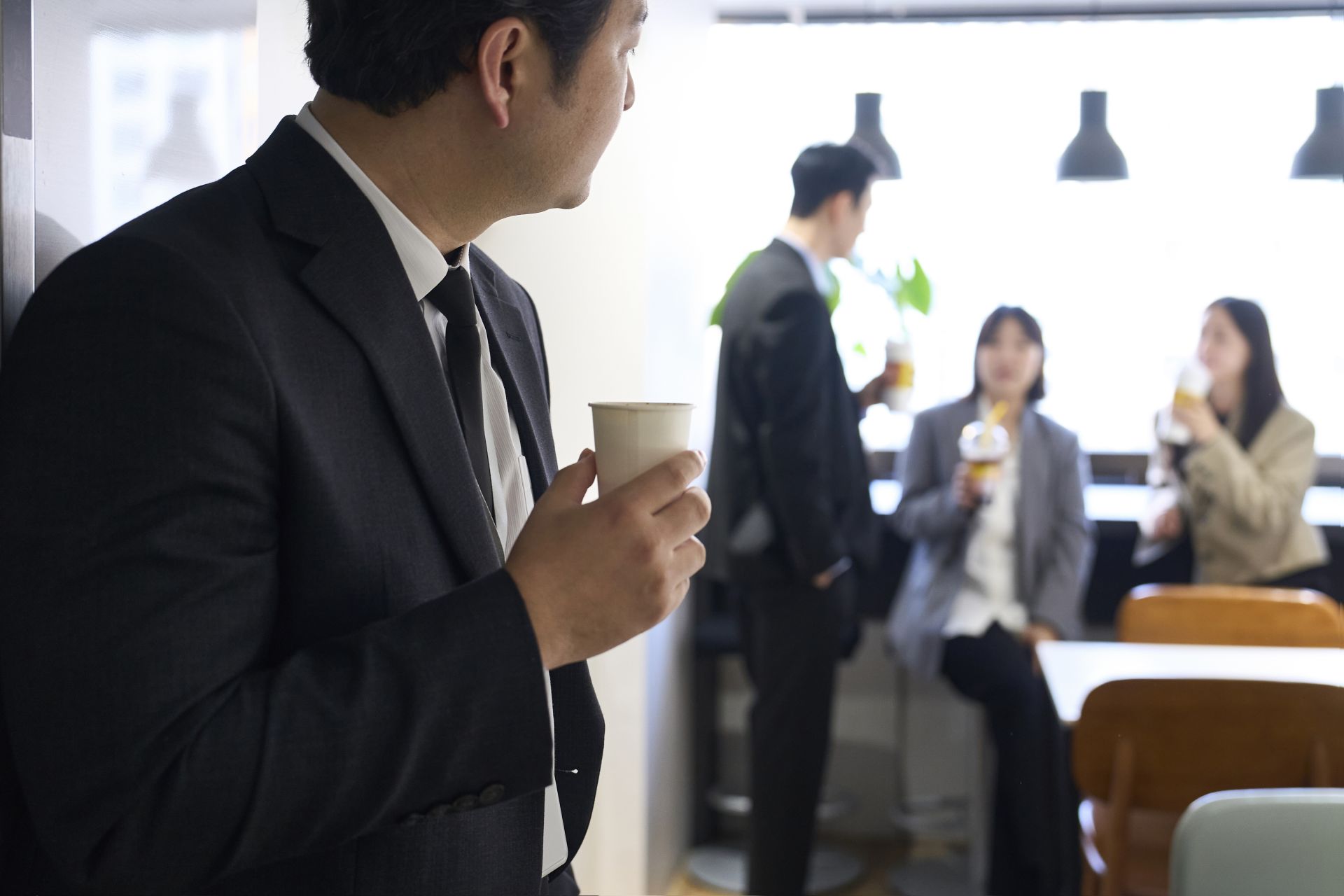

Concerns are being raised that the everyday habit of drinking hot coffee or tea from a paper cup may lead to exposure to microplastics and nanoplastics. Contrary to the perception that paper cups are relatively safer than plastic cups, experts point out that high-temperature beverages can damage the inner coating layer of the cup, allowing microplastics to leach into the drink.
According to a study by a research team at the Indian Institute of Technology (IIT), published in the international environmental journal "Journal of Hazardous Materials," when hot liquid at 85 to 90 degrees Celsius was poured into a paper cup and left for 15 minutes, the thin polyethylene (PE) film coating the inside of the cup was degraded by heat and released microplastics.
The experiment found that an average of about 25,000 microplastic particles were detected per 100 ml of beverage. It was also analyzed that about 10.2 billion plastic particles at the nano scale, which are difficult to see with the naked eye, were mixed into the drink. This means that even a single cup of hot instant coffee can result in the intake of a substantial amount of microplastics and nanoplastics.
Looks like paper, but the inside is plastic-coated
Paper cups are lined with a plastic coating on the inside to prevent liquid from seeping through. Although they appear to be made entirely of paper, the researchers explained that this coating layer is relatively easily damaged as it is exposed to high-temperature liquids. In this process, not only microplastics but also ionic components, fluorine, sulfates, some other chemicals, and heavy metals were detected together.

Because the released microplastics and nanoplastics are extremely small in size, there is a high possibility that they will be absorbed into the body. Some particles can travel along blood vessels and reach deep into organs, and in the long term they may disrupt the immune system or cause hormonal imbalances.
For hot drinks, reusable stainless steel or glass cups are recommended
The British outlet The Independent also recently reported that takeaway coffee cups, including paper cups, may be a source of microplastic exposure. According to the report, an experiment was conducted on 400 disposable cups collected in the Brisbane area of Australia. The results showed that although plastic-coated paper cups released fewer microplastics than pure plastic cups, microplastics were detected in both types of cups.
Given that hundreds of billions of disposable paper cups are used worldwide every year, experts point out that it is difficult to say that paper cups are completely free from the risk of microplastic exposure. They argue that the very perception of paper cups as a safe alternative to plastic cups is misguided.
Experts advise that when drinking hot beverages, it is best to use reusable cups made of stainless steel, glass, or ceramic. They add that if one has no choice but to use a disposable cup, simply drinking the beverage within as short a time as possible, or allowing a boiling-hot drink to cool slightly before pouring it into the cup, can reduce the physical stress placed on the plastic coating layer and thereby lower exposure.
-

Reporter rloseo8@asiae.co.kr
-
Edit Bae Byoungmin wuhaha@asiae.co.kr
© The Asia Business Daily. All rights reserved. Unauthorized AI training and use prohibited.







