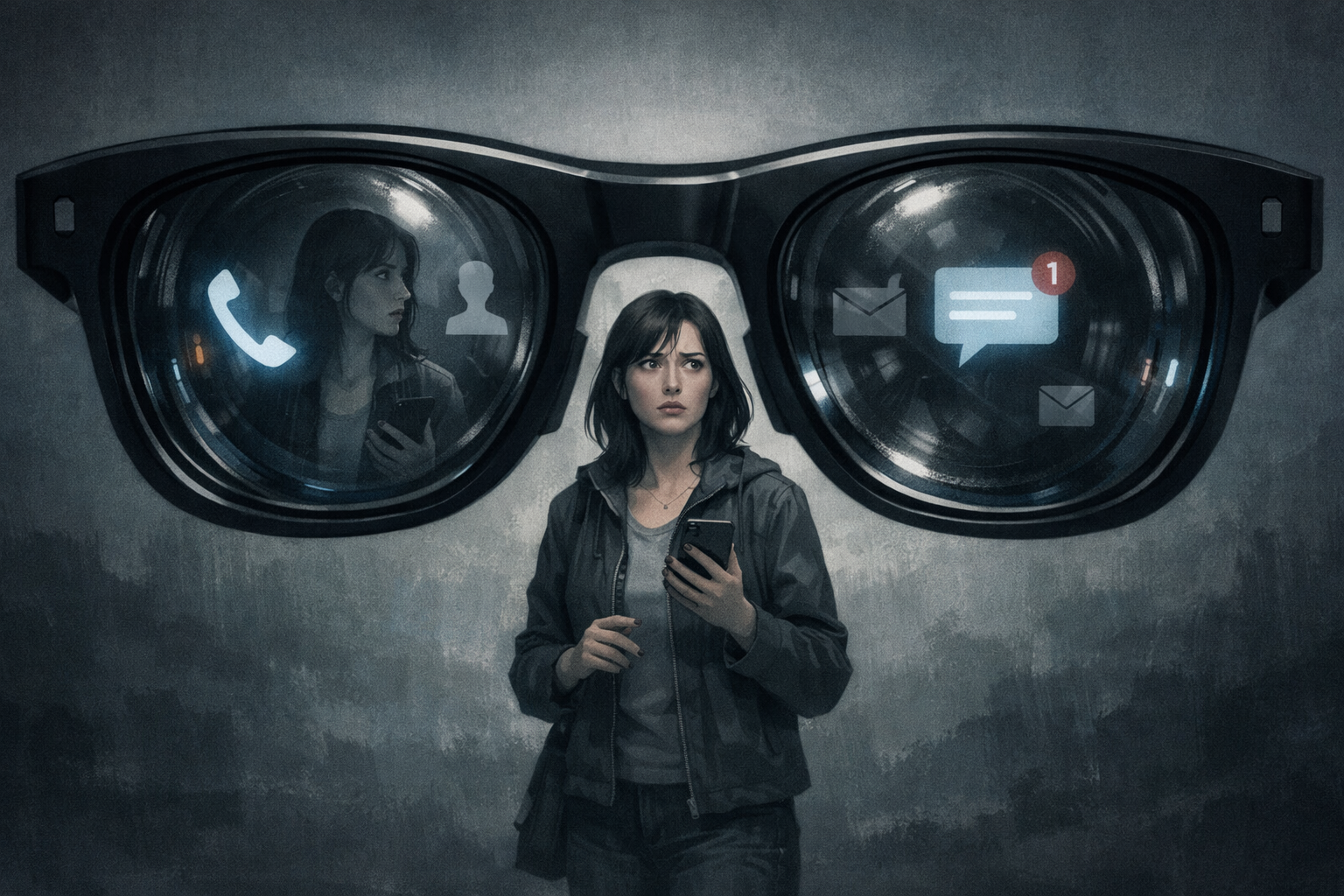
Cases of illegal filming using smart glasses are occurring one after another around the world.
Moments when people let their guard down, simply because they are in the middle of a conversation
or in an everyday encounter, are being captured on video and then released on social media (SNS).
▼
Records left behind after an ordinary conversation

According to the BBC in the United Kingdom, Dilara (21), who lives in London,
struck up a conversation with a man who approached her in a store and then exchanged contact details with him.
The problem was that this entire interaction was secretly filmed
through the smart glasses the man was wearing.

The video was uploaded to TikTok, where it racked up 1.3 million views,
and even Dilara's contact information was exposed as it was.
Afterward, she was bombarded with messages
and even had unfamiliar men show up at her workplace.
▼
Filming that starts without any notification

A similar incident happened to Kim (56) on a beach in England,
and the video received 6.9 million views on TikTok and more than 100,000 likes on Instagram.
Kim, unaware that she was being filmed,
shared her workplace information and social media account details,
and after the video spread, she received thousands of sexually harassing messages.
▼
Videos that will not disappear, growing harm

A BBC investigation found that TikTok and Instagram
host numerous similar videos filmed with smart glasses.
Most of them are known to have been shot by male influencers,
and in many cases, victims were not effectively protected
even after requesting that the videos be taken down or filing reports.
▼
Technology has advanced, but standards have stalled

Victims say they "had absolutely no way of knowing that filming was taking place."
In response, Meta explains that an LED light turns on while recording,
but people continue to testify that this does not work properly in reality.
Women's rights groups point out that, compared with the rapid spread of the technology,
smart glasses manufacturers and platforms have failed to put in place sufficient safeguards for users.
Smart glasses, from 'technology of convenience' to 'technology of risk'
Smart glasses have now moved beyond experimental gadgets to become products embedded in everyday life.
The problem is that for some people, this technology is becoming not a convenience,
but another source of danger.
As quickly as the technology evolves, there is a growing call
for safety standards and accountability discussions to keep pace.
-

Reporter Heo Midam damdam@asiae.co.kr
-
Edit Hur Eunmi eungmimon@asiae.co.kr
© The Asia Business Daily. All rights reserved. Unauthorized AI training and use prohibited.