Xiaomi, which had emphasized strengthening after-sales service (AS) as the core of its customized strategy for the Korean market, is struggling to win over Korean consumers due to disruptions in parts supply and a shortage of service centers.

Only 16 AS Centers Nationwide...Far Fewer Than Samsung's 170 and Apple's 80
As of January 30, Xiaomi operates 16 AS centers nationwide, a mix of directly managed and outsourced locations. Among the directly managed centers, three are in Seoul and one is in Gyeonggi Province, including the first dedicated direct AS center that opened on Hangang-daero, Yongsan-gu, Seoul in October last year. Since last month, Winia Aid, a service agency, has been handling Xiaomi product repairs at 12 locations nationwide, replacing the previous contractor, Service N.

Johnny Wu, President of Xiaomi Korea, is making a presentation at the first press conference held after the establishment of Xiaomi Korea Corporation on January 15 last year at the Four Seasons Hotel in Jongno-gu, Seoul. Photo by Yonhap News
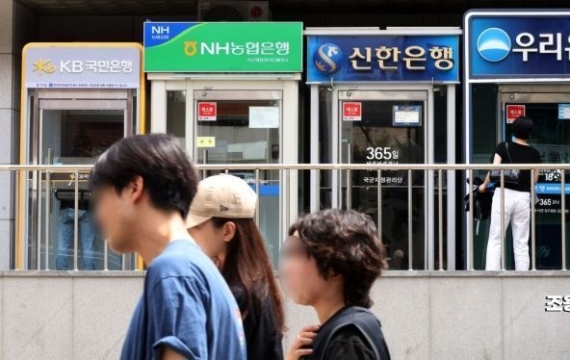
원본보기 아이콘However, there are significant regional disparities in service center accessibility. Users outside the Seoul and Gyeonggi areas can only send their devices to the direct centers via courier, making same-day repairs impossible. Even Winia Aid, the AS agency, only has two locations in Seoul, four in Gyeonggi, and one each in Gangwon, Busan, Ulsan, Daejeon, Gwangju, and Jeonju, so users in other regions face difficulties getting repairs. This stands in stark contrast to Samsung Electronics, which has around 170 mobile phone service centers, and Apple, which has about 80 repair shops.
Direct Centers Also Face Parts Supply Issues...Agencies Struggle with Repairs
The bigger issue is the supply of parts. Even at direct AS centers, repairs are delayed due to parts shortages. This leads to a lack of clear communication to customers about which items can be repaired and the status of their service. A representative from Xiaomi’s direct AS center said, "If the part is available, repairs are quick, but it's often difficult to guarantee same-day service. If the part is in the domestic warehouse, it takes one to two weeks after ordering, but in the worst case, if it has to be ordered from China, it could take up to a month."

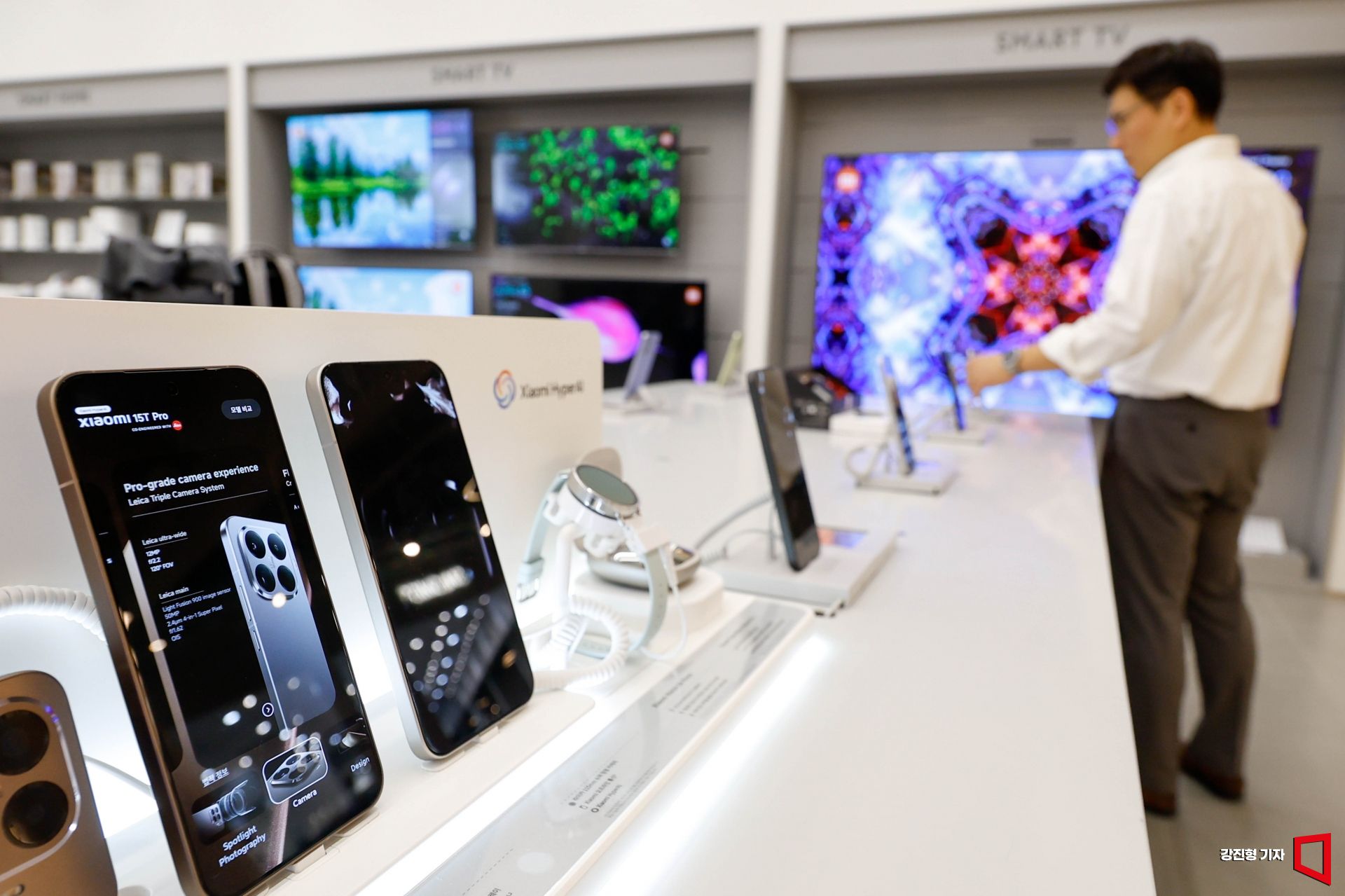
The Xiaomi 15T Pro is on display at the Xiaomi Store NC Eastpole Guui Branch in Gwangjin-gu, Seoul. Photo by Jin-Hyung Kang
원본보기 아이콘Service agencies also unanimously agree that it has recently become difficult to provide smooth repairs for Xiaomi products. Since December last year, repair requests for Xiaomi products have piled up, and parts are not being supplied promptly. A representative from Winia Aid’s A branch said, "Even when we request parts, headquarters does not tell us whether there is stock in Korea or when they will send them, so both customers and we are equally frustrated. A customer who requested a battery replacement two months ago still hasn't received the service and is using a rental phone."
A representative from Winia Aid’s B branch said, "Currently, we do not have most mainboards for Xiaomi smartphone models, so they have to be shipped from China over two to three weeks. Usually, repair centers keep parts in advance, but Xiaomi’s policy is to send parts only when ordered as needed, so there is no surplus," he explained.
Xiaomi Cites 'Trust' as Top Value, "Considering Additional Centers Based on Service Demand"
Regarding service center operations, Xiaomi only reiterated its principle of prioritizing 'trust' as its highest value. A Xiaomi representative stated, "In addition to high-quality products and reasonable prices, we have always aimed to provide consistent service that consumers can use with confidence. We plan to gradually review and implement the opening of additional direct service centers according to service demand."

President Lee Jae-myung and his wife, along with President Xi Jinping and his wife, are taking a commemorative photo with a Xiaomi phone after the state banquet at the Great Hall of the People in Beijing, China, on January 5. This Xiaomi phone was a gift from President Xi to President Lee during the Gyeongju summit. Photo by Yonhap News Agency
원본보기 아이콘Kim Yongjin, Professor of Business Administration at Sogang University, said, "The fundamental limitation for foreign companies is the difficulty of establishing an initial AS network. If the speed of AS, which is a key competitive factor, is weak, the lock-in effect that keeps consumers loyal is diminished." He added, "Since Xiaomi sells a variety of electronic products, it needs many service centers, and partnering with logistics companies to utilize 'third-party logistics' for repairs via courier could be one solution."
-

Reporter Lee Eunseo libro@asiae.co.kr
-
Edit Kim Yumi ymkim91@asiae.co.kr
© The Asia Business Daily. All rights reserved. Unauthorized AI training and use prohibited.