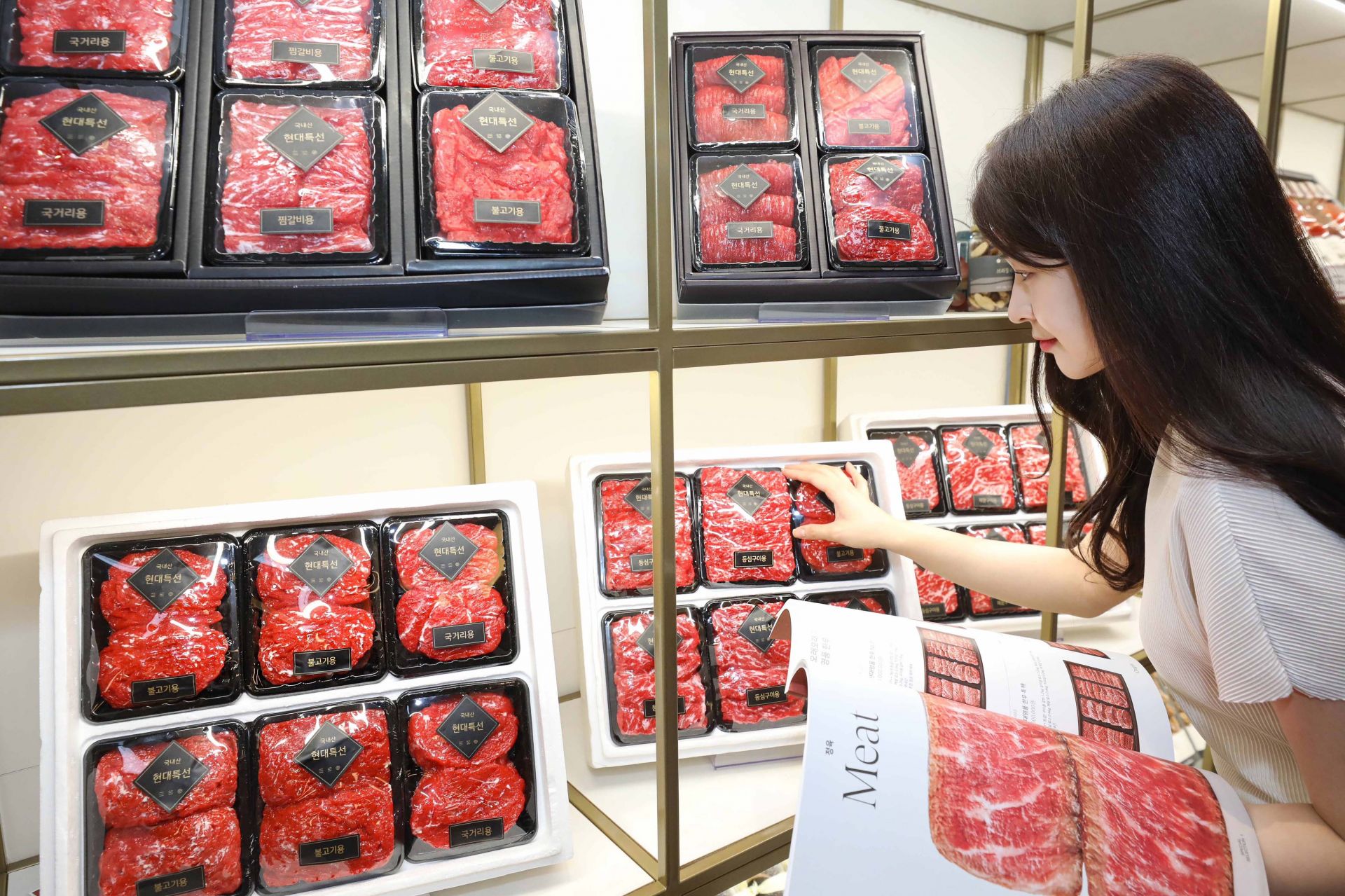
As the price of Korean beef continues to rise, the prices of Korean beef gift sets sold at major supermarkets and department stores for the Lunar New Year holiday have increased by double-digit percentages. Apple prices have also been on an upward trend for the second consecutive year, prompting retailers to expand the supply of mixed fruit gift sets that include apples and other fruits ahead of this year's Lunar New Year.

Premium Korean Beef Sets at Major Supermarkets: 250,000-280,000 Won, Up to 20% Increase
According to the retail industry on January 26, the price of a 2kg chilled Korean beef set, a mainstay at one major supermarket, is around 160,000 won, which is about an 11% increase from the early 140,000-won range during last year's Lunar New Year. Another major supermarket has raised the price of its premium Korean beef sirloin gift set (about 2kg) from 250,000 won to 280,000 won, an increase of approximately 12%. Some Korean beef products have seen price hikes of up to 20%.

The model is holding a 2026 Lunar New Year Korean Beef Gift Set. Provided by Lotte Department Store.
원본보기 아이콘The primary reason for the increase in Korean beef gift set prices is a decrease in supply. According to the Agricultural Outlook Center at the Korea Rural Economic Institute, the number of Korean cattle slaughtered last year was 940,000, a decrease of about 5% compared to the previous year. This year, the number of cattle slaughtered is expected to drop by 8.4% year-on-year to 862,000. In the first quarter of this year, the number is projected to be 220,000, a 6.5% decrease from the previous year.

With supply shrinking, the price of Korean beef has surged sharply. According to Dabom, a livestock distribution information service, as of January 21, the wholesale price of Korean beef (average carcass price) was 21,378 won per kilogram, a 28.4% increase compared to the same period last year (16,649 won).

Korean beef is the most preferred item among holiday gifts. Major supermarkets are focusing on minimizing price increases to reduce the burden on consumers. They have frozen prices on cost-effective Korean beef products by securing stock in advance, and are minimizing price hikes by expanding direct auction volumes and increasing integrated bulk purchases. Frozen braised short ribs have also been secured in advance and are being sold at the same prices as last year.
Even Fruit Prices Are Soaring... Apples Up for Second Consecutive Year
Apple, the representative fruit for holidays, has also continued its annual upward price trend. Analysts say that last year's poor apple harvest has increased upward pressure on prices. Although the overall apple supply has improved somewhat compared to 2024, the supply of large apples (over 300g), which are mainly used in gift sets, has decreased, resulting in insufficient supply. Apples grow and accumulate sugar through photosynthesis in the late growing season (summer to early autumn), but frequent cloudy and rainy weather prevented apples from reaching their full size.

In response, major supermarkets are offsetting the burden of higher prices for single-variety apple gift sets by adjusting their contents. For example, they have reduced the weight of apple gift sets from 3.6kg to 3.4kg while keeping prices unchanged. A retail industry official explained, "Gift sets are usually prepared three to four months in advance, and apple prices are higher than usual this year. To ease the pressure of rising prices, we are combining apples with pears in gift sets or making advance contracts with citrus producers."

Some major supermarkets have increased their pear supply by 20% compared to last year. By mixing pears, which have seen a relative increase in production, with apples, they have managed to reduce the burden of rising prices. Last year, pear production rose 12.8% from 2024 to 201,000 tons. As for storage pears, which are harvested after Chuseok and distributed until the summer, the storage volume reached 92,000 tons, a 16.1% increase compared to the same period last year. In addition, through advance contracts for citrus fruits such as Redhyang and Hallabong, the proportion of these fruits in Lunar New Year gift sets has also increased by about 10%.
-

Reporter ming@asiae.co.kr
-
Edit Kim Yumi ymkim91@asiae.co.kr
© The Asia Business Daily. All rights reserved. Unauthorized AI training and use prohibited.