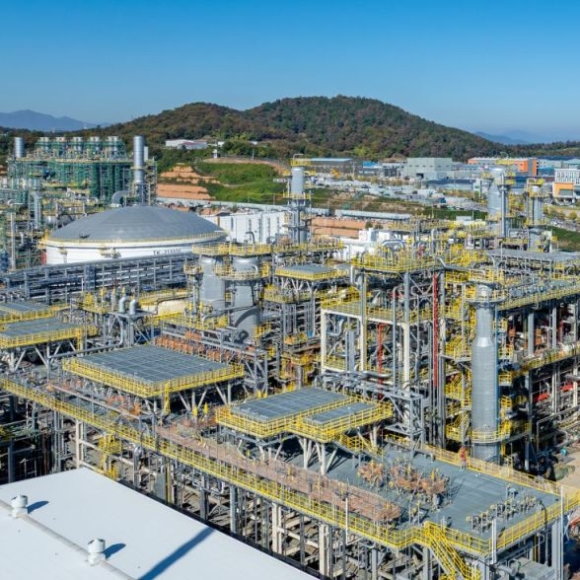
On the 25th (local time), according to Bloomberg News, the February delivery futures price of U.S. natural gas traded on the New York Mercantile Exchange (NYMEX) reached $6.288 per MMBtu (million British thermal units). This is the first time in four years since December 2022 that U.S. natural gas prices have surpassed the $6 mark.
Trump Declares Federal State of Emergency in 12 States
A powerful snowstorm has struck the United States, causing widespread power outages and flight cancellations. The snowstorm is expected to continue until the 26th.
According to foreign media including the Washington Post on the morning of the 25th (local time), more than 700,000 households in states such as Louisiana, Mississippi, Texas, and Tennessee experienced power outages. Southern regions that were affected by the snowstorm the previous day suffered the most severe blackouts.
On this day alone, more than 10,000 flights were canceled. Including the previous day, over 14,000 flights were canceled over the weekend. Most of the flight cancellations were concentrated at airports in the eastern region, such as Philadelphia, New York, New Jersey, Washington DC, and North Carolina.
The National Weather Service (NWS) announced that 30 to 60 centimeters of snow are expected in the northeastern United States, including New York and Boston. Even after the storm passes, extreme cold is expected to persist from the southern to the northeastern regions.
President Donald Trump described the snowstorm as a "historic winter storm" and approved a federal state of emergency for 12 states: South Carolina, Virginia, Tennessee, Georgia, North Carolina, Maryland, Arkansas, Kentucky, Louisiana, Mississippi, Indiana, and West Virginia.
Secretary of Homeland Security Kristi Noem said at a press conference the previous day, "The most important thing residents across the country can do is please stay off the roads," urging people to remain at home unless travel is absolutely necessary.
At the state level, at least 22 states and the capital, Washington DC, have declared a state of emergency so far.
U.S. Natural Gas Prices Reach Highest Level Since 2022
Due to the current cold wave, heating demand has surged and gas production has been disrupted, pushing U.S. natural gas prices to their highest level since 2022. If the cold wave continues for some time, prices are expected to keep rising.

Earlier this month, natural gas was trading at around $3, but as the cold wave intensified across the United States, prices more than doubled. Analysts attribute the skyrocketing prices to a sudden surge in heating demand.
Some U.S. natural gas production facilities have also suspended operations due to cold wave damage, raising concerns that gas prices may continue to rise for the time being. Bloomberg News reported, "Nearly 10% of U.S. natural gas production has been temporarily halted due to the winter storm," adding, "This coincides with a period of soaring demand for fuel for power generation, further driving up prices."
-

Reporter Hwang Yoonju hyj@asiae.co.kr
-

Reporter Lee Hyunwoo knos84@asiae.co.kr
-
Edit Kim Hyunhee faith100@asiae.co.kr
© The Asia Business Daily. All rights reserved. Unauthorized AI training and use prohibited.