Spicy Ramen Purchases Slightly Decrease Over One Year
The spicy ramen market in Korea, which has grown by stimulating Koreans' "spicy pride," has recently entered a phase of moderation. The era in which ultra-spicy new products, driven by Scoville unit competition, led the market has come to an end, and a "lineup competition" centered around a few strong brands is now in full swing.
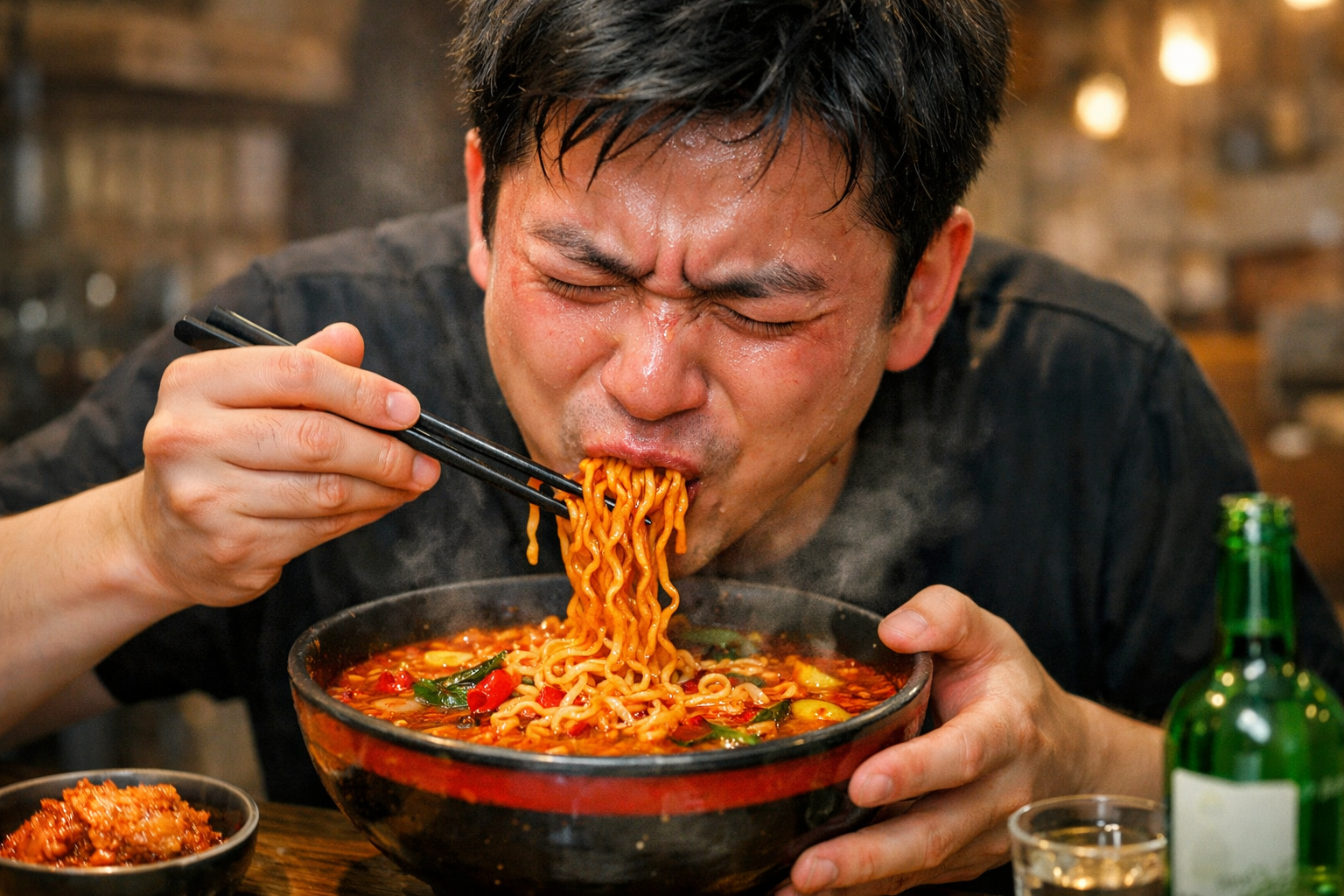
Entering Adjustment Phase Instead of 'Scoville Competition'
Buldak, Yeolramen, Maeptang, and Teumsae Occupy 90% Market Share
End of Initial Competition Amid New Product Flood
Demand Restructured Around Verified Brands
According to a purchasing trend analysis by the market research firm Embrain DeepData on January 17, the estimated purchase amount of spicy ramen sold through major distribution channels over the past year, as of November last year, was 176.6 billion won, a slight decrease compared to 187 billion won in the same period the previous year. As overall growth slows, the spicy ramen market appears to be entering a stage of qualitative restructuring rather than quantitative expansion.
Spicy Ramen: From Many Competitors to a Structure Dominated by Top Four Brands
One of the clearest changes in this adjustment phase is that demand is becoming increasingly concentrated on a few brands. Looking at the estimated purchase amount share by spicy ramen brand over the past year, Samyang Foods' "Buldak Bokkeummyeon" ranked first with 34.9%, followed by Ottogi's "Yeolramyeon" (33.1%), Samyang Foods' "Maeptang" (10.7%), and Paldo's "Teumsae Ramyeon" (10.5%). The top four brands account for about 90% of the total market.
This shows that, after a period of an influx of new spicy ramen products, consumer fatigue has accumulated, and the market is now entering a typical maturity phase where demand consolidates around proven brands. The single metric of the "Scoville unit," which measures chili pepper spiciness through capsaicin concentration, is no longer sufficient to influence consumers' choices. Brand trust and the accumulated experience of consumers are now the decisive factors in purchasing decisions.

Buldak, Yeolramyeon, Maeptang, Teumsae... Brand Strategies Diverge Based on Spicy Flavor Identity
The common trait among the leading brands is that their products are not merely spicy; each has established a distinct spicy flavor identity. Buldak Bokkeummyeon has secured a unique position as a "stir-fried spicy ramen," with its estimated purchase amount increasing by 4.8% year-on-year. Notably, the combination of global brand recognition and strong domestic loyalty has allowed it to be the only brand to maintain growth, even as the overall spicy ramen market pauses for breath.
Yeolramyeon, as the representative spicy soup noodle, has expanded its lineup with variations such as "Mayoelramyeon" and "The Hot Yeolramyeon," maintaining a stable market share. In addition, recipe-based consumption content, such as "Soft Tofu Yeolramyeon," is spreading through social media, evolving the product from a simple food item into a comprehensive consumer experience.
Maeptang has emerged as a strong contender by offering a wide spectrum of spicy flavors, mainly focusing on spicy soup ramen. Rather than extreme spiciness, its approach of "selectable spiciness" fits well with the diversification of consumer tastes. Teumsae Ramyeon, boasting a spiciness of up to 10,000 SHU, continues to be the choice for hardcore spicy ramen enthusiasts. Instead of pursuing mass market expansion, it firmly maintains its identity as the "ramen that remains spicy to the end," securing a stable niche market.
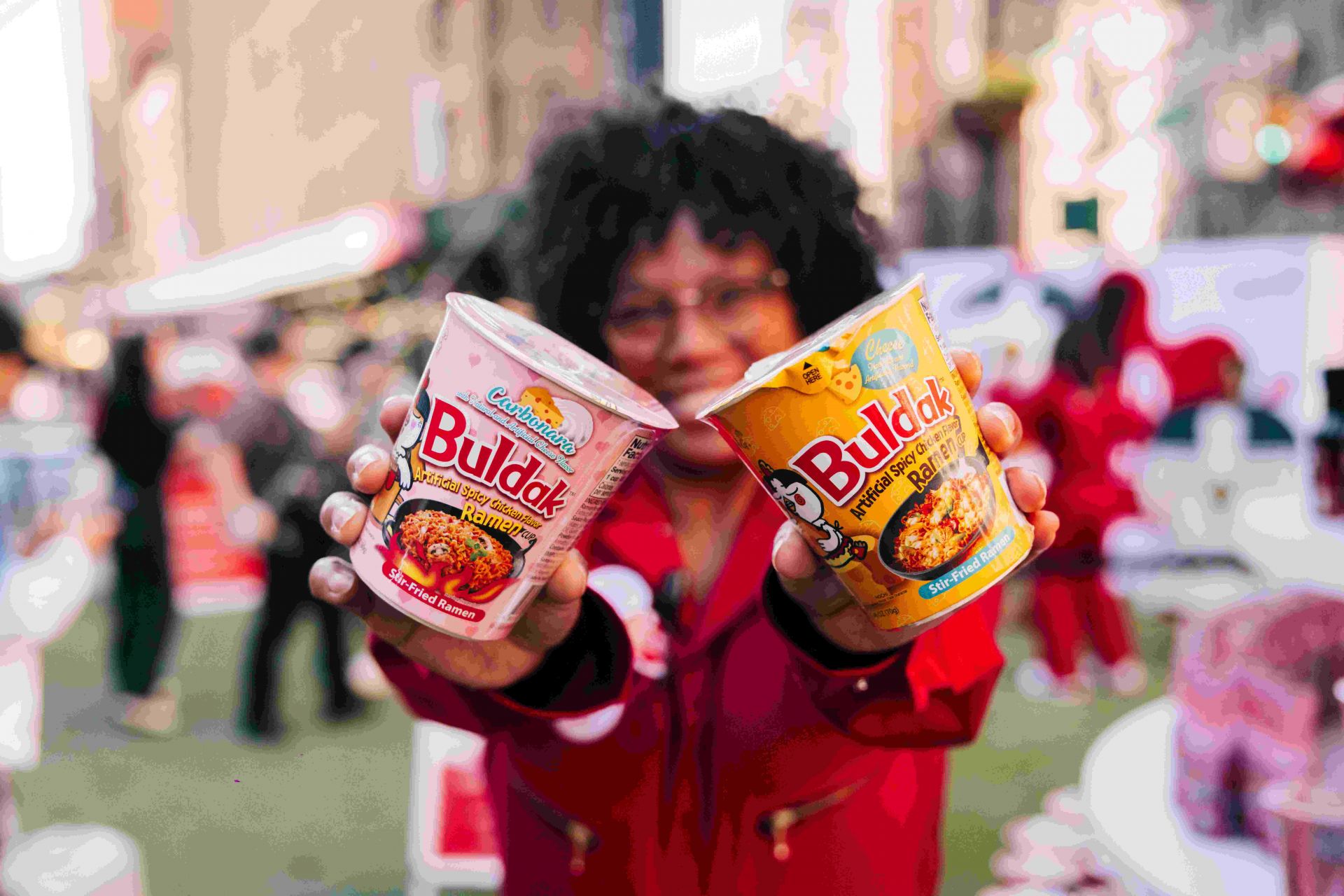
Buldak Bokkeummyeon, the Only Stir-Fried Noodle Showing Growth
Yeolramyeon, the Representative Spicy Soup Noodle
MaepTaeng, Emerging Strong Contender in Selectable Spiciness
Teumsae Ramyeon, Fixed Fanbase of Extreme Spiciness Enthusiasts
Spicy Flavor Consumption Shifts from Challenge to Everyday Style
From Scoville Competition to Lineup Competition: The Next Phase for Spicy Ramen
The focus of competition in the spicy ramen market is shifting from who can make the spiciest product to which brand can offer the widest variety of spicy options within its lineup. Consumers are no longer seeking ever more extreme stimulation; instead, they are switching to choosing the type of spiciness that suits their preferences from within familiar brands.
This signals that the market is moving from "challenge-based consumption" to "everyday consumption." Spicy ramen is no longer just a novelty item but is becoming a routine meal option, and product structures are shifting from single-hit products to brand portfolio-centered lineups. In the future, success in the spicy ramen market will depend not on offering stronger stimulation, but on providing a broader and deeper range of brand experiences.
-

Reporter gooeunmo@asiae.co.kr
-
Edit Kang Dongwon kangdw76@asiae.co.kr
© The Asia Business Daily. All rights reserved. Unauthorized AI training and use prohibited.