

With the 'Atlantic Alliance'-which has supported the Western bloc since World War II-now facing the risk of collapse due to U.S. President Donald Trump's ambitions to annex Greenland, global attention is focused on Trump's special address at the World Economic Forum (WEF) in Davos.
According to Bloomberg on the 18th (local time), President Trump will deliver a special address at the Davos Forum on January 21 at 8:30 a.m., speaking for about 45 minutes. This marks his third attendance during his presidency. At last year's WEF, which took place right after the start of his second term in January, he delivered his speech virtually.
All Eyes on Trump's Speech at the Davos Forum on the 21st
The world is paying close attention to President Trump's remarks on major issues that could impact the global economy-such as the Russia-Ukraine war, anti-government protests in Iran, Venezuela, and Greenland-during this speech. Tensions between Trump and key European countries over Greenland continue to escalate.
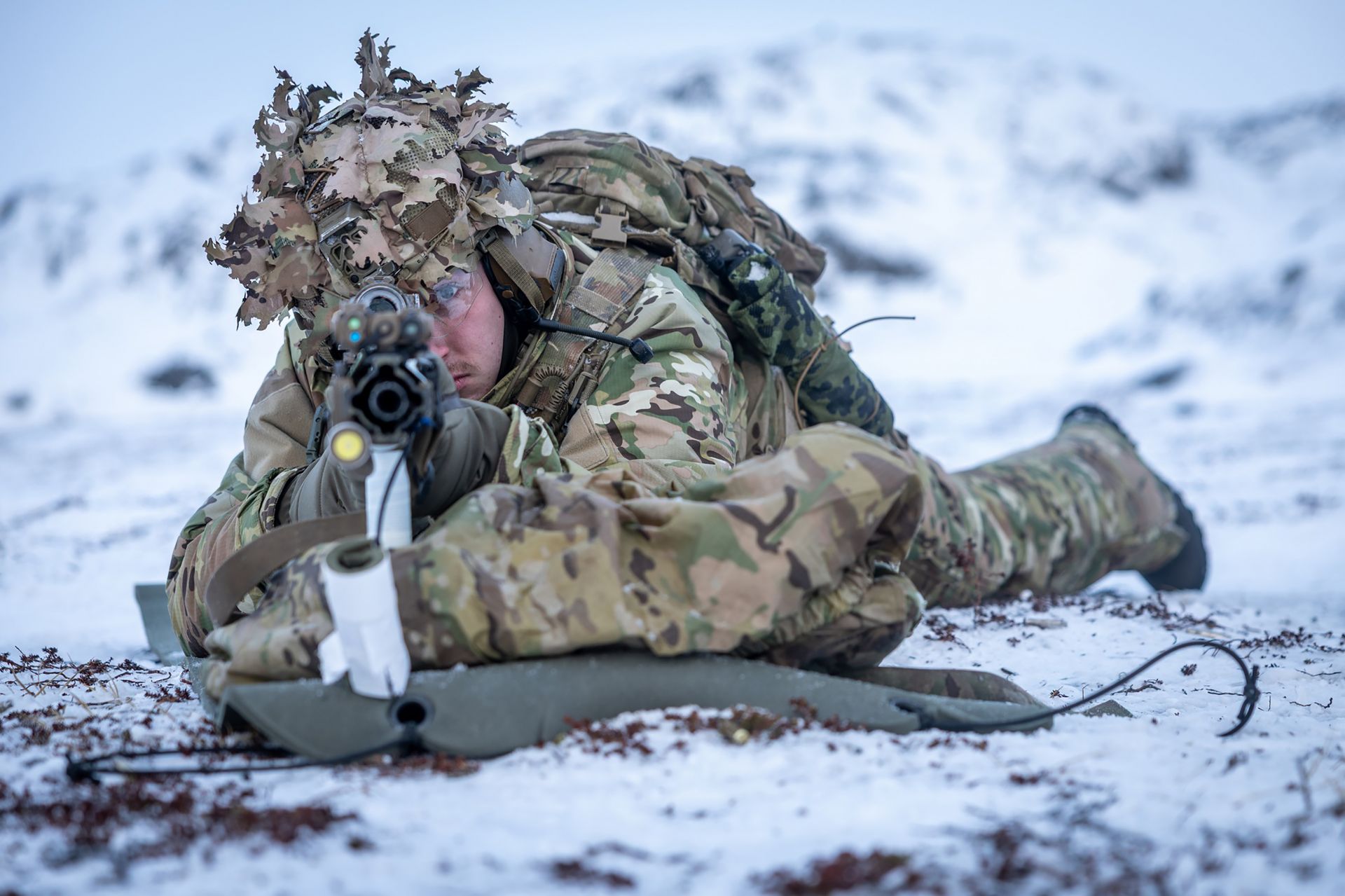
As President Trump persistently revealed his ambition to annex Greenland, on January 15, eight countries-Denmark, Norway, Sweden, France, Germany, the United Kingdom, the Netherlands, and Finland-decided to deploy small-scale forces, including reconnaissance troops, to Greenland. In response, President Trump stated on Truth Social on January 17, "Starting February 1, a 10% tariff will be imposed on all goods exported to the United States from all the aforementioned countries," adding, "From June 1, the tariff will increase to 25%, and these tariffs will remain in place until an agreement is reached for the full purchase of Greenland by the United States."
In response to Trump's tariff threats, the EU is considering countermeasures. One proposal under review is the introduction of the Anti-Coercion Instrument (ACI), often referred to as the 'trade bazooka.' The ACI allows the EU to restrict trade in services, foreign direct investment, financial markets, public procurement, and intellectual property rights against third countries that economically threaten the EU or its member states. Although the EU legislated the ACI in 2023, it has never been used. During last year's trade negotiations with the U.S., the EU also considered imposing retaliatory tariffs worth 159 trillion won.
Europe's Strong Response Serves as Leverage to Increase Bargaining Power
This strong response from Europe is expected to serve as leverage to enhance its bargaining power when meeting President Trump at the Davos Forum. One day before Trump's special address, European Commission President Ursula von der Leyen, French President Emmanuel Macron, and Canadian Prime Minister Mark Carney will deliver their speeches. They are expected to emphasize the importance of the North Atlantic Treaty Organization (NATO) at the forum.
Some observers suggest that, given the importance of the NATO alliance, the conflict between President Trump and the EU could be dramatically resolved. However, considering that both former and current officials in the Trump administration continue to stress the security importance of annexing Greenland, it remains uncertain whether President Trump will back down easily.
U.S. Treasury Secretary Scott Bessent said in an interview with NBC on the 18th, "European leaders will realize that they need to remain under the U.S. security umbrella," adding, "If Russia or another country attacks Greenland, we will be drawn into that war."
He continued, "We are building the Golden Dome, a next-generation missile defense system. President Trump is strategic, and he is looking ahead to potential battles in the Arctic beyond this year and next." Secretary Bessent also addressed the EU's consideration of retaliatory tariffs against the U.S., stating, "Trade agreements are not finalized, and emergency measures (additional tariffs) can be very different from other agreements." This is interpreted as meaning that if Europe imposes retaliatory tariffs, the U.S. could respond with additional tariffs.
On the same day, former Vice President Mike Pence, who served in the first Trump administration, said in an interview with CNN, "Right now, I think the issue is not 'what' the President is trying to achieve, but 'how' he is trying to achieve it," adding, "The 'what' he is pursuing here is entirely in the interest of the United States."
However, former Vice President Pence also expressed concern, saying, "In my view, there are worries about using questionable constitutional authority to unilaterally impose tariffs on NATO allies to achieve this goal," and added, "I am as concerned about this as I am about the threat of military invasion (of Greenland). That threat no longer seems to be under discussion."
The Davos Forum is an annual event held every January in the Swiss winter resort town of Davos, where leaders from major countries and global corporations gather to discuss global issues. This year, under the theme "A Spirit of Dialogue," the forum will focus on five key questions aimed at connecting a divided world and securing future growth drivers.
Bloomberg reported that while President Trump is likely to address global issues such as the Russia-Ukraine war, anti-government protests in Iran, Venezuela, and Greenland, he is also expected to announce detailed housing price stabilization policies at the forum in an effort to strengthen his support base ahead of this year's midterm elections.
-

Reporter Hwang Yoonju hyj@asiae.co.kr
-

Reporter Lee Seunghyeong trust@asiae.co.kr
-
Edit Choo Myeonghoon chox2mh@asiae.co.kr
© The Asia Business Daily. All rights reserved. Unauthorized AI training and use prohibited.







